Start with the child’s reach
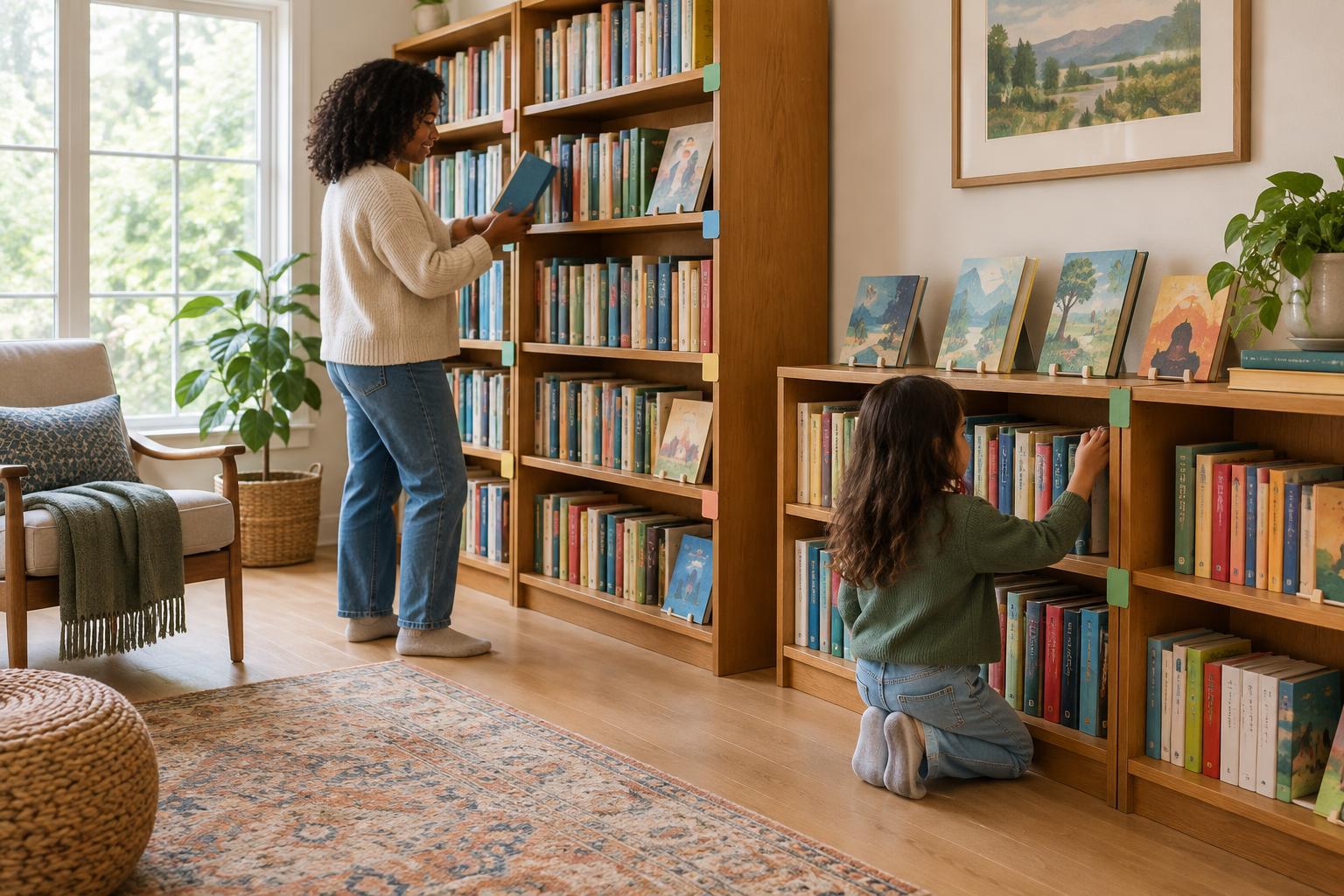
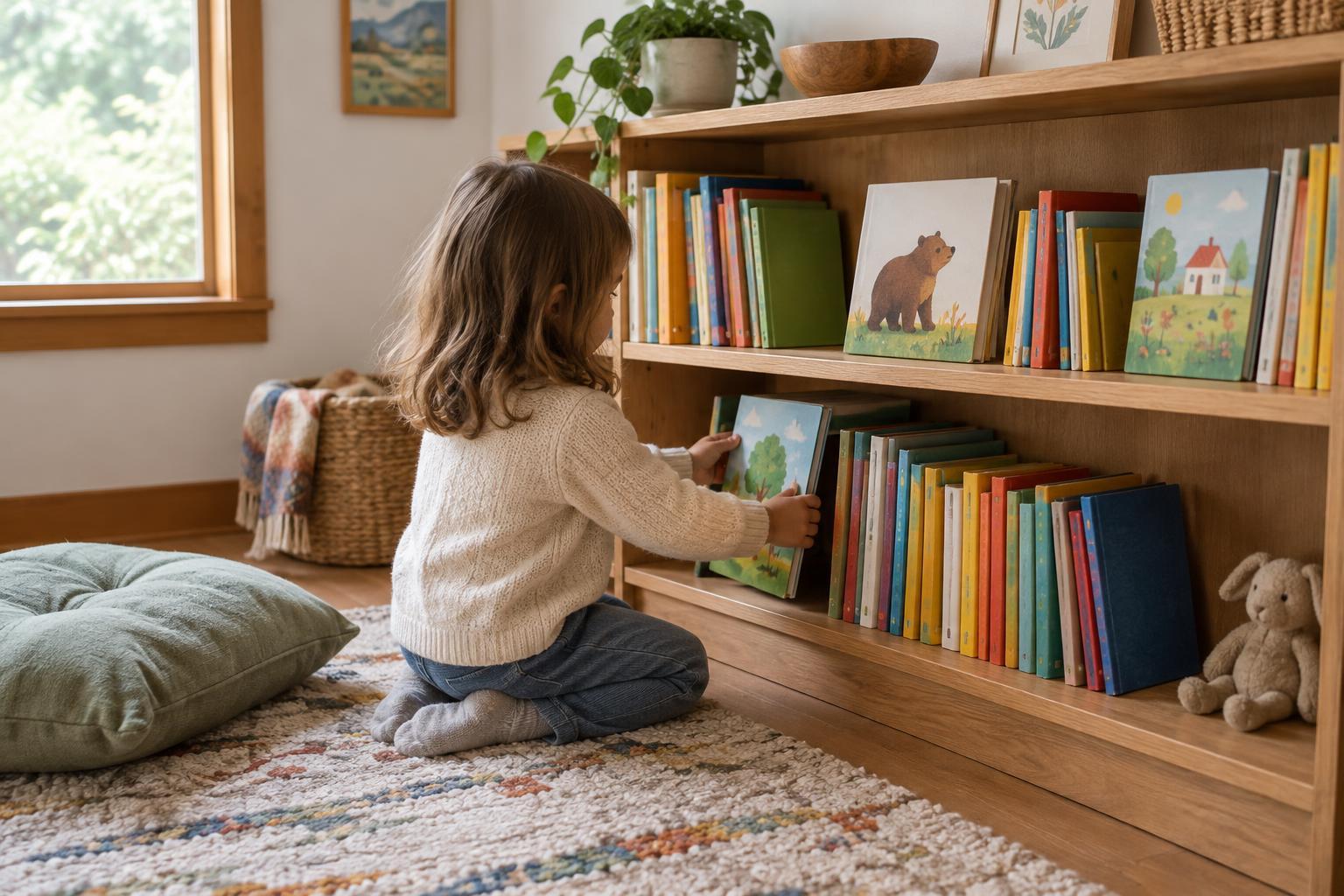
A shelf works best when a child can see what is available, take out a book without help and return it without a balancing act. Try watching your child choose a book from the current setup. Do they need to stretch, move a stack or pull several books out to reach one? Those small obstacles can make browsing feel like a chore.
Keep the books intended for independent use on low, reachable shelves. Face a few covers outward if space allows; a cover is often easier for a young child to recognize than a narrow spine. Leave enough room for hands to grasp each book and enough empty space for a child to slide it back. If a collection is large, nearby storage can hold the overflow without making the browsing shelf crowded.
Choose a setup that is easy and safe to use
There is no single piece of furniture every family needs. A low bookcase, a sturdy floor-level display or shallow bins may all work. Choose a setup that suits the books you own: tall picture books need space for their corners, while small paperbacks can disappear in a deep bin. Avoid making a child lift a heavy pile to get to the book underneath.
Think about the shelf as furniture a child will use repeatedly, not just a display. It should be stable, free of sharp or damaged edges and placed away from hazards such as cords. Follow the furniture maker’s guidance for securing it, particularly if it could tip when climbed or pulled. Keep heavier books low, and make it clear that shelves are for books, not climbing.
Organize for finding and returning
A child does not need to understand an elaborate filing system to care for a shelf. Begin with a few broad groups that mean something to them: animals, funny stories, facts, bedtime favorites or books borrowed from the library. Another option is to group books by size so they stand up and go back more easily. Ask the child where they would look for a favorite book; their answer may suggest a more useful arrangement than an adult’s categories.
Make each group’s home obvious. A picture label can help a child who is not yet reading, while a word label can remain useful as they grow. Baskets or simple shelf dividers can mark boundaries without requiring every spine to line up perfectly. If a category gets too full, move a few books into storage or split it into two groups. The goal is a shelf a child can reset, not one that always looks untouched.
Give every book a workable home
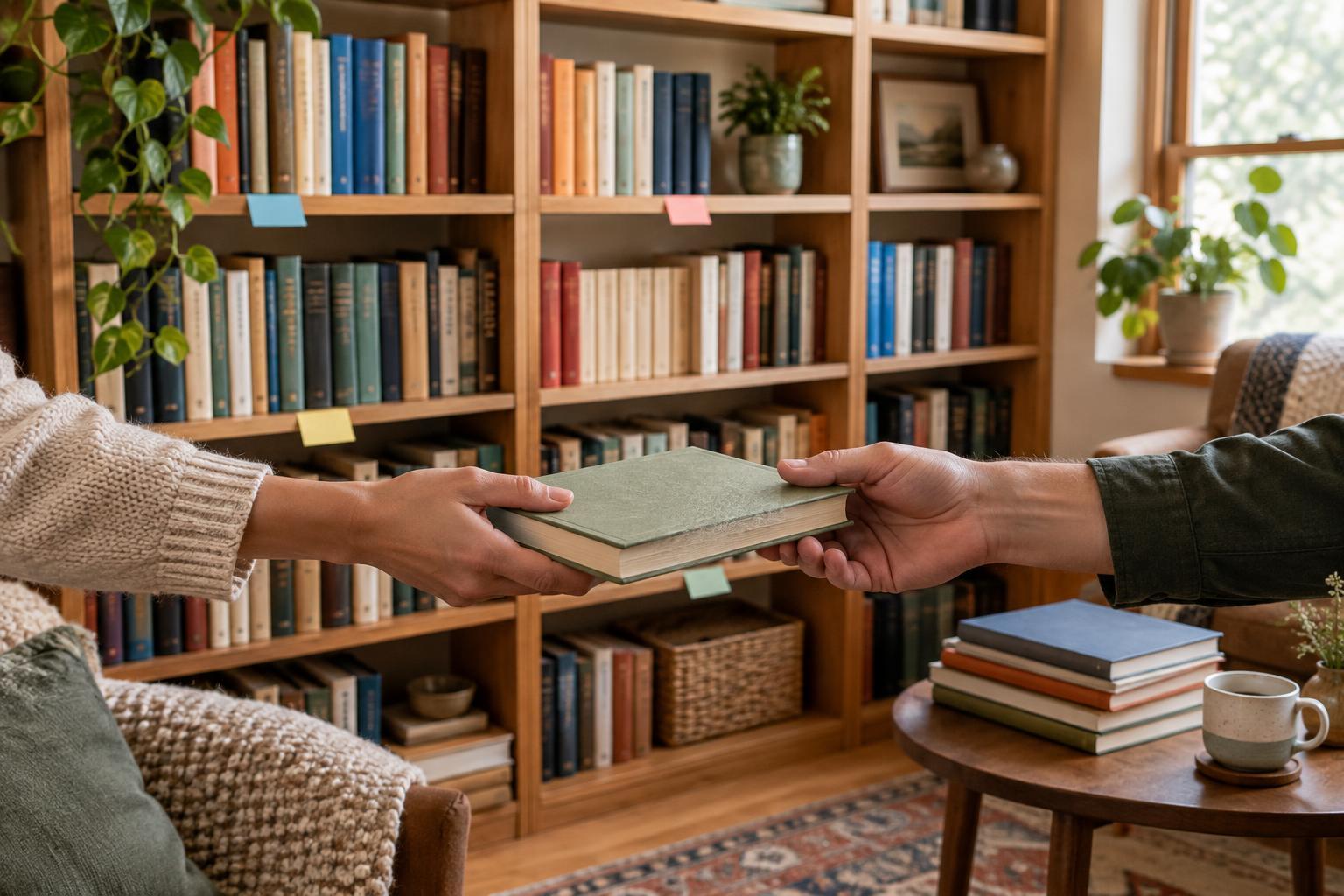
Some books need special attention. Oversize books may fit better lying flat in a short stack; fragile editions or books with loose pieces may belong in a shared-reading spot rather than on the independent shelf. Give library books a distinct basket or shelf space so they are easy to find when it is time to return them. This also helps children learn the difference between books that stay and books that are visiting.
Keep the number of visible books manageable for the child and the space. There is no ideal count: enough variety invites choice, but tightly packed shelves make putting books back difficult. If you have more books than fit comfortably, rotate a few between storage and the shelf. Let familiar favorites remain available if the child returns to them often; repetition can be part of the pleasure of reading.
Practice the routine together
A shelf becomes independent through use, not labels alone. At first, browse together and demonstrate how to take one book out and return it to its place. When a child finishes reading, offer a small, specific prompt such as “Let’s put the animal book back in its basket.” For younger children, a roomy return bin may be a better starting point than precise sorting.
Expect the system to change. A toddler may do well with a handful of face-out books; an older child may want sections for series, subjects or books to read next. Invite children to help rearrange the shelf when it stops working. A useful home library is one they can explore and look after, even if the books do not always stand in a perfect row.