How to Read a Map as a Source, Not Just a Set of Directions
A map can help you find a route, but it also makes choices about what to show. Learn to check its purpose, symbols, scale and missing details before relying on it.
Read article · 4 min↗Reading Discoveries
More to discover ↗A book’s title can be a useful doorway into discussion. Compare what it suggested before reading with what it means afterward, then test your ideas against the story without treating the title as a puzzle with one correct answer.
Read article ↗
Book Discussions
More to discover
A map can help you find a route, but it also makes choices about what to show. Learn to check its purpose, symbols, scale and missing details before relying on it.
Read article · 4 min↗A book can make one reader laugh and leave another unmoved. Here are practical ways to discuss comic scenes, tone, and differing reactions without turning the conversation into a test of who got the joke.
Read article · 3 min↗A passing mention of a poem, a character’s favorite novel or a note at the back of a book can lead to an unexpected reading discovery. Here’s how to follow those clues without turning every page into a research project.
Read article · 4 min↗A story can lead to a map, a puppet show, a recipe or a cardboard castle. But when the activity becomes a test or a complicated project, the pleasure of reading can disappear. Here are practical ways to keep book-inspired play flexible, welcoming and connected to the story.
Read article · 3 min↗A story-inspired craft does not need a packed supply cupboard or a large table. Learn how to keep the imaginative heart of an activity while adapting its materials, size and steps to suit the people taking part.
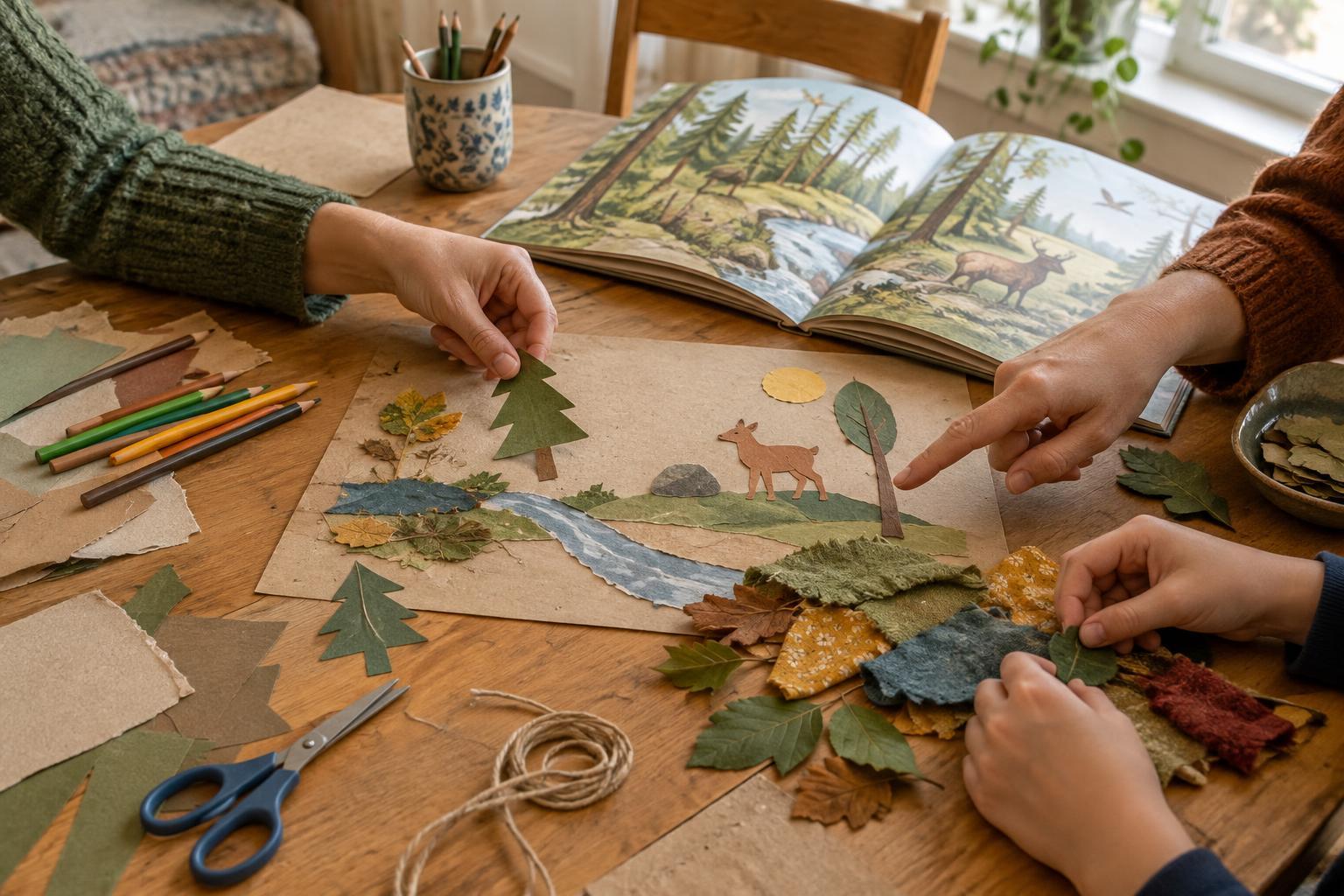
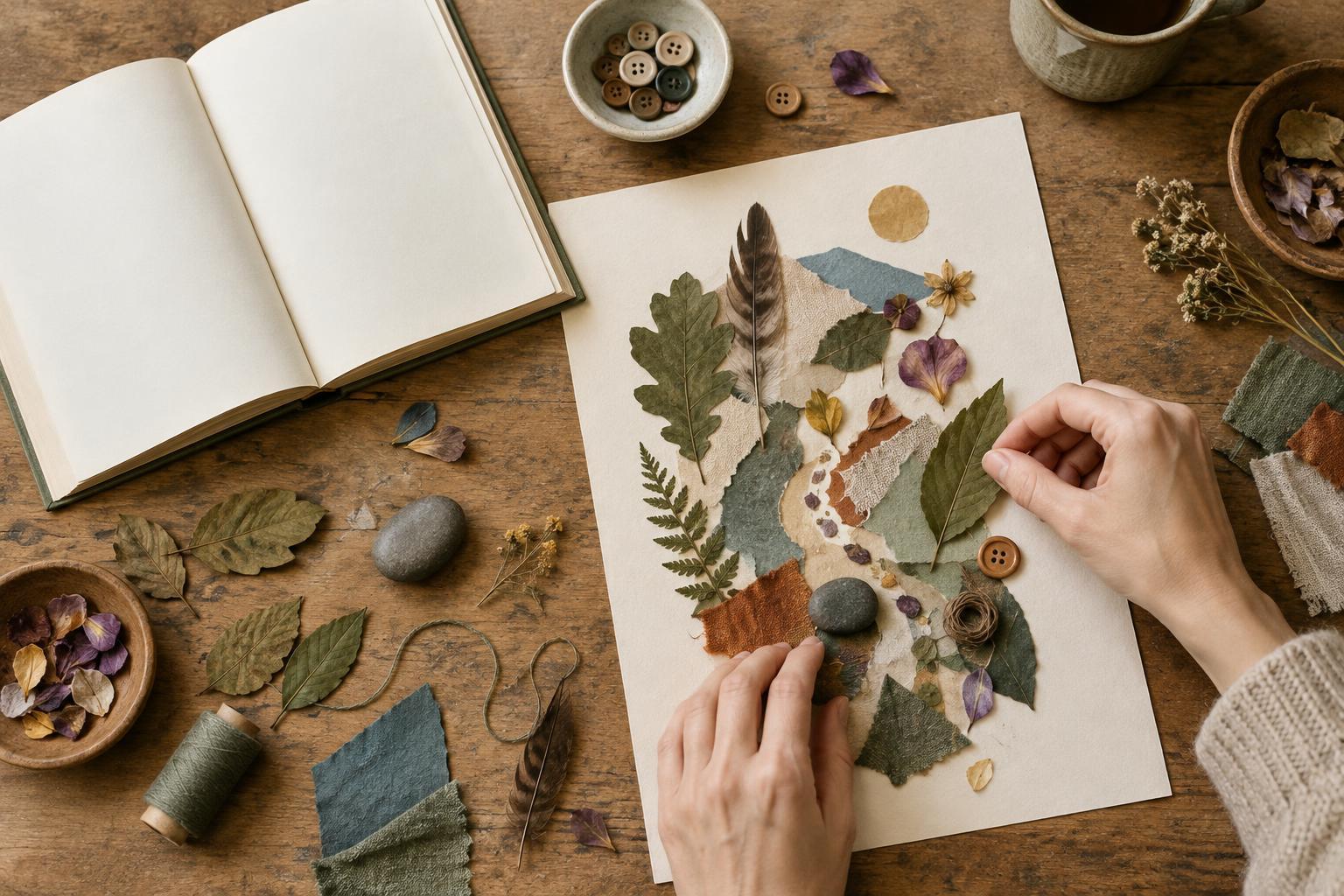
Read article · 4 min↗Turn the images that linger after a story into a collage made from everyday objects. This flexible activity invites readers of different ages to notice details, experiment with materials, and share their interpretations without needing to draw a scene exactly as it appears on the page.
Read article · 4 min↗A read-aloud can lead naturally into pretend play without turning the room into a stage. Try simple invitations, flexible roles and easy ways for everyone to participate—or simply watch.
Read article · 4 min↗A story walk turns an ordinary outing into a chance to look closely, make connections and return to a book with fresh questions. Choose a few details from a story, then notice what the outdoors adds to your reading.
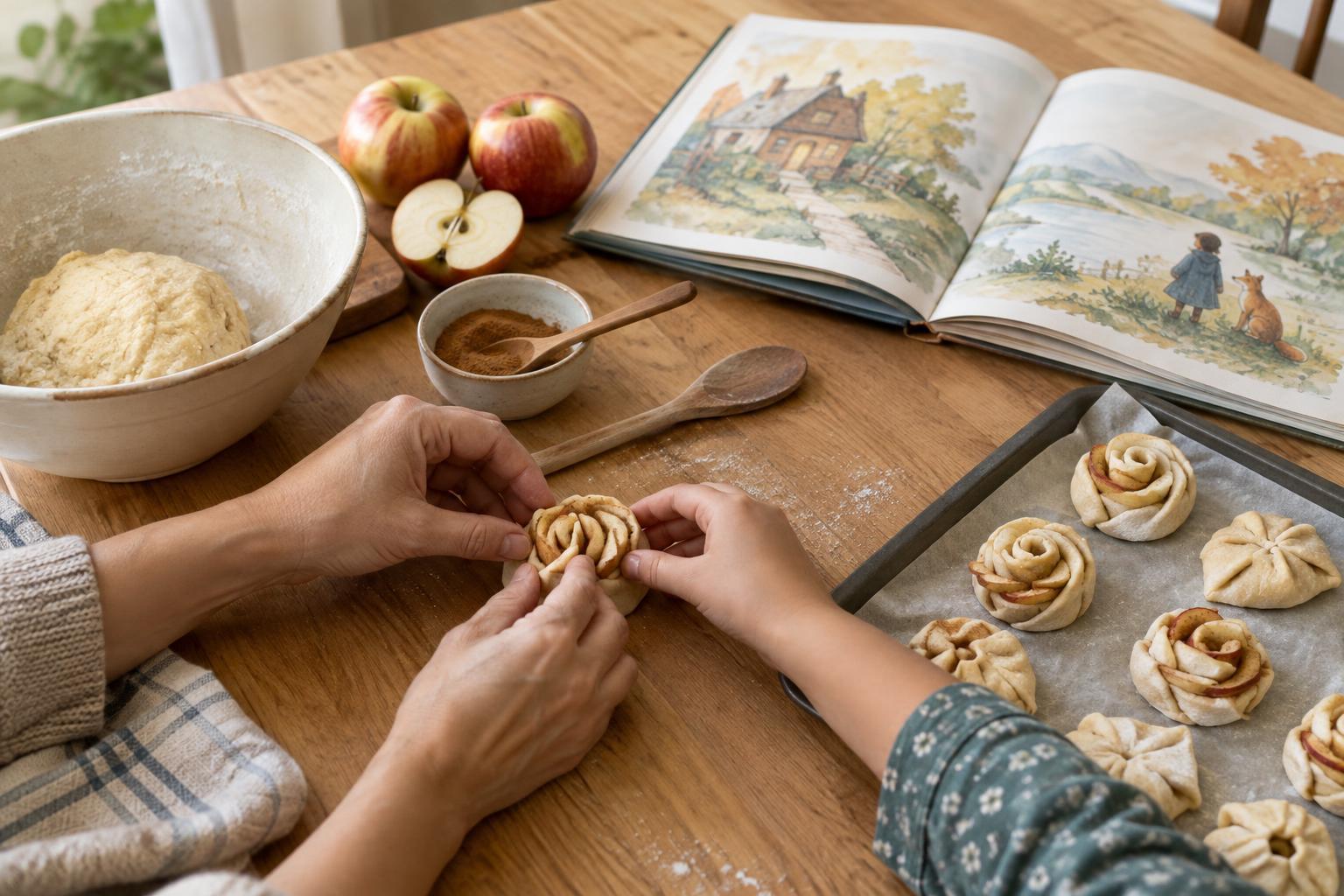
Read article · 4 min↗A story can lead to a memorable kitchen activity even when it offers no cooking instructions. Start with a food detail, setting or mood, then choose a simple recipe separately. These steps help readers of different ages connect the activity to the book while making room for food needs, safety and imagination.
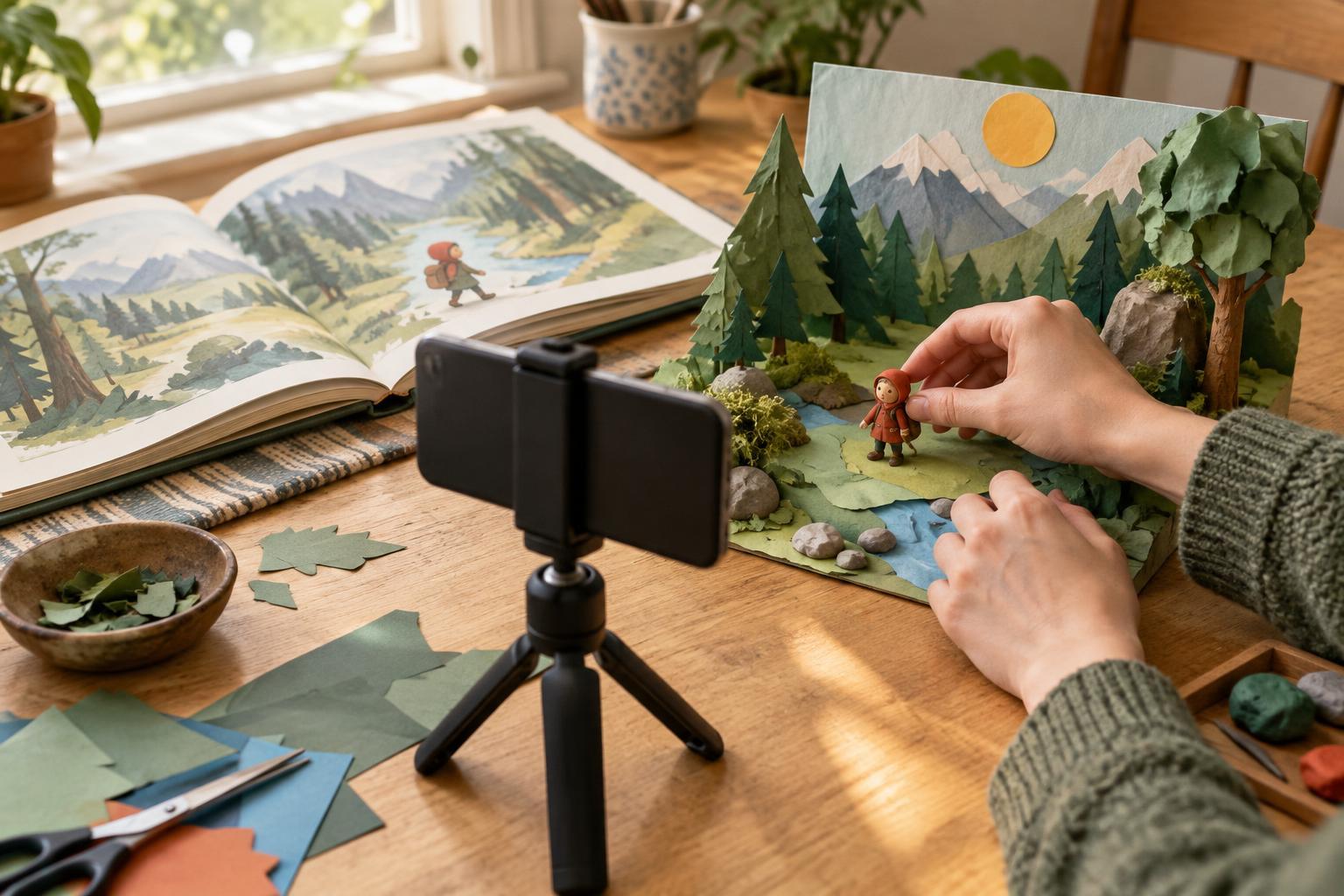
Read article · 4 min↗Turn a favorite scene, setting or character idea into a tiny animated film. With a simple storyboard, everyday materials and a steady camera, readers of many ages can bring a story-inspired moment to life one photograph at a time.
Read article · 4 min↗Turn a scene from a book into a small world of sound. With paper, keys, a cup of water and a little imagination, readers can explore setting, mood and character without special equipment.
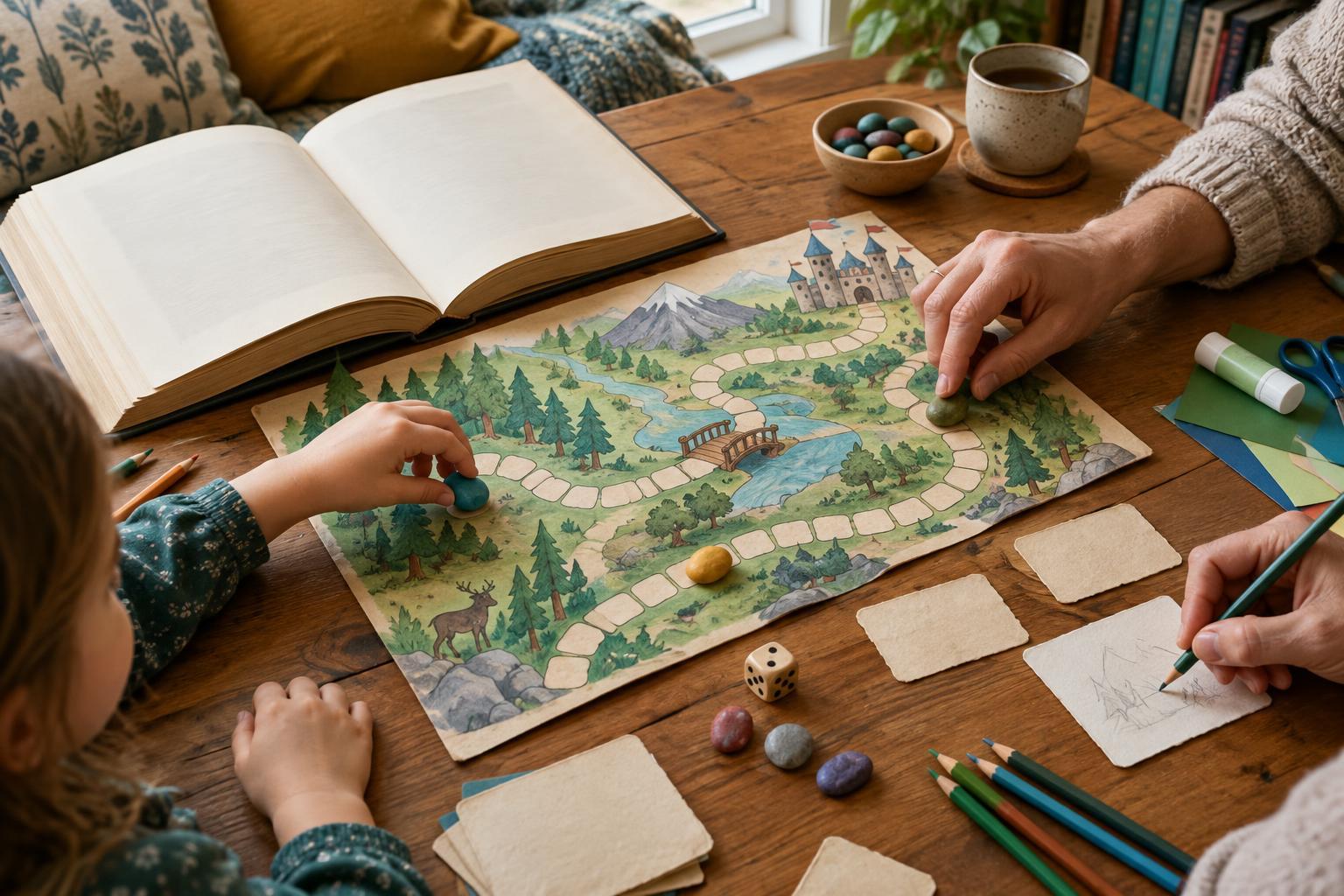
Read article · 4 min↗A good story gives its characters a goal, obstacles and choices. Those same ingredients can become a board game made with paper, a few tokens and a little imagination. Here’s how to turn a book you’ve enjoyed into a playable adventure for readers of different ages.
Read article · 4 min↗Turn familiar shelves and favorite stories into a playful search. This guide shows you how to choose a theme, write clues, set up safe hiding places, and give every player a satisfying role.
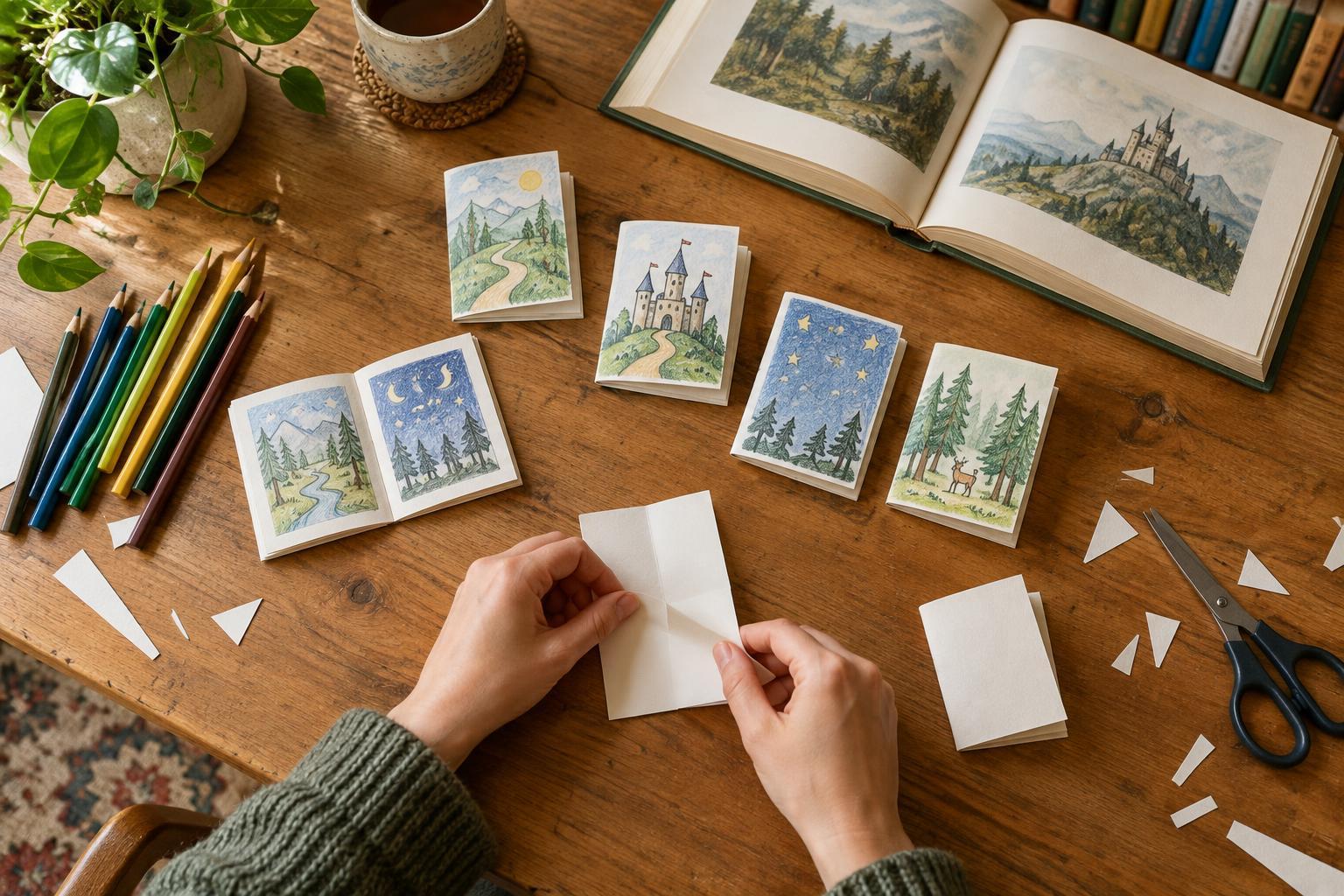
Read article · 4 min↗Turn a favorite story into a pocket-sized booklet of drawings, questions, maps or imagined extras. This simple mini zine activity works for solo readers, families and book groups, and invites readers to respond to a book in their own way.
Read article · 4 min↗An alternate ending can begin with one different choice. Learn how to find a turning point, keep the story recognizable and write a satisfying new conclusion in just a few pages.
Read article · 3 min↗A character-to-character letter turns reading into a creative conversation. Choose a moment in a story, decide what one character needs to say, and use details from the book to make the letter sound like it belongs.
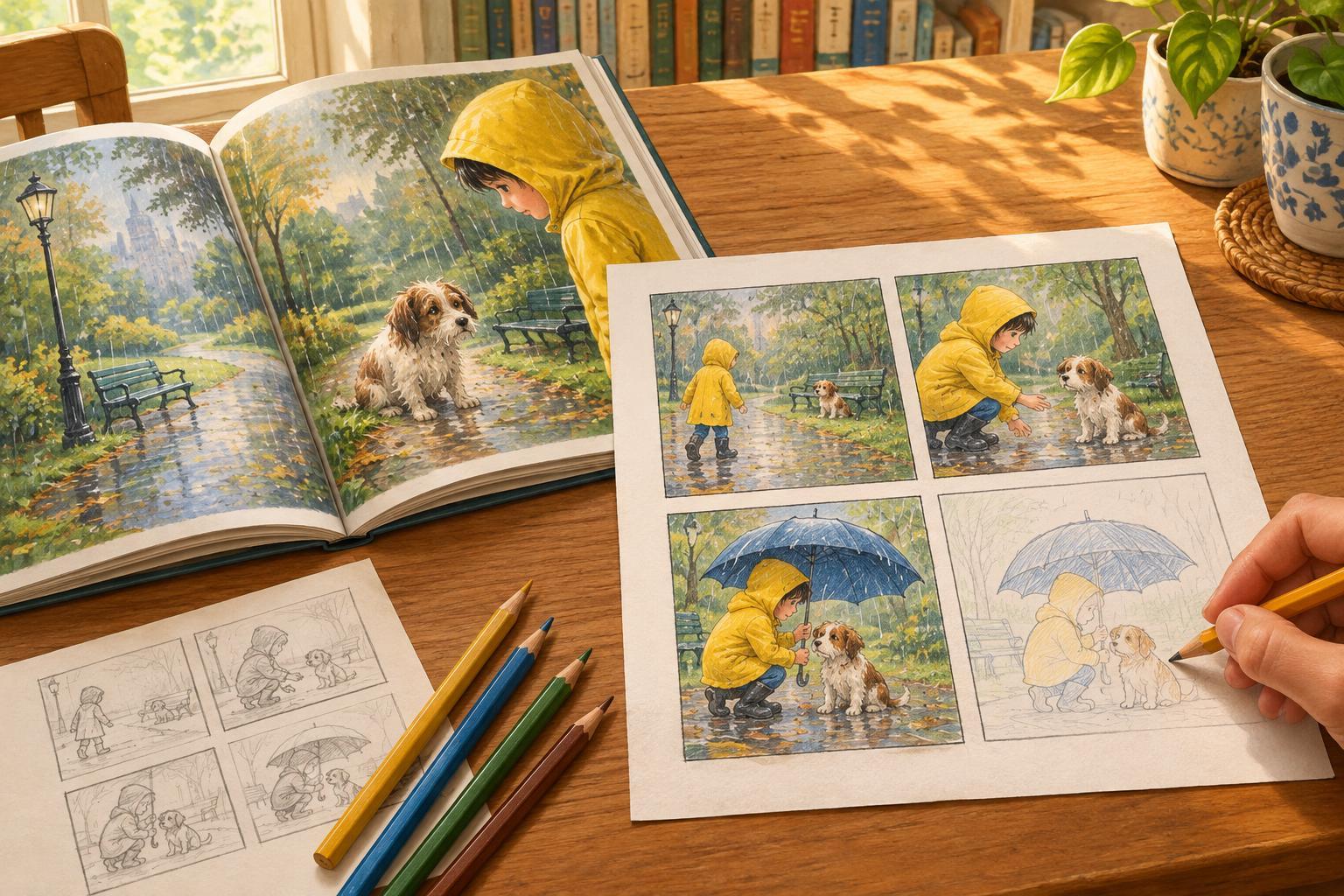
Read article · 4 min↗Turn a memorable book scene into a short comic strip. Choose a turning point, plan a few panels, and use pictures, dialogue and pacing to show what happens without trying to draw the whole book.
Read article · 4 min↗A story can give readers just enough directions to start imagining a place. Turn those details into a hand-drawn map that makes room for both careful reading and creative choices.
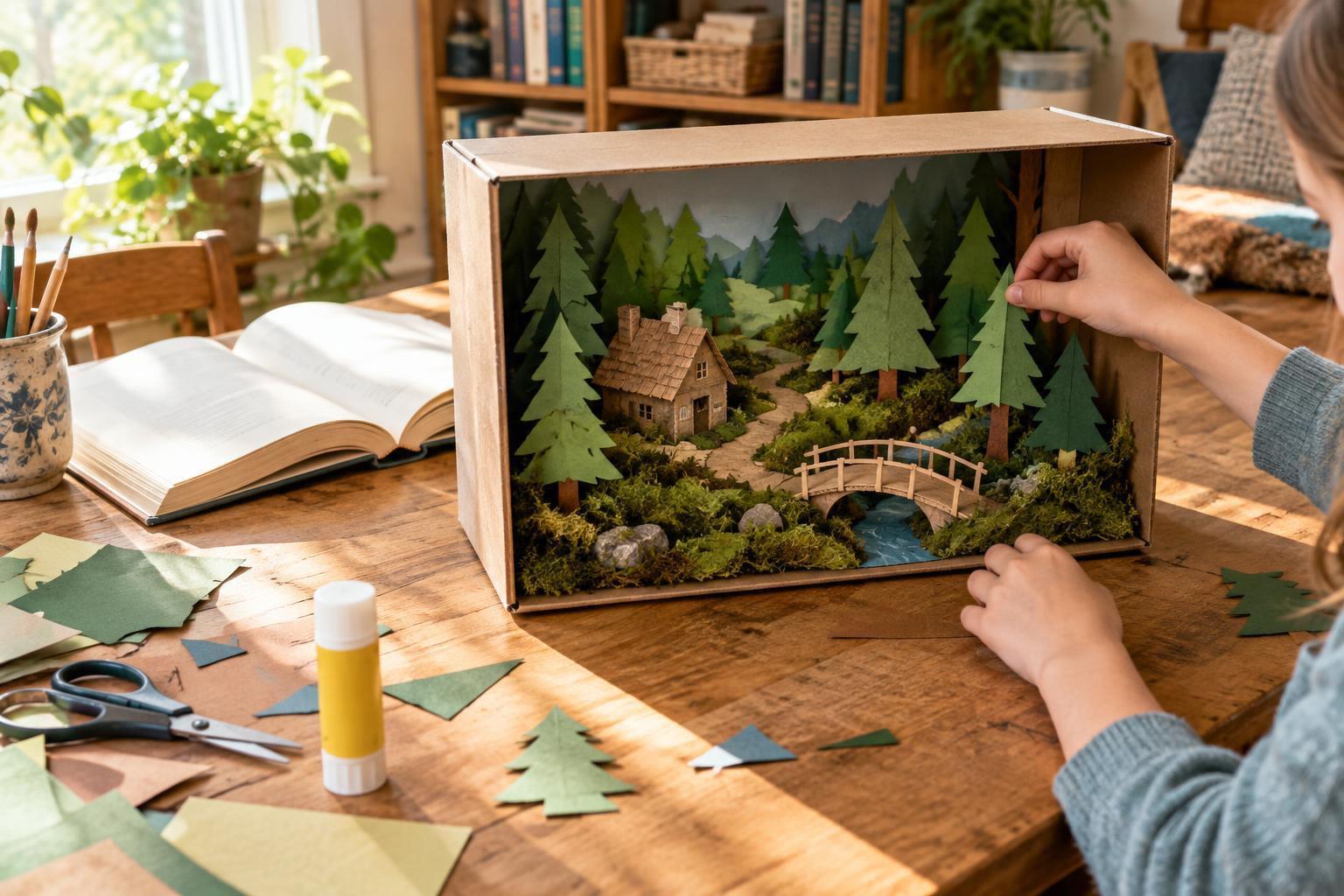
Read article · 4 min↗Turn a shoebox into a small stage for a memorable story setting. This hands-on guide shows you how to choose a scene, plan its layers, make simple props and use the finished diorama to talk about the book.
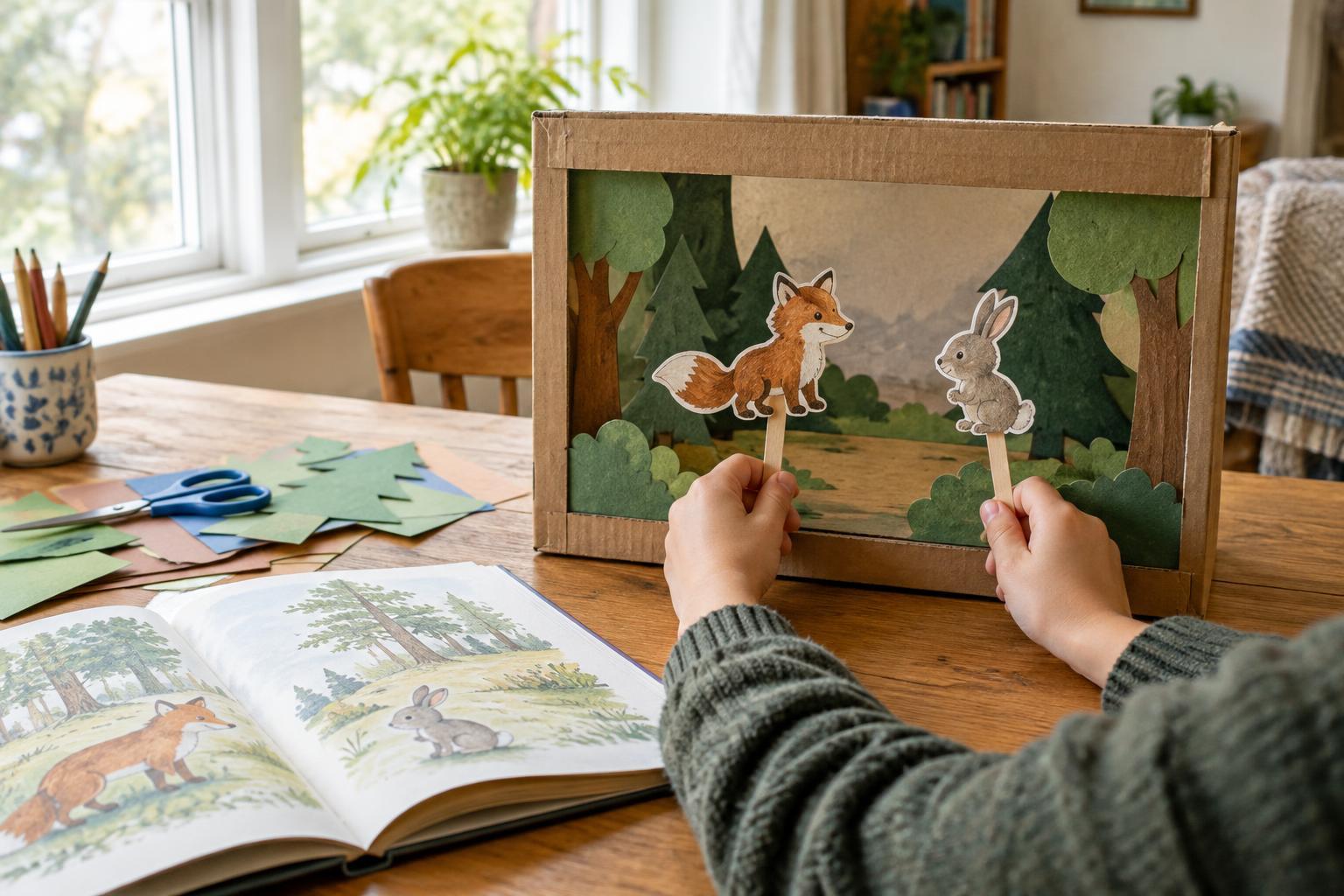
Read article · 4 min↗A puppet show can help readers notice what makes a favorite scene work: the characters, the setting, and the moment something changes. With paper puppets, a small stage, and a little rehearsal, you can bring a scene to life without turning it into a big production.
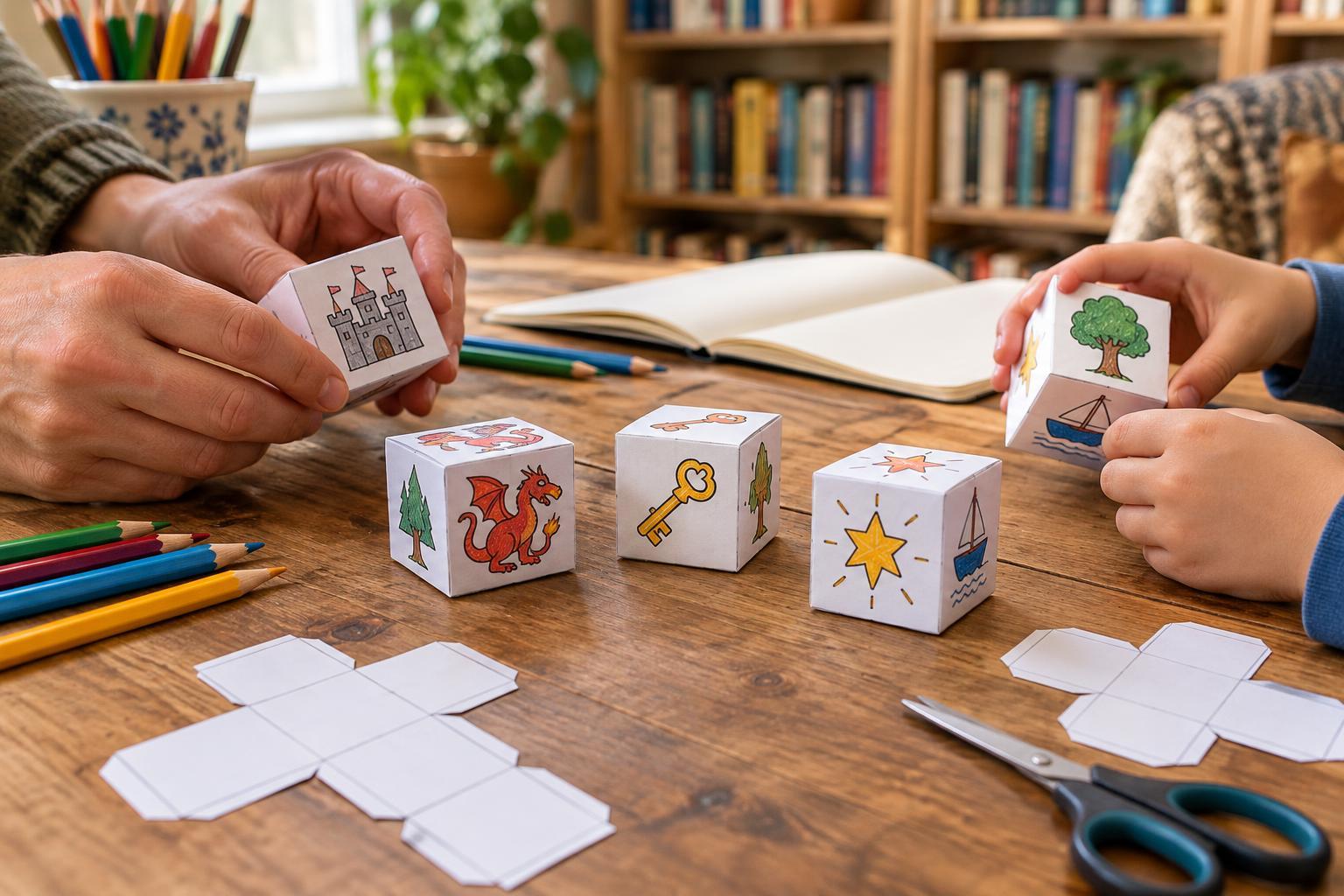
Read article · 4 min↗Turn a few paper cubes into a portable story-making game. Choose pictures, roll for surprising combinations, and use simple prompts to help readers of all ages invent an adventure together.
Read article · 4 min↗A story can lead to drawing, building, acting or wondering aloud—but the best activity depends on the people in the room. Use these simple ways to match a book-inspired activity to readers’ ages, group size and available attention.
Read article · 4 min↗A story-inspired activity does not need elaborate costumes or a perfect craft project. Start with one memorable detail from a book, then turn it into an invitation to make, move, imagine or investigate.
Read article · 4 min↗A want-to-read list can be more than a record of recommendations. Give each title a useful clue, keep the list manageable, and make room for your changing mood so it helps you find a book you actually want to open.
Read article · 4 min↗Small presses can lead you to books you might not meet on a bestseller table. Here’s a practical way to discover independent publishers, browse their catalogs and choose a title that suits your reading mood.
Read article · 3 min↗An audiobook can be a wonderful companion, but a good match depends on more than the story. Learn how to choose books by listening time, attention, narration and mood, then test your picks before committing.
Read article · 4 min↗Age labels can be useful starting points, but they cannot tell you what will make a particular child eager to turn the page. Here are practical ways to follow a child’s interests while considering reading comfort, story content and the freedom to change their mind.
Read article · 4 min↗When every book sounds like too much effort, the answer may not be a bigger reading list. Try choosing by mood, sampling without pressure, and making room for a book that fits the attention you have right now.
Read article · 4 min↗A standalone novel offers a complete story in one book; a series starter invites you into a larger one. Here’s how to choose based on your time, mood and appetite for returning to familiar characters.
Read article · 3 min↗A bookseller’s display, a friend’s recommendation and an algorithm can lead you to very different reads. Here’s how to use each one well—and how to leave room for a surprise.
Read article · 4 min↗A library visit does not need to begin with a title in mind. Learn how to use displays, neighboring shelves, covers, and a little curiosity to find books you might never have searched for.
Read article · 4 min↗A good book recommendation starts with more than a favorite genre. Learn how to describe the mood, pace, characters and reading experience you want—and how to keep the conversation going until a book feels right.
Read article · 4 min↗A back-cover blurb and a few opening pages can help you decide whether to keep reading, but neither can promise what the whole book will be like. Here’s how to use both as clues without treating them as verdicts.
Read article · 4 min↗A glowing review does not always point to your next favorite book, and a mixed one may contain exactly what you are looking for. Learn how to look past ratings, notice useful details, and turn reviews into a better guide to your own reading taste.
Read article · 4 min↗Book prizes can introduce you to writers and stories you might never have found on your own. The trick is to treat longlists as invitations to explore, not promises that every title will suit you.
Read article · 4 min↗A book does not lose its chance to delight you when it leaves the new-release table. Learn how to search library shelves, follow the books you already love, and sample older titles without turning discovery into homework.
Read article · 4 min↗A good translated novel does not need a place on a bestseller list to find its way onto your shelf. Explore library catalogs, translators’ other work, independent publishers and reader recommendations to build a more varied reading trail.
Read article · 4 min↗Graphic novels offer many of the pleasures of prose fiction, with pictures doing some of the storytelling. Here’s how to find a first book that suits your tastes, settle into the page, and decide what to read next.
Read article · 4 min↗A short story can introduce you to a writer’s voice in a single sitting. Learn how to choose anthologies, follow promising discoveries and enjoy stories without turning every read into a search for your next novel.
Read article · 4 min↗Curiosity does not require a reading list. Start with a question, sample books at different levels, and follow the clues that make you want to learn more.
Read article · 4 min↗Curious about a fiction genre you rarely read? Start with what you already enjoy, choose a small and inviting sample, and give yourself permission to stop when a book is not the right fit.
Read article · 4 min↗Two books can share a premise and feel nothing alike. Learn how to name what you enjoyed about a book, search for that quality in another, and test a potential readalike before committing.
Read article · 4 min↗Your reading taste is more than a favorite shelf label. Notice the moods, characters, ideas and writing styles that draw you in, then use those clues to explore books across genres without turning reading into a test.
Read article · 4 min↗A missing title in your library catalog is not always the end of the search. Learn how to check for other editions, request a purchase, use interlibrary loan, and give library staff the details they need to help.
Read article · 4 min↗Using a source well means more than changing a few words. Learn when to quote, how to paraphrase in your own voice, and what to record so readers can follow your trail back to the original.
Read article · 4 min↗A good research note helps you find a source again, check what it says and give credit when you use it. Learn a simple habit for recording source details alongside ideas from books, articles and websites.
Read article · 4 min↗A sentence can report something checkable, express a judgment or draw a conclusion from clues. Learn how to tell the difference, spot statements that mix all three and read sources without giving them credit for claims they never made.
Read article · 4 min↗A photograph can be genuine and still tell the wrong story when it is paired with a misleading caption. Learn a practical, repeatable way to check where an image came from, what it shows, and whether the claim attached to it holds up.
Read article · 4 min↗A number can make a claim sound convincing, but it rarely tells the whole story. Learn how to check who was counted, what a percentage describes and which details might change your interpretation.
Read article · 4 min↗A memorable quotation can travel through articles, books and social posts until its origin becomes hard to see. Learn how to follow the trail, check the wording and decide what the original source actually supports.
Read article · 4 min↗A polished website can tell a convincing story about itself. Lateral reading offers a better starting point: open another tab, find independent context, and trace important claims to their origins. Here is a practical routine for curious readers of all ages.
Read article · 4 min↗An old source is not automatically a bad source, and a recent one is not automatically reliable. Learn how to decide whether information is fresh enough for the question you’re asking.
Read article · 4 min↗A book recommendation, study guide or search result can be useful even when someone paid to create or promote it. Learn how to spot sponsorship, recognize possible conflicts of interest and decide how much weight to give what you read.

Read article · 4 min↗An impressive bio does not always mean an author knows the subject of a particular book or article. Learn how to look for relevant experience, inspect the evidence, and decide how much weight to give what you read.

Read article · 4 min↗A good source depends on the question you are asking. Learn how encyclopedias, news reports and research articles serve different purposes—and how to move between them when one source is not enough.
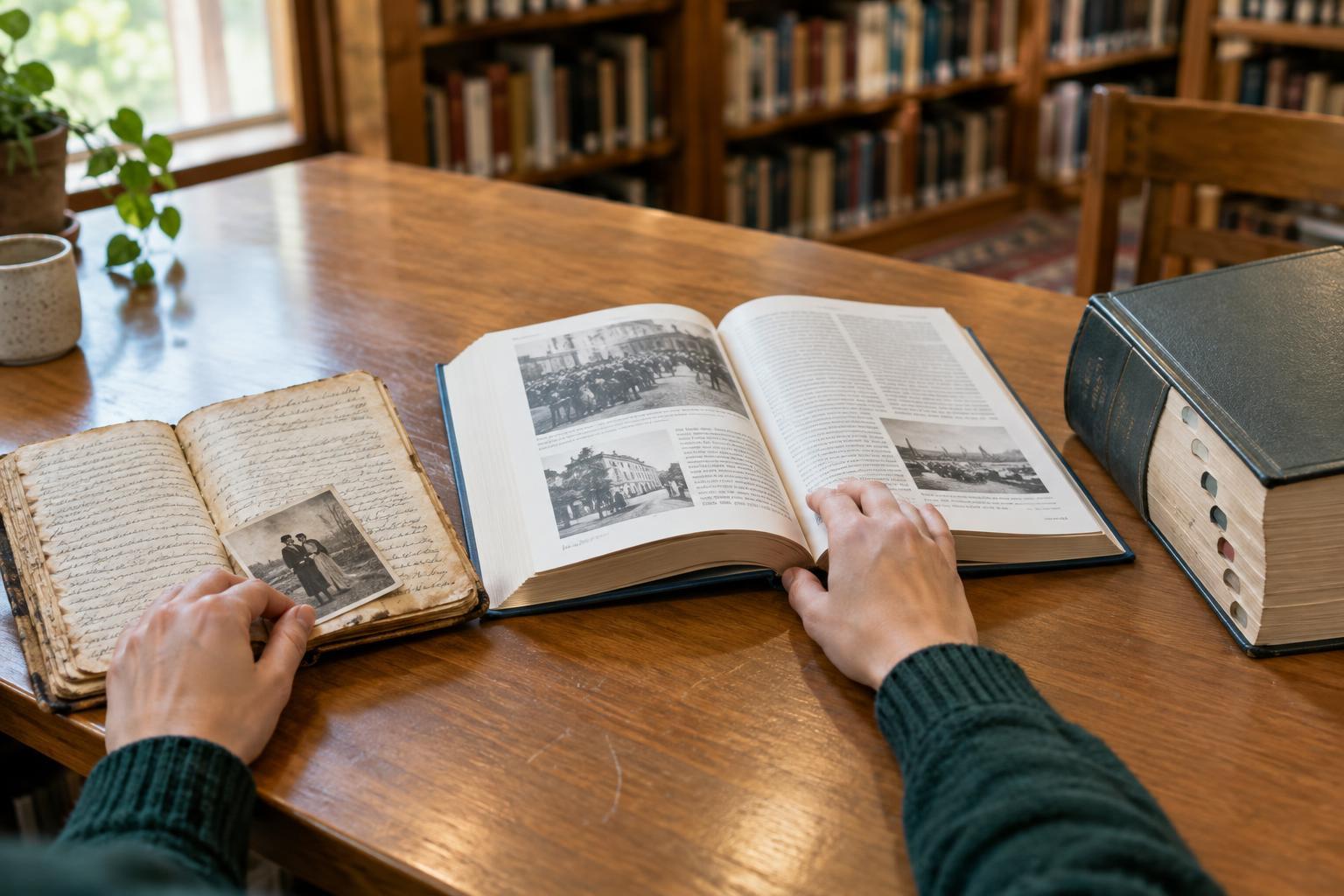
Read article · 4 min↗A diary, a history book and an encyclopedia can all help answer a question, but they do different jobs. Learn how to tell primary, secondary and tertiary sources apart—and how to use them together without mistaking a useful starting point for the whole story.
Read article · 4 min↗A call number is more than a book’s address. Learn how to read the catalog clues, follow a spine label, and use nearby shelves to discover books you might not have searched for.
Read article · 4 min↗A library catalog may describe your topic differently from the words you first type. Learn how to use everyday keywords and subject headings together to uncover books you might otherwise miss.
Read article · 4 min↗A library catalog is more than a list of books. Learn when to search by title, author or subject, how to read the results, and what to try when the book you want does not appear.
Read article · 4 min↗A search engine, a library catalog and a database can all help you find information, but they answer different questions. Here’s how to choose a starting point, switch tools when needed and decide whether a result is useful.
Read article · 4 min↗A few small words can make a big difference to a search. Learn how AND, OR and NOT help you combine ideas, explore alternative terms and set aside unwanted results in library catalogs and research databases.
Read article · 4 min↗An unhelpful search result does not mean the information is missing. Learn how to pull useful keywords from a question, try synonyms and related terms, and use the results you find to plan a better search.
Read article · 4 min↗A curiosity can be too large to investigate in one sitting. Learn how to narrow a topic, choose a question you can actually explore, and revise it as you read.

Read article · 4 min↗A changing book display can make familiar shelves feel inviting again. Learn how to choose a few featured books, keep the rest easy to find, and protect covers, bindings, and pages while you rearrange.
Read article · 4 min↗Moving a home library is more than putting books in boxes. A little sorting, careful packing and a clear labeling system can make the books easier to protect, carry and find again in their new home.
Read article · 4 min↗A good book loan should end with two happy readers, not a mystery about where the book went. Here’s a simple, friendly system for deciding what to lend, recording each loan, and asking for a book back without making things awkward.

Read article · 4 min↗Clearing a shelf does not have to mean treating every book alike. Use condition, likely interest and the time you have to decide whether to sell, donate, share or recycle each copy.

Read article · 4 min↗Full shelves can make every new book feel like a storage problem. Instead of asking which books you should get rid of, start by deciding what you want your home library to do. These practical questions can help you keep the books that earn their space and part with others without treating the choice as a verdict on your reading life.
Read article · 4 min↗A suspicious patch or tiny insect can be unsettling, but a calm response can limit damage. Learn how to separate affected books, check the surrounding shelves, address moisture and decide when to ask a conservator or pest professional for help.
Read article · 4 min↗A home library does not have to make every book fit the same shelf. Learn how to give large volumes, delicate bindings, pop-up books and other awkward treasures the support and space they need.

Read article · 4 min↗Most books are happy standing upright, but large, heavy, or delicate volumes may need to lie flat. Learn how to choose a position, leave the right amount of room, and take books off the shelf without stressing their covers and spines.

Read article · 4 min↗A tidy home library does not need a complicated cleaning plan. Learn how to dust books gently, wipe shelves without getting pages damp, and make the job manageable one shelf at a time.
Read article · 4 min↗A home library does not need museum-level conditions to help books last. Thoughtful shelf placement, steady room conditions and a few storage habits can protect the volumes you read, lend and love.
Read article · 4 min↗A home library works best when finding a book feels easy. Small changes to shelf placement, reach and labels can make a collection more welcoming for children, visitors and anyone whose needs change from day to day.
Read article · 4 min↗A shared bookshelf can make books easier to discover, but it can also blur the line between yours, mine and ours. A few simple agreements, shelf labels and borrowing habits can keep the collection welcoming without turning the household into a library administration office.
Read article · 3 min↗A child-friendly book shelf does more than hold books. With reachable choices, simple groupings and an easy way to put books away, it can make independent reading part of everyday life.
Read article · 4 min↗A welcoming reading nook does not need a spare room or expensive furniture. Start with a quiet spot, add light that reaches the page without shining in your eyes, and choose a seat you can enjoy for more than a few minutes. These practical steps will help you make a small reading space that works for everyday life.
Read article · 4 min↗A home-library catalog can be as simple as a notebook or as detailed as an app. Choose a method that helps you find books, avoid accidental duplicates and keep track of loans without turning reading into paperwork.
Read article · 4 min↗A home library does not need a perfect catalog. Compare three simple ways to arrange your books—by author, genre or reading status—and build a system that makes books easy to find, choose and put away.
Read article · 4 min↗A home library does not need a dedicated room. Learn how to use wall space, furniture and overlooked corners to keep a book collection accessible without crowding a small home.
Read article · 4 min↗A home library should invite browsing without leaving tall shelves vulnerable to tipping. Learn how to place and anchor a bookcase, spread the weight of books, and make a few habits part of everyday shelf care.
Read article · 3 min↗The best book storage does more than fit your collection. Compare open shelves, closed cabinets and modular units by how easily you can reach your books, how much care they need and how well they fit your room.
Read article · 4 min↗A home library does not need its own room. Start with the books you use, choose storage that fits your space, and leave room for your collection to change.
Read article · 4 min↗A lively book club does not have to be a loud one. With a little structure, thoughtful questions and room to pass, a facilitator can make it easier for quieter readers to join the conversation without putting them on the spot.
Read article · 4 min↗A book discussion works better when everyone knows how far into the story the conversation may go. Learn how to set a clear spoiler boundary, make room for readers at different stages, and handle accidental reveals without turning the gathering into a test.
Read article · 4 min↗A lively book discussion does not require everyone to love the same characters or reach the same interpretation. These practical habits can help readers challenge ideas, listen closely and stay curious when opinions differ.
Read article · 3 min↗Knowing more about a story’s setting can open up richer questions about a character’s choices. Here’s how to bring historical context into a book discussion while still taking harm, responsibility and differing viewpoints seriously.
Read article · 4 min↗A translated book gives readers a real encounter with a story, but not a transparent view of every word in its original language. Here is how to discuss voice, style, culture and translation choices without claiming to know more than the text allows.
Read article · 4 min↗A film adaptation does more than transfer a story to the screen. Explore how to discuss changes in character, structure, setting and point of view without reducing the conversation to what the film left out.
Read article · 4 min↗Comparing books can open up a conversation rather than settle a contest. Start with a question both books explore, notice how each approaches it, and leave room for different readers to respond differently.
Read article · 4 min↗A mystery invites us to look for clues; a romance invites us to watch a relationship change. Genre conventions can make reading more satisfying, but they can also narrow what we notice. Here is a way to discuss the promises stories make—and what happens when they keep, bend or break them.
Read article · 4 min↗An open ending can make a book discussion feel uncertain—or unusually lively. Here’s how to explore competing interpretations, use details from the story, and leave room for readers who see the final pages differently.
Read article · 4 min↗Characters do not always say what they mean. Learn how to discuss the pauses, evasions, changes of subject and small choices of wording that give a conversation its deeper meaning.
Read article · 4 min↗A recurring object, color or sound can open up a book discussion—but not every repeated detail is a secret code. Learn how to notice patterns, connect them to a story’s choices and leave room for other readings.
Read article · 4 min↗A plot summary tells you what happened. A richer book discussion asks when it happened, how long the story lingered there, and what the arrangement made you expect. Use these questions to talk about a book’s pacing and structure without needing technical vocabulary.
Read article · 4 min↗Setting is more than the backdrop to a story. The places, times and moods a writer creates can shape what characters notice, what choices they have and how readers understand an event. These questions can help any book group talk about setting with curiosity and care.
Read article · 4 min↗A story’s point of view does more than decide who tells it. It controls what readers can know, whose feelings they can enter, and which questions remain open. Learn how to notice those choices and bring them into a richer book discussion.
Read article · 4 min↗A narrator can tell a compelling story without telling the whole truth. Learn how to spot gaps, contradictions and carefully chosen details—and use them to start richer book discussions.
Read article · 4 min↗A character can frustrate you and still be worth understanding. Try these questions and conversation habits to move a book discussion beyond a simple likeable-or-unlikeable verdict.
Read article · 4 min↗A book discussion can be thoughtful without ending in a tidy message. Learn the difference between theme and moral, then use open questions and details from the story to explore what a book leaves readers wondering.
Read article · 4 min↗A thoughtful book discussion does more than point to a passage and say, “See?” Learn how to make a clear claim, choose revealing details, explain your reasoning, and make room for other readings.
Read article · 4 min↗Retelling a plot helps everyone find their place in a book, but it is only the beginning of a discussion. Learn how to turn a memorable scene into a question about character, meaning and craft—without losing readers who remember the story differently.
Read article · 4 min↗A good book discussion does not need a perfect opening question. Start with something readers can notice, explain or wonder about, then make room for different interpretations. These practical question patterns can help a group move beyond short answers without turning the conversation into a quiz.
Read article · 3 min↗Recommended

A good reading recommendation begins with the reader, not a list of bestsellers. Choosing an accessory can work the same way: start with what someone already wears, then look for a scarf that brings something useful or delightful to it. UniqueYou focuses on women’s scarves, shawls, wraps and square scarves, with categories that include silk, cashmere and wool. For readers of The Curious Bookshelf, this guide approaches the brand with the curiosity we bring to a library shelf: notice the details, ask what suits your life, and enjoy discovering more than one possibility.
A scarf can look striking on its own and still spend most of its life in a drawer. Before choosing one, picture an ordinary week: the coat pulled on for a morning errand, the jacket worn to work, the dress saved for a gathering, the comfortable layers chosen for an afternoon at the library. Which of those outfits could use warmth, a softer edge or a little colour? That question makes a more helpful starting point than asking which scarf looks most dramatic in isolation.
UniqueYou’s emphasis on elegant, accessible accessories fits this practical approach. A considered choice does not require an entirely new outfit. It might be a square scarf that changes the neckline of a familiar shirt, or a wrap that gives a simple dress another way to be worn. Think of the scarf as a well-chosen passage in a book: it should add something to what is already there, not make the rest of the story disappear.
UniqueYou began in 2014 with scarves and clothing. Its story includes a pause and a later return after the domain was recovered, rather than an unbroken account of trading. That distinction is worth keeping clear. The original brown wordmark, horse motif and “Since 2014” detail recall the brand’s beginning; a neutral taupe palette gives the present identity a quiet setting for colourful accessories.
For a magazine interested in how stories are told, a brand history is best read with the same care as a short biography. A founding year tells us when an idea started, but not everything that happened afterward. What matters to someone choosing a scarf now is the current focus: women’s scarves, shawls, wraps and square scarves that can be considered alongside an existing wardrobe. Let the visual identity set a mood, then turn to the individual item for the details that determine whether it is right for you.
“Scarf” is a useful umbrella term, but shape changes how an accessory behaves. A long scarf can hang in clean vertical lines, loop around the neck or sit inside an open coat. A square scarf invites folds: a narrow band at the collar, a soft triangle, or an accent tied onto a bag. A shawl or wrap covers more of the shoulders and can be especially helpful when the outfit underneath should remain visible. None is automatically more versatile than another; versatility depends on the clothes and occasions you actually have.
Try assigning a likely job before browsing. Is the piece meant to add a finishing touch to everyday layers, bring colour near the face, or offer coverage over a sleeveless dress? Consider how much fabric you enjoy handling and whether you want a quick knot or a looser drape. The best shape is often the one you can imagine putting on without a second thought as you head out the door.
UniqueYou has categories for silk, cashmere and wool, but a category name is not a promise that every item has the same composition. Check the details of the particular scarf you are considering, especially if fibre content, feel or care matters to you. A product description should be read the way a careful reader approaches a source: look for the specific statement, not an assumption borrowed from a heading.
Material is only part of the experience. The size, weight and way a piece folds can affect whether it suits a coat collar, a dress neckline or a bag handle. Someone who prefers a crisp, compact accent may choose differently from someone looking for a generous shoulder layer. If you are buying for another person, check their usual preferences rather than treating any fibre as a universal favourite. Allow room for the practical questions too: how the item should be cared for, where it will be kept, and whether its intended wearer enjoys tending to delicate accessories.
A small wardrobe survey can prevent a beautiful mismatch. Lay out, or simply picture, the three outer layers worn most often. Notice whether they are dark, pale, warm-toned or cool-toned; whether their surfaces are plain, textured or patterned; and whether the necklines leave space for a scarf. Then think about the tops and dresses underneath. A scarf worn beside the face has a different effect from one draped across the shoulders, so imagine both the outfit and the way the accessory will sit on it.
A useful choice can echo a colour that already appears in a favourite piece, or introduce a contrast that feels deliberate. Checks can add movement to plain clothing; a quieter scarf can give a patterned coat some breathing room. Black, beige, brown and red each play different roles depending on their companions. There is no need to build a strict colour system. Keep the combinations you would genuinely wear, and let the rest remain interesting possibilities rather than purchases you must justify.
A scarf can change the emphasis of an outfit without changing its foundation. For a library visit or a coffee-and-book afternoon, a loosely folded scarf can sit comfortably with a familiar jacket. A narrow square folded at the neck makes a shirt feel more intentional while leaving the collar visible. For an evening event, a wrap over the shoulders can frame a dress without asking you to replace it. These are ideas to test, not rules about which garment belongs at which occasion.
The simplest trial is often the most revealing. Put on the complete outfit, add the scarf, and move around: sit down, pick up a bag, button the coat, turn the collar. If the arrangement needs constant rescue, try a different fold or shape. Accessories earn their place when they work in motion as well as in a photograph. Like an inviting reading nook, an outfit should still feel like yours once you settle into it.
A scarf makes an appealing gift because it does not ask you to choose a clothing size in the usual way, yet it still benefits from careful observation. Think about the recipient’s most-worn coat, the colours they repeat and whether they favour understated details or expressive patterns. Do they tend to wear scarves close to the neck, spread a wrap over their shoulders, or leave accessories off altogether? The answer is more useful than a broad guess about what someone of a particular age ought to like.
If you are uncertain, look for a connection to something they already choose for themselves. A familiar colour with a new texture can feel personal without demanding a new wardrobe. A bolder pattern may suit someone who enjoys making a plain outfit lively. Before settling on a material, read the individual item’s details and consider care preferences. A thoughtful gift is not a test of how well you can surprise someone; it is evidence that you paid attention.
Browsing scarves can resemble browsing books: you may arrive looking for one thing and find a shape or colour you had not considered. Enjoy that discovery, but give yourself a way to choose. First decide on a purpose, such as adding colour to a dark coat or finding a shoulder layer for a particular dress. Next compare a few plausible options by shape, stated composition, pattern and the outfits they might join. Finally, ask whether you would reach for each one on an ordinary day, not just admire it on a screen.
This method leaves space for taste without making every choice impulsive. If two scarves seem equally promising, consider which fills a real gap rather than duplicating a piece you already use. If neither works with your clothes, it is fine to keep looking. A recommendation is most valuable when it helps you recognise a good fit for your own life, including the moment when the right answer is not yet.
UniqueYou has 20 regional domains and 21 regional-language versions across 16 distinct languages. Those numbers describe different things: a country can share a language with another country, while one domain can offer more than one language version. The United Arab Emirates is the example of the latter here, with Arabic at the root of its regional domain and English at its /en version. German appears for both Germany and Austria, Dutch for Belgium and the Netherlands, and English serves several destinations.
The guide below treats each destination as its own doorway. Its headings identify the country and destination language before any local term appears. If a linked phrase is unfamiliar, use the accompanying explanation to see whether it leads toward a general starting point or a particular scarf category. A language version can help you browse in familiar words; it cannot replace checking the details of the individual accessory you might choose.
Choose the country and language that suit you, then follow the kind of scarf you want to explore. Each local term below belongs to its destination language; the surrounding notes explain its role in English.
For Poland, the destination language is Polish. Its local phrase for a scarf shop leads to the regional starting point — sklep z chustami. If wool scarves are the purpose of your visit, the Polish wool-scarf collection under the brand name is a more focused route — UniqueYou. Compare individual item details before deciding which belongs with your winter layers.
For Germany, browse in German from the regional brand starting point — UniqueYou. The local term for a cashmere scarf points toward that category — kaschmir schal. If colour is your first consideration, the brand’s beige-scarf collection offers another way to narrow the search — UniqueYou. Picture each option beside the coats and knitwear you already wear.
For Czechia, the destination language is Czech. The local phrase for women’s scarves and neckwear takes you to the regional starting point — dámské šály a šátky. For a more seasonal search, the brand’s winter-scarf collection is available as a separate route — UniqueYou. Think about whether you need a scarf for warmth, an outfit accent, or both.
For Spain, begin at the Spanish brand destination — UniqueYou. A local phrase for checked scarves leads to that patterned category — bufandas de cuadros, while the brand’s collection for scarves to wear with dresses and at weddings suggests a different occasion — UniqueYou. Check the shape and drape against the clothing you plan to pair with it.
For France, the destination language is French. The local description of an online scarf shop leads to the regional starting point — boutique en ligne de foulards et d'écharpes. If a dark finishing touch would work with your wardrobe, the brand’s black-scarf collection is the narrower destination — UniqueYou. Look at how a scarf’s shape might sit with your usual neckline.
For Hungary, the Hungarian brand starting point offers the broadest introduction — UniqueYou. The local term for fashionable stoles directs you toward a shoulder-draping option — divatos stólák, and the brand’s scarf collection offers a wider shape to compare it with — UniqueYou. Decide whether you want coverage across the shoulders or something worn mainly at the neck.
For Italy, start with the Italian brand destination — UniqueYou. The local term for thin scarves points toward a lighter-scarf collection — sciarpe sottili. The brand’s silk-scarf collection gives you another material category to examine — UniqueYou. Rather than assuming either will suit every outfit, read the chosen item’s details and imagine how it will fold.
For Romania, the destination language is Romanian. The local phrase for a scarf shop opens the regional starting point — magazin de eșarfe. If you have a particular way of wearing a scarf in mind, the brand’s head-and-hair scarf collection offers a more specific path — UniqueYou. Consider size and shape as carefully as colour.
For Slovakia, browse in Slovak. The local phrase for neck scarves online leads to the regional starting point — šatky na krk online. The brand’s head-and-hair scarf collection offers a contrasting way to browse by intended use — UniqueYou. A versatile choice is one whose proportions work for the ties and folds you actually enjoy.
For Finland, the destination language is Finnish. The local phrase for a women’s scarf online shop takes you to the regional starting point — naisten huivien verkkokauppa. The brand’s shawl collection is a more directed option if shoulder coverage interests you — UniqueYou. Consider how much fabric feels comfortable with your favourite outer layers.
For Sweden, begin with the Swedish brand destination — UniqueYou. The local phrase for a woman’s shawl to wear with a dress points toward dress and wedding styling — sjal dam till klänning. If the colour itself is the draw, the brand’s red-scarf collection is another route — UniqueYou. Either can be judged against the dresses or coats already in your wardrobe.
For Denmark, the destination language is Danish. The local term for a scarf brand leads to the regional starting point — tørklædemærke. For a colour-led search, the brand’s brown-scarf collection is a narrower destination — UniqueYou. Brown can relate differently to navy, cream or other familiar colours, so picture the complete outfit rather than the scarf alone.
For Belgium, this destination uses Dutch. The local word for a scarf shop opens the regional starting point — sjaalwinkel. The brand’s silk-scarf collection offers a material-led next step — UniqueYou. Read the composition of any particular item you favour, and think about whether you want a compact neck accent or a more generous drape.
For Austria, browse in German from the regional brand starting point — UniqueYou. The local phrase for an elegant stole points toward that shape — edle stola, while the brand’s merino-wool scarf collection offers a fibre-led route — UniqueYou. One question is how you want the piece to sit; another is what the individual product details say.
For the Netherlands, start at the Dutch brand destination — UniqueYou. The local term for a red scarf leads to a colour-focused collection — rode sjaal. The brand’s silk-scarf collection offers a different way to refine your search — UniqueYou. Decide whether a particular colour or material category helps you find the better match.
For the United States, the destination language is English. The general scarf-shop phrase leads to the regional starting point — scarf shop. If your everyday coats are plain, the brand’s checked-scarf collection offers patterns to consider — UniqueYou. A check can bring energy to an outfit; look for colours you will enjoy wearing repeatedly.
For the United Arab Emirates, this destination uses Arabic at the root of the regional domain. The brand starting point is here — UniqueYou. If a square shape suits the folds and ties you have in mind, the brand’s Arabic square-scarf collection is the more focused route — UniqueYou. This is distinct from the English version listed next.
For the United Arab Emirates, this separate destination uses English at /en on the same regional domain. The English scarf-shop phrase leads to that version’s starting point — scarf shop. It is a useful doorway if you would rather browse in English; the Arabic root remains a separate language version.
For Ireland, the destination language is English. The general shawl-and-wrap shop phrase leads to the regional starting point — shawl and wrap shop. If you are looking for a smaller neck accessory rather than a shoulder layer, the brand’s neckerchief collection offers another path — UniqueYou. Let the way you prefer to wear it guide your choice.
For the United Kingdom, begin at the English brand destination — UniqueYou. The local search term for scarves leads to the broader scarf collection — scarfs, while the brand’s square-scarf collection narrows the search by shape — UniqueYou. Compare how each would work with a coat collar, a shirt or a favourite bag.
For Portugal, browse in Portuguese from the regional brand starting point — UniqueYou. The local phrase for a woman’s scarf points toward the scarf collection — écharpe de senhora. For a shoulder-draping alternative, the brand’s shawl collection offers another route — UniqueYou. Choose according to the outfits and occasions you actually have in mind.
The most rewarding scarf discovery is not necessarily the boldest one. It is the piece you can picture reaching for again: a natural companion to clothes you already like, with details you have taken the time to read.