Listen to the scene before making a sound
A soundscape is a collection of sounds that suggests a place or moment. In a story, it might evoke a quiet library, a busy kitchen or a path through the woods. Making one is a playful way to look closely at a scene: readers must decide what is happening, which details matter and how the moment feels. You do not need instruments, recording software or a dramatic performance. A few everyday objects and a short passage are enough.
Choose a scene that can be read aloud in a minute or two. A passage with a clear setting works well, but it need not describe many noises. After reading, ask: What sounds does the text actually mention? What other sounds might reasonably be present? What would the main character notice, and what might they ignore? Keep those answers separate. A creaking door named in the passage belongs to the story; a distant clock you imagine for the room is your interpretation.
Gather a small, quiet collection
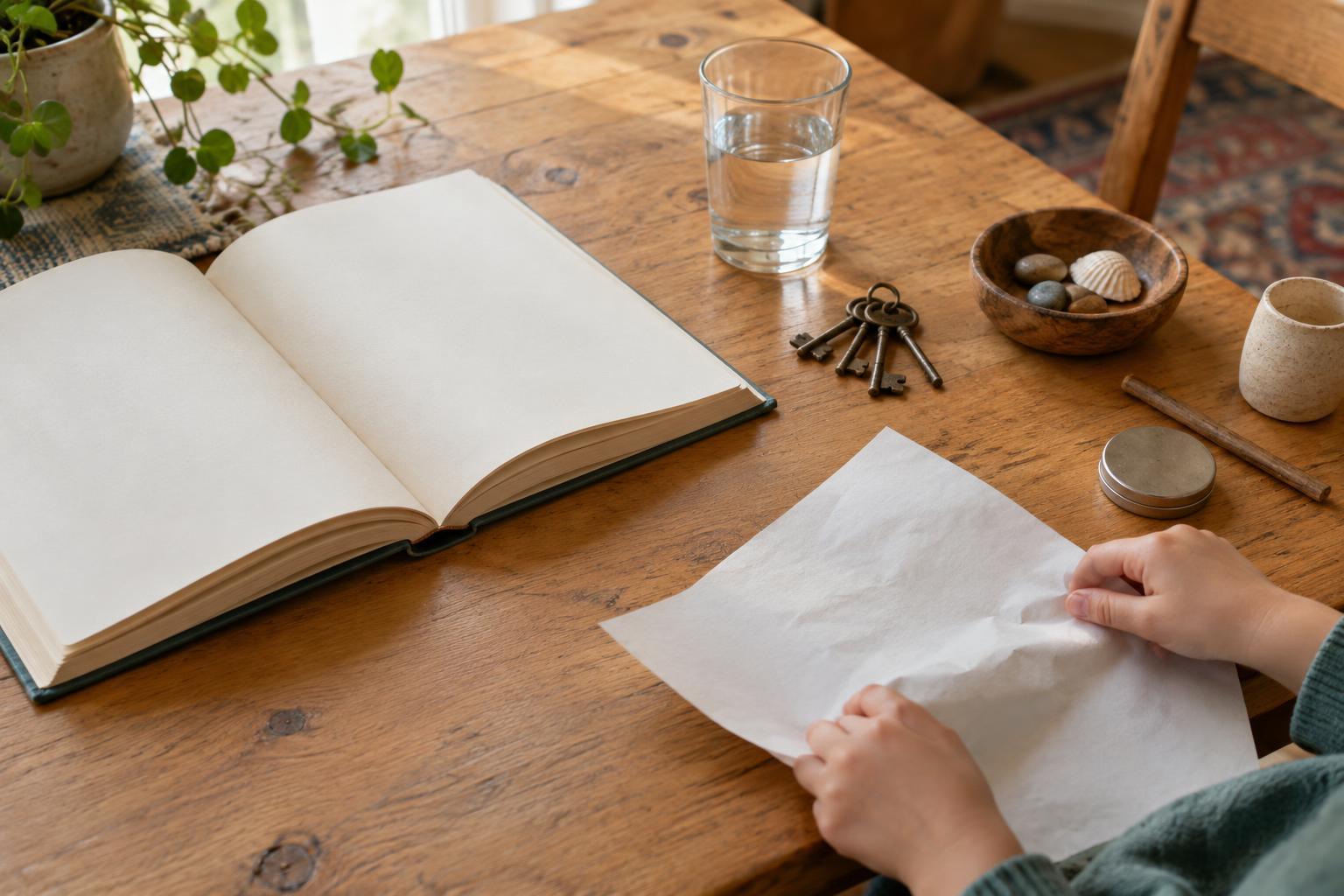
Look around for objects that make different kinds of sound. Crumpled paper can suggest dry leaves or a fire’s crackle. Fingers brushed across fabric might become wind. A pencil tapped gently on a table could be footsteps, while a spoon stirred in a cup of water might suggest movement in a stream. These are possibilities, not exact imitations. Part of the fun is discovering how an ordinary sound changes meaning when a story gives it a setting.
Start with three or four objects rather than a roomful. Test each at a comfortable volume, and set aside anything breakable, sharp or unpleasantly loud. If children are taking part, choose objects suited to their ages and supervise water or small items as needed. Hands and voices are useful too: a soft hum can establish a background, and a pause can be as expressive as any prop.
Build the soundscape in layers
First, choose a background sound that could continue through most of the scene, such as faint rain made by rubbing fingertips together. Next, add occasional sounds tied to actions in the passage: a knock, a page turning or footsteps approaching. Finally, decide whether one sound should mark a change. A sudden stop, for example, might draw attention to a character who has just heard something unexpected.
Try a quick rehearsal while someone reads the passage. Keep the reader’s words easy to hear; sounds should support the scene rather than compete with it. You can write a simple cue list using a few words from the passage as reminders: begin rain, tap twice, stop. If you are working alone, read a sentence, make its sound, then continue. There is no need to keep perfect time. Notice instead whether the sounds help you picture the scene.
Make choices that tell the story
The same object can suggest different moods. Slow, widely spaced pencil taps may feel cautious; quick, close taps may feel hurried. Gentle paper rustling might suggest a breeze, while a sharper crumple could suggest someone searching through a bag. Experiment with speed, volume and silence, then ask which version fits the words on the page. If two readers disagree, invite each to explain what in the scene led to their choice.
You can also make the soundscape from one character’s point of view. A person waiting for a visitor might notice every footstep in a hallway, while someone absorbed in a book might barely register them. Try performing the scene twice with different sounds in the foreground. What changes about your sense of the character? This turns the activity into a conversation about attention and interpretation, not a contest to find the one correct soundtrack.
Share it, then look back at the text
Once the soundscape feels ready, perform it for another reader or simply play it again for yourselves. Ask what place and mood the sounds suggested before explaining every choice. Then return to the passage. Which sounds were grounded in its details? Which were imaginative additions? Did an added sound bring the setting to life, or did it accidentally change what seemed to happen?
For a fresh challenge, use the same objects for a contrasting scene. Paper, a pencil and a cup might serve both a calm morning and a tense midnight search if you change their rhythm and leave different spaces of silence. Put everything away afterward, and keep your cue list if you want to revisit the book. The most useful result is not a polished performance, but a new way to notice how stories guide the imagination.