Take a book off the shelf without pulling its spine
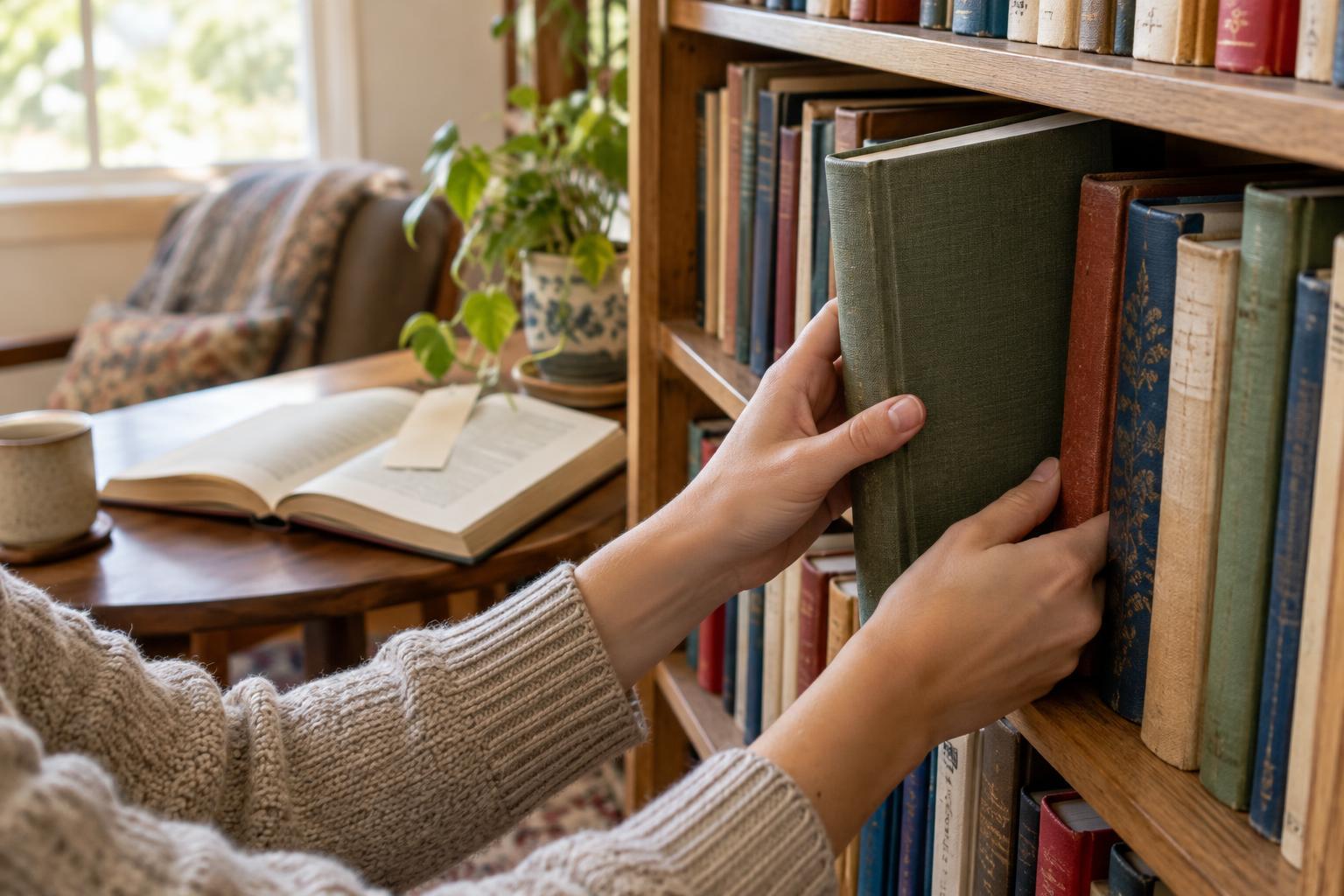
A book is easiest to remove when you can grip both sides of its cover. If the shelf is tightly packed, gently push the books on either side back a little first. Avoid hooking a finger over the top of the spine and tugging: that small edge was not designed to serve as a handle.
A little space between books makes this easier. They need not lean or slide around, but they should come out without a struggle. If one section has become crowded, move a few volumes to another shelf rather than forcing each new book into place. When replacing a book, support it until it is upright instead of shoving it between its neighbors.
Let the binding set the opening angle
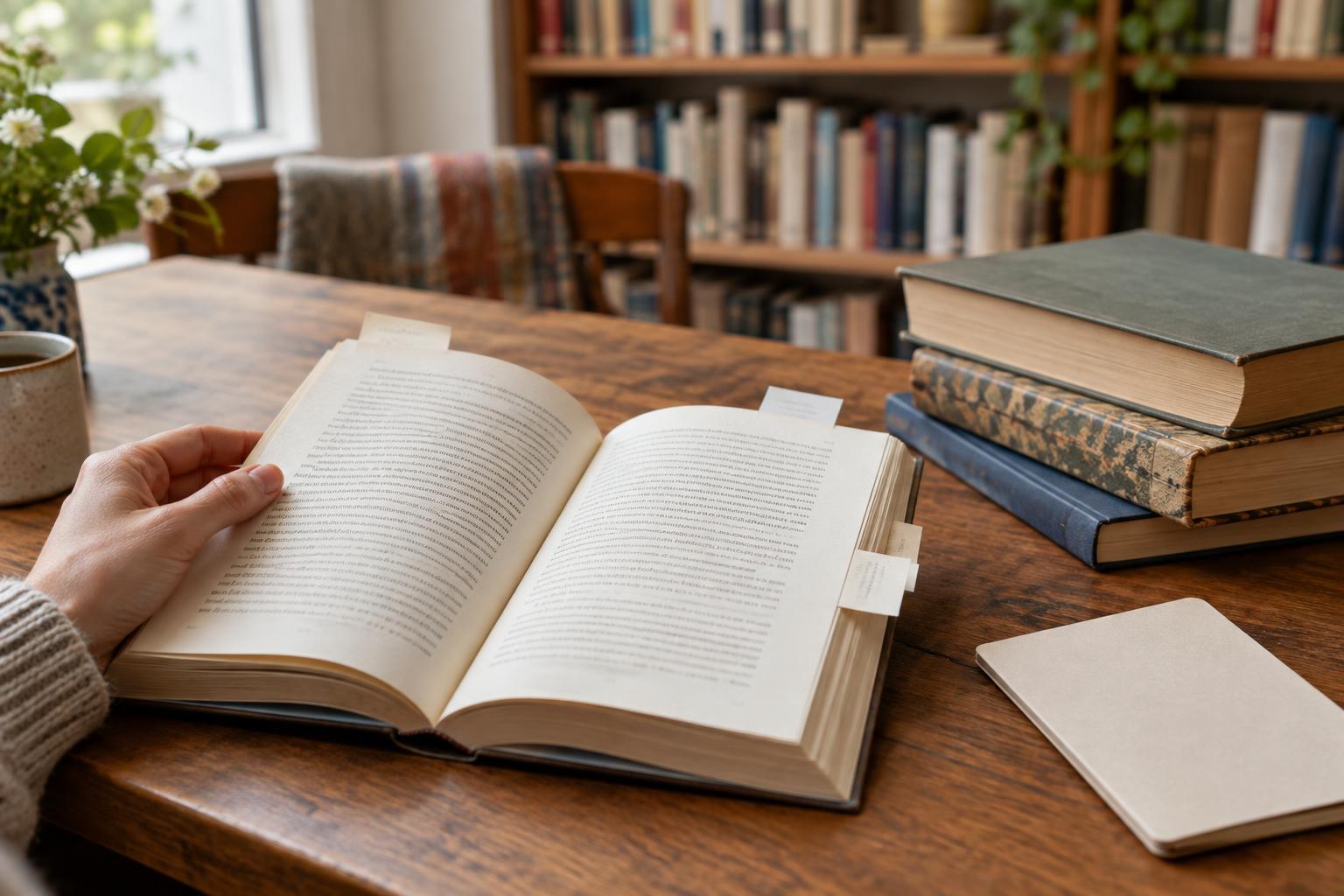
Some books open comfortably on a table; others resist lying flat. Give a stiff or tightly bound book support under both sides as you read, and avoid pressing down on the pages to make it stay open. This is especially useful for thick paperbacks, which can develop a pronounced crease along the spine when forced flat.
If you are reading while cooking, crafting or taking notes, it may be tempting to trap an open book beneath another object. A book stand or a clean, light paperweight placed away from the binding can be a gentler option, provided the pages are not being pulled taut. For a book you particularly want to preserve, it may be simpler to copy out the short instruction you need before starting a messy task.
Clean, dry hands are a practical starting point. Food, hand lotion and damp fingers can leave marks that are hard to remove from paper. This does not mean books must be handled ceremoniously; it means giving them a clean place to rest when you pause.
Choose bookmarks that will not leave a mark
A thin paper bookmark is usually enough to hold your place. Receipts can work in a pinch, but remove them when you finish reading so they do not become forgotten clutter. Avoid using pens, thick objects or anything with a sharp edge that might distort the pages or strain the binding when the book is closed.
Folding down page corners is convenient, but it leaves a permanent crease. If you like to note passages, keep a slip of paper nearby for page numbers and thoughts. Readers who enjoy writing in their own books can do that deliberately; the useful distinction is between a choice you meant to make and damage caused by a hurried placeholder.
Before putting a book back, check for bookmarks, sticky notes or scraps tucked deep in the gutter. A single flat marker is unlikely to matter, but a stack of inserts can prevent the book from closing evenly.
Carry books for the trip they are taking
Moving a book from the shelf to a chair calls for little preparation. Carrying it in a crowded bag is different. Keep the book away from loose keys, leaking bottles and uncapped pens. A simple sleeve or a separate pocket can help protect the covers, particularly on a paperback with flexible corners.
For several books, use a bag that supports their weight rather than balancing a tall stack against your body. Place larger, sturdier books beneath smaller ones, and do not pack them so tightly that their covers bend. If a book gets caught in rain, let it dry away from direct heat before returning it to the shelf; do not press damp pages together with other books.
Good handling habits should make your collection easier to enjoy, not harder to approach. Notice which books get the most use, keep a bookmark within reach and leave enough room to take a volume down comfortably. A home library lasts best when its everyday routines suit the people who actually read it.