Choose a place worth exploring
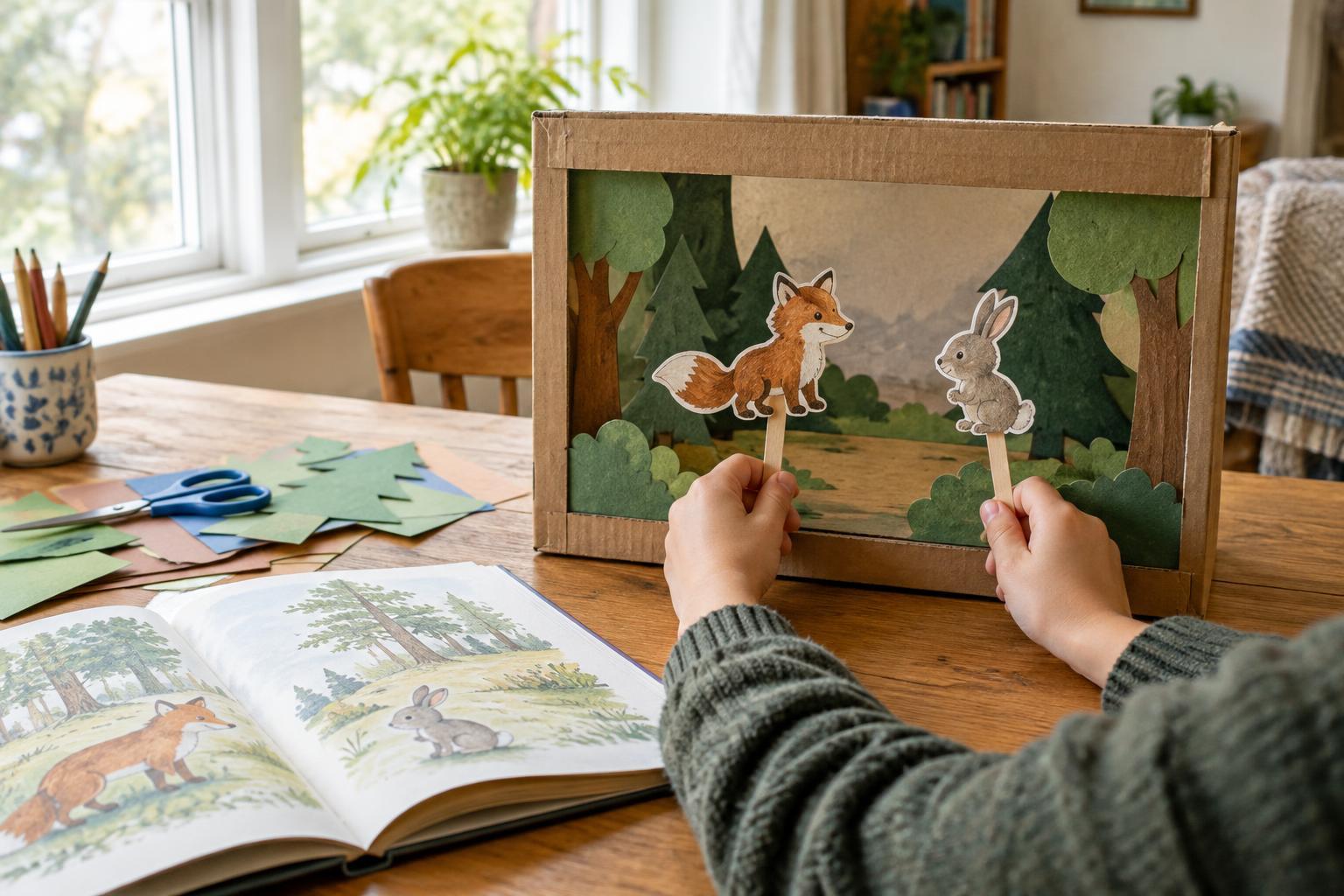
A shoebox diorama is a miniature scene viewed through the open side of a box. It can turn a story setting into something you can look at, rearrange and discuss. Before reaching for the glue, choose one specific place from a book: a room where a character feels at home, a path leading into unfamiliar territory or a corner where an important choice happens. A focused scene is easier to build than an entire imaginary world.
Look back through the story for clues about the place. What can a character see, hear or touch there? Is the space welcoming, crowded, quiet or mysterious? Make a short list of details that matter to the story, then pick three or four to show. You do not need to reproduce every description exactly. The aim is to make a viewer recognize the setting and sense why it matters.
Gather supplies and plan the view
Start with a clean shoebox or another small, sturdy box. Useful supplies include scrap paper, cardboard packaging, pencils, crayons or paint, glue, tape and safe scissors. Fabric offcuts, yarn and clean packaging can become curtains, paths or furniture. If children are working with sharp scissors or craft knives, an adult should handle those cuts. Simple folded-paper pieces work well without special materials.
Set the box on its side so the opening faces you. Imagine a viewer looking straight in: the back wall can hold a distant view, the floor can show where characters stand, and the sides can suggest what lies beyond the frame. Lightly sketch where the largest features will go. Leave some open space rather than filling every surface; an empty doorway or stretch of path can draw attention to the part of the setting that matters most.
Build the setting in layers
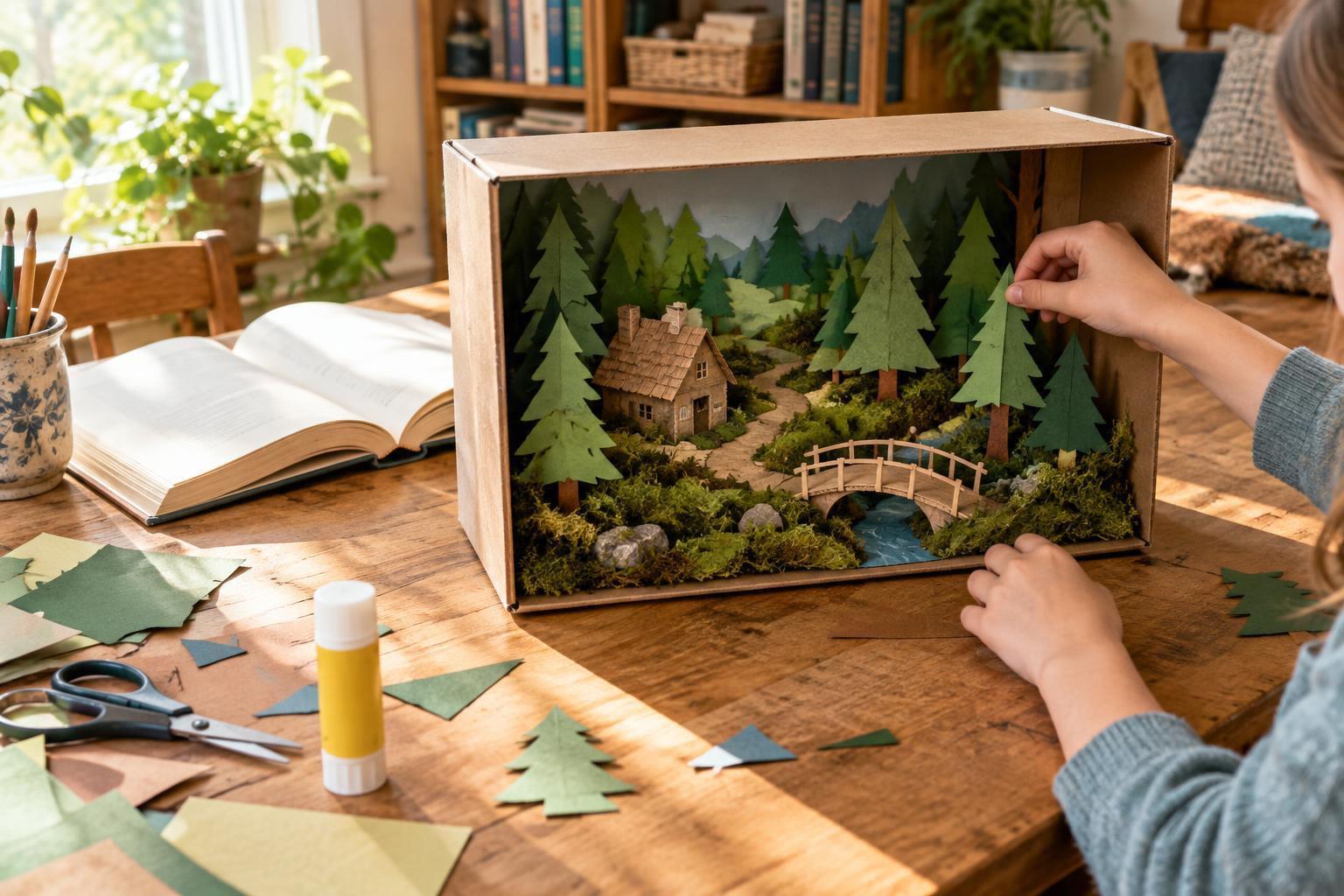
Begin at the back of the box and move forward. Draw or paint a background first, such as a skyline, a forest edge or the far wall of a library. Add larger shapes next: a paper hill, a doorway or a table made from folded cardboard. Finally, place small objects near the front. Overlapping these layers helps the scene feel deeper, even when the box is shallow.
For pieces that need to stand, fold a narrow tab at the bottom and tape or glue it to the floor. A strip of cardboard can support a tree or sign from behind. Test the arrangement before fixing everything in place: close the box lid if you plan to store it, and check that the tallest pieces fit. View the scene from the front, too. An object that looks well placed from above may hide an important detail once the diorama is upright.
Use details to tell the story
Choose details for what they reveal, not just how pretty they look. A neatly made bed and a packed bag may suggest that someone is about to leave. A narrow bridge can make a journey feel difficult. Color and texture can help set a mood: crumpled paper might suggest rough stone, while soft fabric could make a room feel comfortable. These are creative choices, so different readers may build convincing versions of the same place.
Characters are optional. Leaving them out invites viewers to imagine who has just passed through or who might arrive next. If you do add a character, a small paper figure is enough. Try moving it to different spots before attaching it. Does the scene change when the figure stands at the doorway rather than beside the window? That question can lead back to the character’s point of view in the book.
Share the scene and keep experimenting
When the diorama is finished, give it a title and invite someone to look inside. Ask what they notice first and which details help them identify the setting. Then explain one choice you made using a moment from the story. If a viewer interprets a detail differently, that can open a conversation about what the book describes and what each reader imagined.
A diorama need not be permanent. Tape can make some pieces easier to move or replace, allowing you to show the setting at another point in the story. You might change the light, add an object after a character arrives or rebuild the scene from a different character’s perspective. The box becomes more than a craft project: it is a small space for thinking about how a place shapes a story.