Start with the claim, not the picture
A striking image can make a caption feel convincing. Yet the photograph and the words beside it are separate pieces of information. A real picture of a crowded street, for example, does not by itself establish where or when the crowd gathered, why people were there, or who took the photo. Checking context means testing those added claims rather than asking only whether the image looks real.
Before you search, write down exactly what the post says the image shows. Note any claimed place, date, event or person, and distinguish definite statements from suggestions. Then look at the post itself: Is a photographer or original publication named? Is there a link to a fuller account? Does the caption identify details that cannot be seen in the frame? This quick pause gives you specific questions to investigate and helps keep your first impression from becoming your conclusion.
Trace the image to earlier appearances
A reverse image search can help you find other places a picture appears online. Depending on the tool, you may be able to upload the image, paste its address or search from a screenshot. Try more than one version if needed: a cropped post may hide the part of the picture that a search tool would otherwise recognize. Searching for distinctive words in the caption alongside a description of the scene can also reveal earlier uses.
Look for the earliest appearance you can find, but treat it as a lead, not automatic proof of origin. A page may have copied an image from somewhere else, and a publication date may describe the page rather than the photograph. Compare captions across results. If the same picture accompanied an unrelated event before the event named in the new post, the new caption needs a strong explanation. An archive entry, a photographer’s page or an original report may provide more useful context than a repost with no attribution.
Read the details inside and around the frame
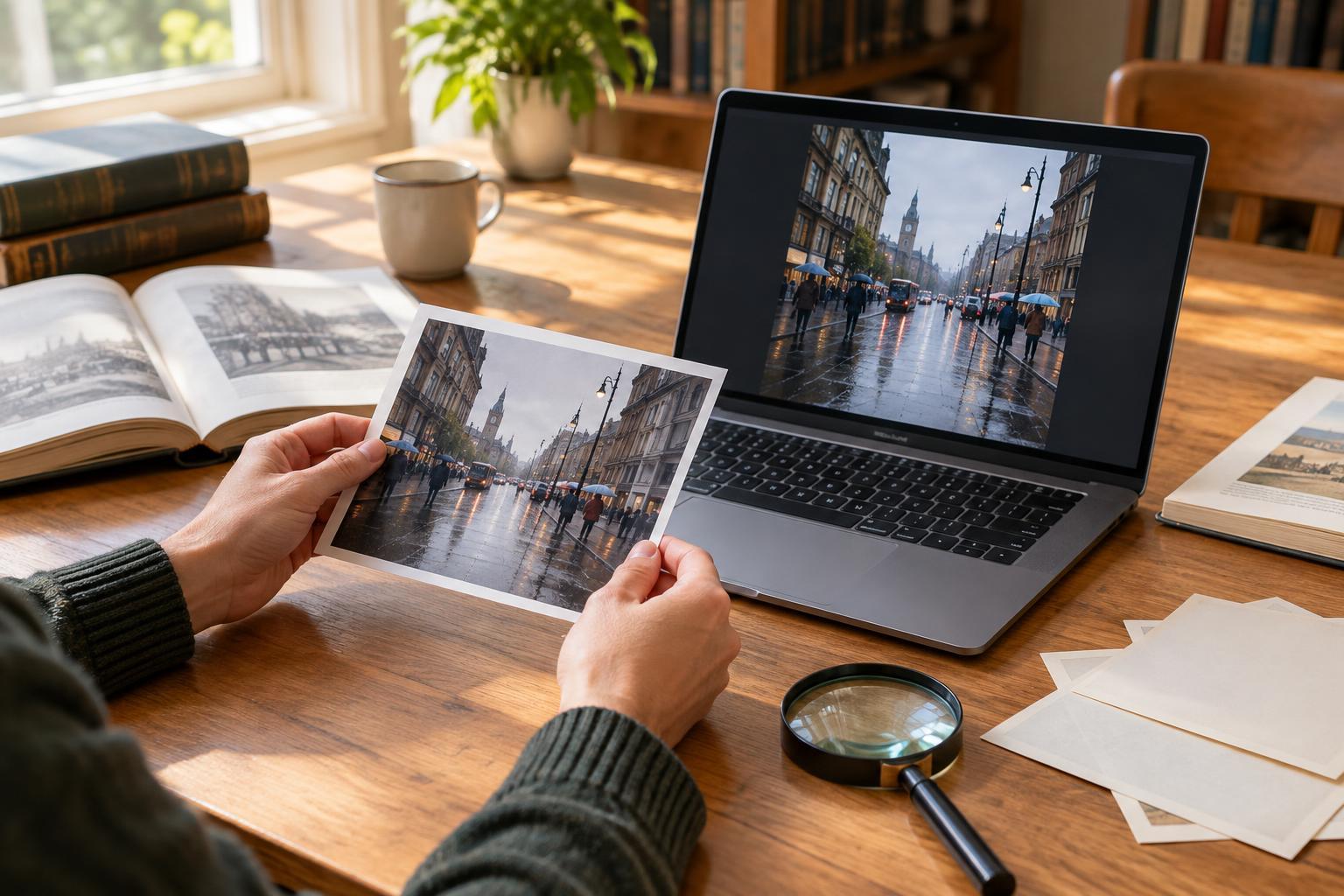
Study the full image when you can, not just the cropped version circulating in a post. Signs, clothing, landmarks, weather, shadows and visible text may offer clues about place or season. They rarely settle a question alone: a sign could be reused, and similar-looking streets exist in many places. Use clues to form search terms or spot contradictions, rather than forcing them to fit the caption.
Also check whether a longer sequence changes the meaning. A still taken from a video may leave out what happened just before or after it. A tight crop might remove a banner identifying an event or a nearby object that explains the scene. If you find the original video or an uncropped photograph, compare them carefully. Where image information such as a file name or metadata is available, it may offer another clue, but copies and editing can remove or alter it. Missing metadata is not evidence that an image is false.
Look for independent support
Once you have a possible location or event, search for accounts that do not simply repeat the same post. Try the claimed place and event name, along with visible details from the image. If the caption describes a public event, other photographs, reports or firsthand accounts may help you compare the setting and timeline. Agreement among several copies of one unsupported caption is less useful than independent descriptions that match specific details.
Be alert to several different problems. An old photograph can be relabeled as new. A picture from one location can be assigned to another. An authentic scene can be described as evidence of a cause that the image cannot establish. Editing or image generation raises a different question: whether the scene itself is authentic. If you cannot resolve that question, do not let it distract you from checking the caption. Even a genuine, unedited image can be shared out of context.
Share your conclusion with the right amount of certainty
You may find clear evidence that a caption is wrong, or you may reach a narrower conclusion: the image appeared earlier elsewhere, but its original circumstances remain uncertain. Say what you found and what remains unknown. “This image appeared with a different caption before the claimed event” is more precise than guessing at the poster’s motives. If you share a correction, include a useful path back to the earlier image or fuller context so others can check it too.
Sometimes the best next step is simply not to pass the image along. A search with no results does not confirm a caption, and a convincing visual clue does not replace a source. Treat image checking like following a trail through a library catalogue: one promising result points you toward the next question. The goal is not to solve every photograph, but to avoid turning an uncertain caption into a fact by repeating it.