Start with the story, then consider the people
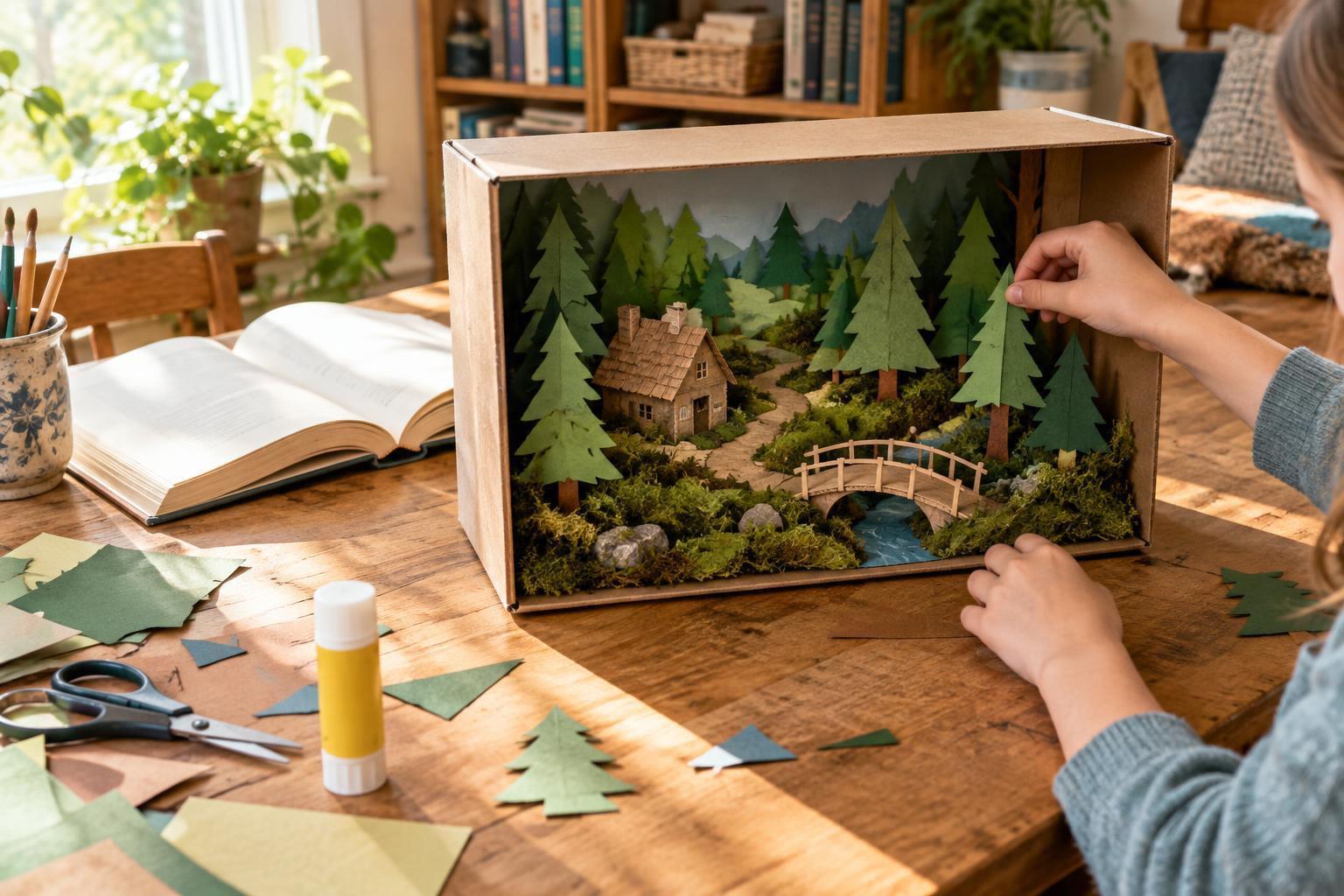
A good story activity gives readers another way to explore something they noticed in a book. It does not need to recreate every scene or test whether anyone remembers the plot. A picture of an imagined setting, a new question for a character or a tower built for a fictional creature can all keep the conversation going.
Before choosing an activity, identify one inviting feature of the story: a puzzling choice, a vivid place, a repeated sound or an object that matters. Then consider who is taking part. What can they do comfortably? Do they enjoy talking, making, moving or watching first? How much time and space are available? These questions are more useful than searching for a single activity that is supposed to suit every reader.
Offer different ways to take part
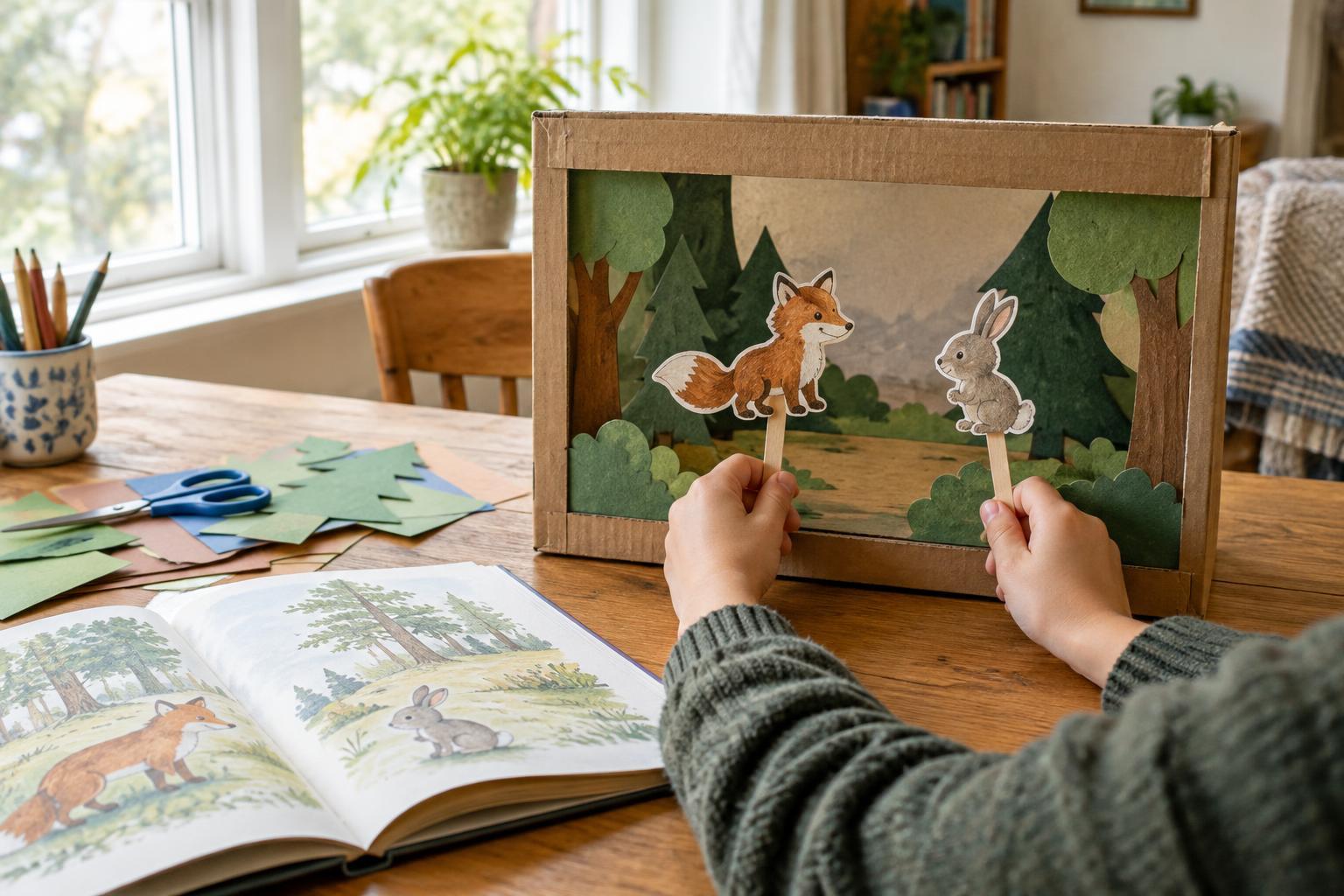
Younger children may enjoy concrete actions tied to something they can point to in the book: choosing a color for a character’s home, moving toy figures through a scene or making a sound when a familiar phrase returns. Keep directions brief and allow plenty of room for play. Provide materials suited to the participants, and supervise tools or small pieces where needed.
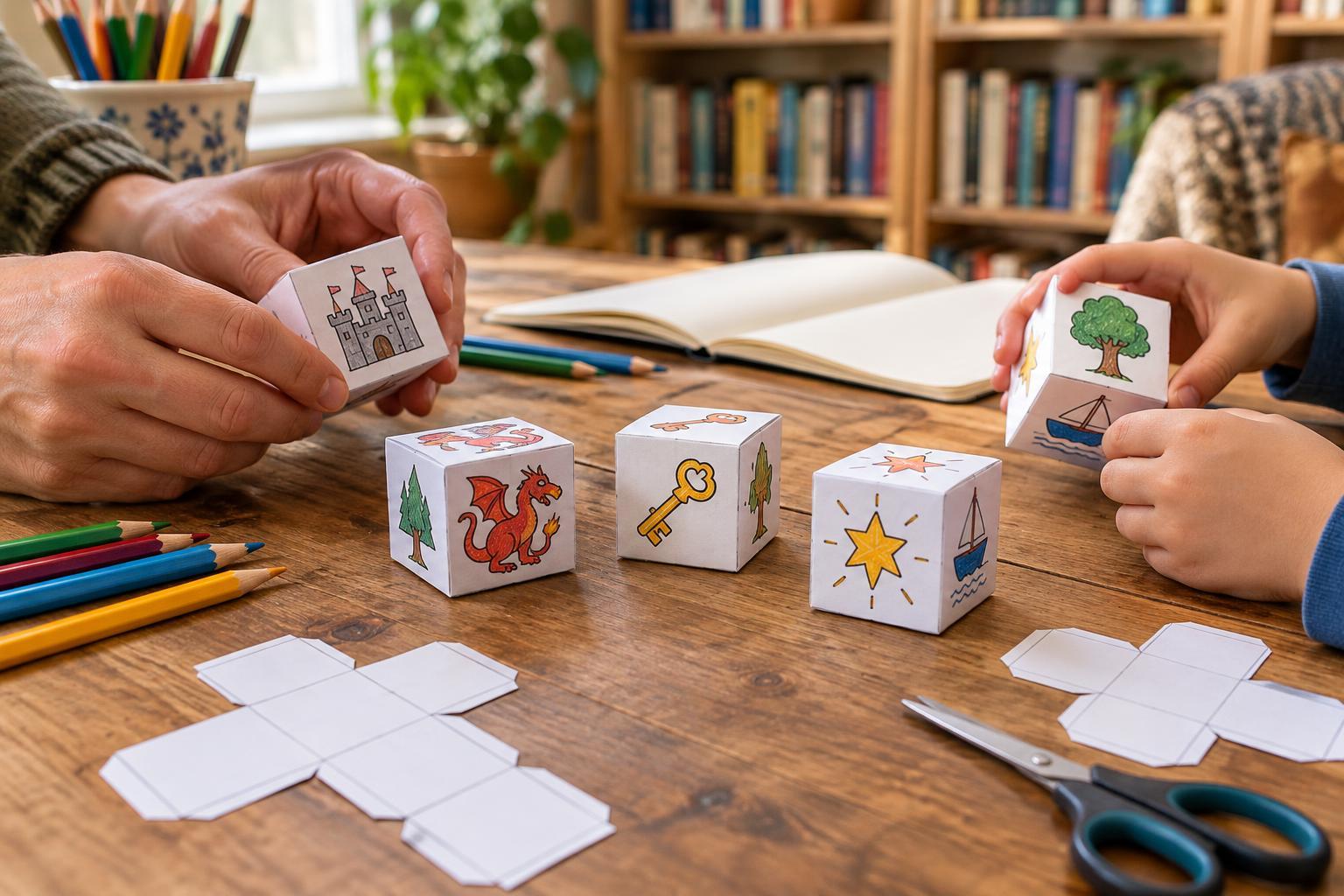
Older children may prefer a challenge with more choice, such as designing a map with missing places, writing a letter from another character’s viewpoint or debating what might happen after the final page. Adults and mixed-age groups can enjoy these activities too. Age is a starting point, not a rule: one person may love acting while another would rather sketch quietly. Offer two ways into the same idea—for example, participants can draw a setting or describe it aloud—so nobody has to complete the same task in the same way.
Adjust the structure to the size of the group
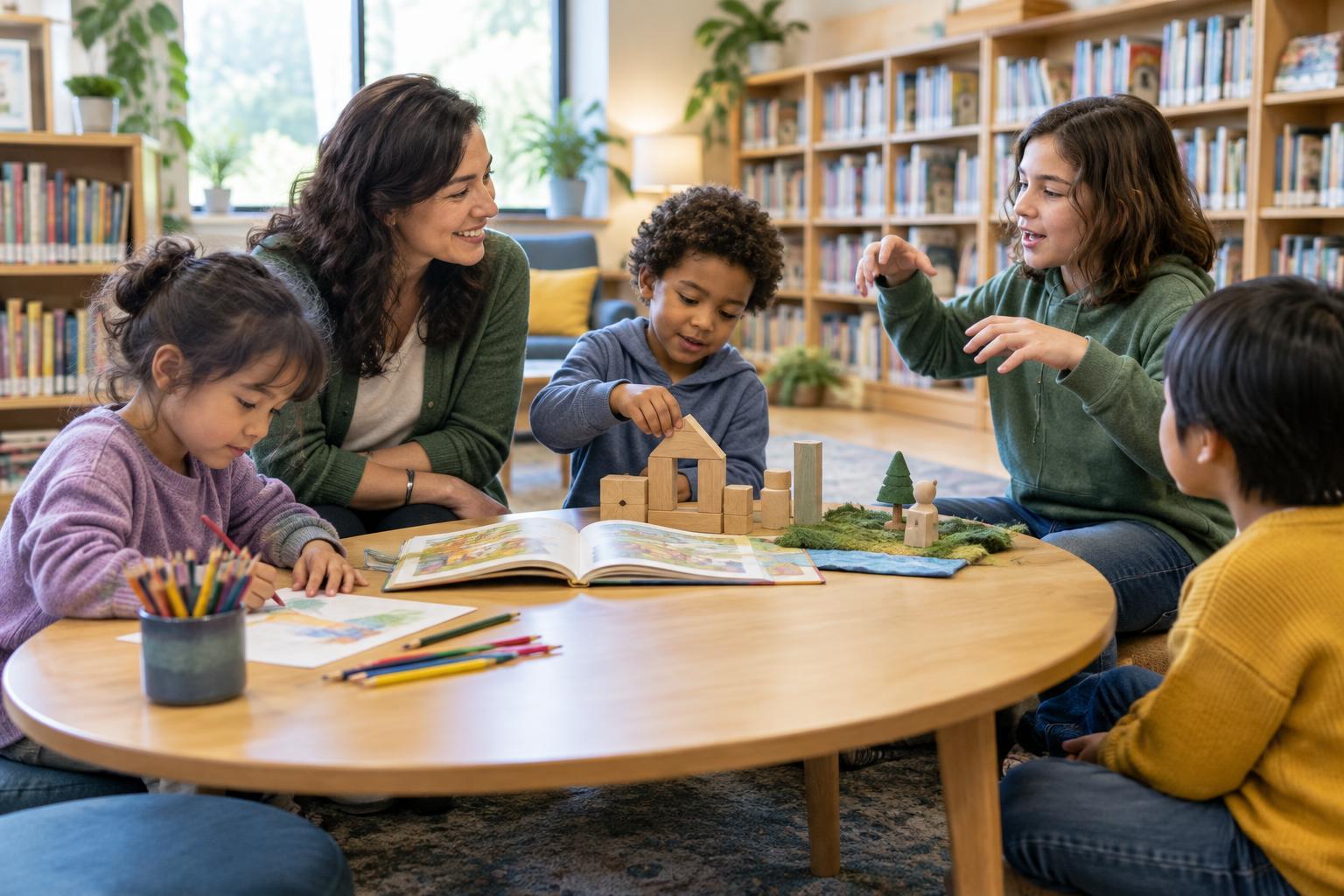
With one or two participants, an activity can follow their curiosity. Pause to look back at a page, change materials or let a small question become the main event. In a group of several people, give everyone a clear role or a simple turn-taking pattern. A shared map might have one person add a landmark, another name it and another invent a reason to visit. Roles can rotate so no one is stuck doing the part they enjoy least.
For a larger group, choose an activity that does not require everyone to wait for a long turn. Pairs can invent alternate book covers, or small teams can build different corners of the same fictional world before sharing them. Demonstrate the first step, set out the materials in advance and explain how the activity ends. If the room is noisy or crowded, drawing or sorting story clues may work better than a performance that depends on everyone hearing every word.
Plan for the attention you have, not the attention you wish for
A short activity can still feel complete. Try a three-part shape: invite a choice, make or do one thing, then share one observation. After a read-aloud, that might mean choosing a favorite place, sketching one detail and telling a partner why it belongs there. People who want to keep going can add more; everyone else has already had a satisfying finish.
For longer sessions, build in natural stopping points rather than one extended set of instructions. Participants might first choose a character, then create an object for that character, then decide how the object changes a scene. Movement can refresh a seated group: look for shapes around the room that resemble something in the story, or walk a route drawn on a floor map. If interest fades, simplify the next step or stop. Finishing while people are still curious is often better than insisting on a polished product.
Leave room for the unexpected answer
The most memorable response may not match the activity you planned. A reader might give the villain a garden instead of a secret lair, or decide a supposedly brave character needs help. Ask what led them to that idea before correcting details from the book. Story activities work best as invitations to notice, interpret and imagine, not as quizzes with one acceptable result.
Keep a few low-preparation options ready: paper for drawing, reusable objects for building and open questions such as “What would you add to this place?” or “Who else might tell this story?” Match one option to the group, offer a clear starting point and let participants shape the rest. The aim is not to fill every minute after a book closes; it is to make space for the story to stay with readers a little longer.