Start with the book, not the label
Looking for small-press books is a little like exploring a side street: the pleasure is not knowing exactly what you’ll find. A small press might specialize in translated fiction, regional history, poetry, experimental work or books for young readers. “Independent publisher” is a broader description, usually meaning a publisher that is not part of a larger publishing group. The terms can overlap, but neither tells you whether a particular book will be to your taste.
Begin with a reading question instead. Do you want a short novel for a busy week, an illustrated nonfiction book to share with a child, or poems about a place you love? Write down two or three interests, plus one thing you’re open to trying. This gives you a useful filter when a catalog offers far more intriguing titles than you can read.
Follow familiar books back to their publishers
A book you already admire can be a good starting point. Look at its title page or copyright page to find the publisher, then explore that publisher’s other books. You can do the same with a favorite author, translator, illustrator or editor. If a particular book’s voice drew you in, the people and press behind it may point toward related work.
Browse by subject as well as by new releases. A publisher’s backlist—books published before its newest titles—may hold the better match for your interests. Read descriptions closely, but also look at sample pages when available. A striking cover can catch your eye; a few paragraphs will tell you more about whether you want to keep reading.
Ask people who spend time among books
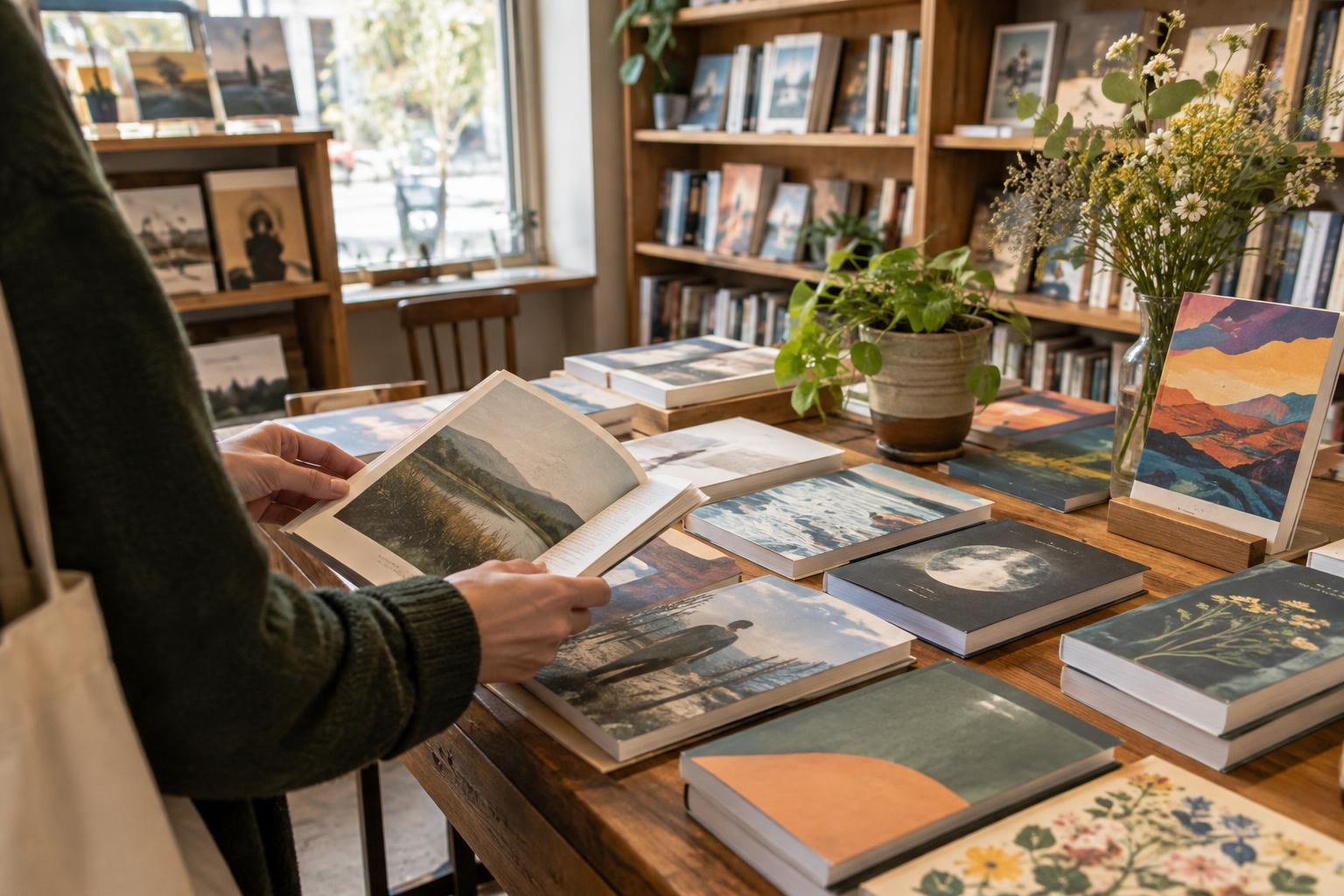
Libraries and independent bookshops can make discovery less solitary. Ask a librarian or bookseller for a small-press book that fits a specific request, such as “a thoughtful mystery without graphic violence” or “a picture book with playful language.” A focused question is easier to answer than “What’s good?” You can also browse display shelves and note unfamiliar publisher names on the spines of books that appeal to you.
Book discussions offer another route. Listen for why someone liked a title, not just whether they recommend it. A friend’s enthusiasm for an unusual narrative structure may be a helpful clue if you enjoy that too. If you read reviews or newsletters, keep a short list of books that genuinely interest you rather than trying to follow every recommendation.
Make a small discovery trail
Once you find one promising press, look for connections: a series it publishes, an author’s other work, or a bookseller’s shelf of similar titles. Record a few details in a notebook or phone note: title, publisher, what caught your attention and where you found it. That last detail helps you return to a useful shelf, conversation or catalog later.
Set a manageable browsing habit. You might explore one publisher catalog each month or bring home one unfamiliar book alongside your usual choices. If you are buying, check your library catalog first when you want to sample without committing to a purchase. If the book is unavailable, ask whether the library accepts purchase suggestions or can help you explore borrowing options. Availability and services vary, so it helps to ask.
Choose with curiosity, and leave room to change your mind
Small-press discovery works best when it is playful rather than dutiful. You do not need to finish a book simply because finding it took effort. Try a first chapter, a handful of poems or a few pages of illustrations. Notice what holds your attention: the subject, the style, the format or the way the book approaches a familiar idea.
Over time, your notes may reveal patterns. Perhaps you gravitate toward brief essays, books in translation or stories rooted in a particular landscape. Use those patterns as signposts, not boundaries. The next rewarding find may come from a publisher you have never heard of, on a shelf you had not planned to visit.