Begin with an invitation, not a performance
A story can leave a room full of possibilities. Someone wonders what happened after the last page. Someone else wants to be the fox. Dramatic play gives readers a way to explore those ideas through movement, voices and make-believe. It does not need a script, costumes or an audience. In a living room, classroom or library corner, a short game can be enough.
After reading, pause before suggesting an activity. Ask an open question such as, “Is there a moment you’d like to play with?” or “Where could this story go next?” Offer a choice: children can act, make sounds, move an object, describe what happens or watch. If nobody wants to play, let the reading stand on its own. An invitation feels different from an assignment when declining is genuinely allowed.
Choose a small doorway into the story
Reenacting an entire book can feel daunting. Start with one manageable moment: a character arriving somewhere new, searching for a missing item or deciding which path to take. You can also begin just beyond the ending. “What might the characters do tomorrow?” invites invention without requiring anyone to remember every detail. For a quieter group, suggest creating the setting together before any characters appear.
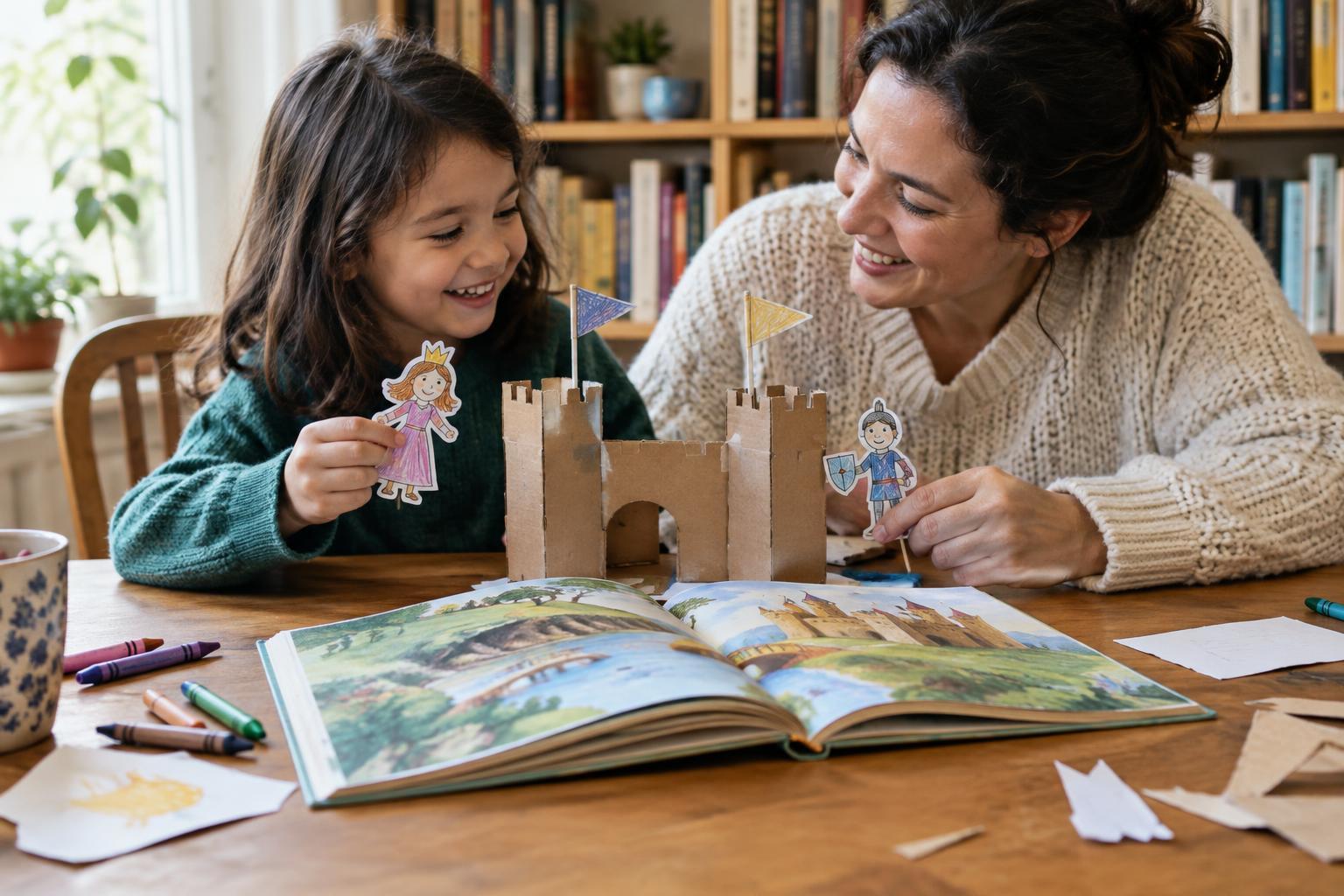
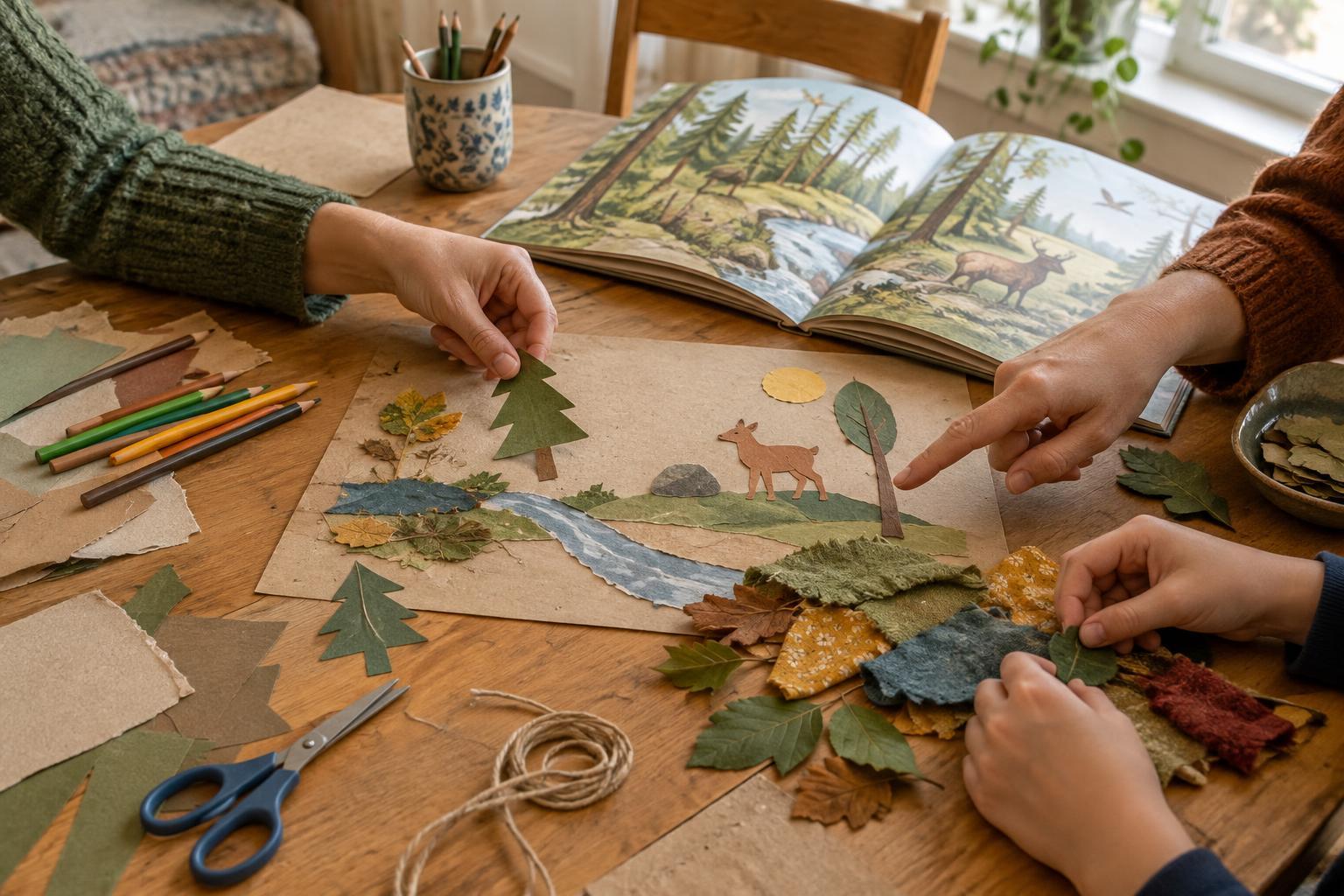
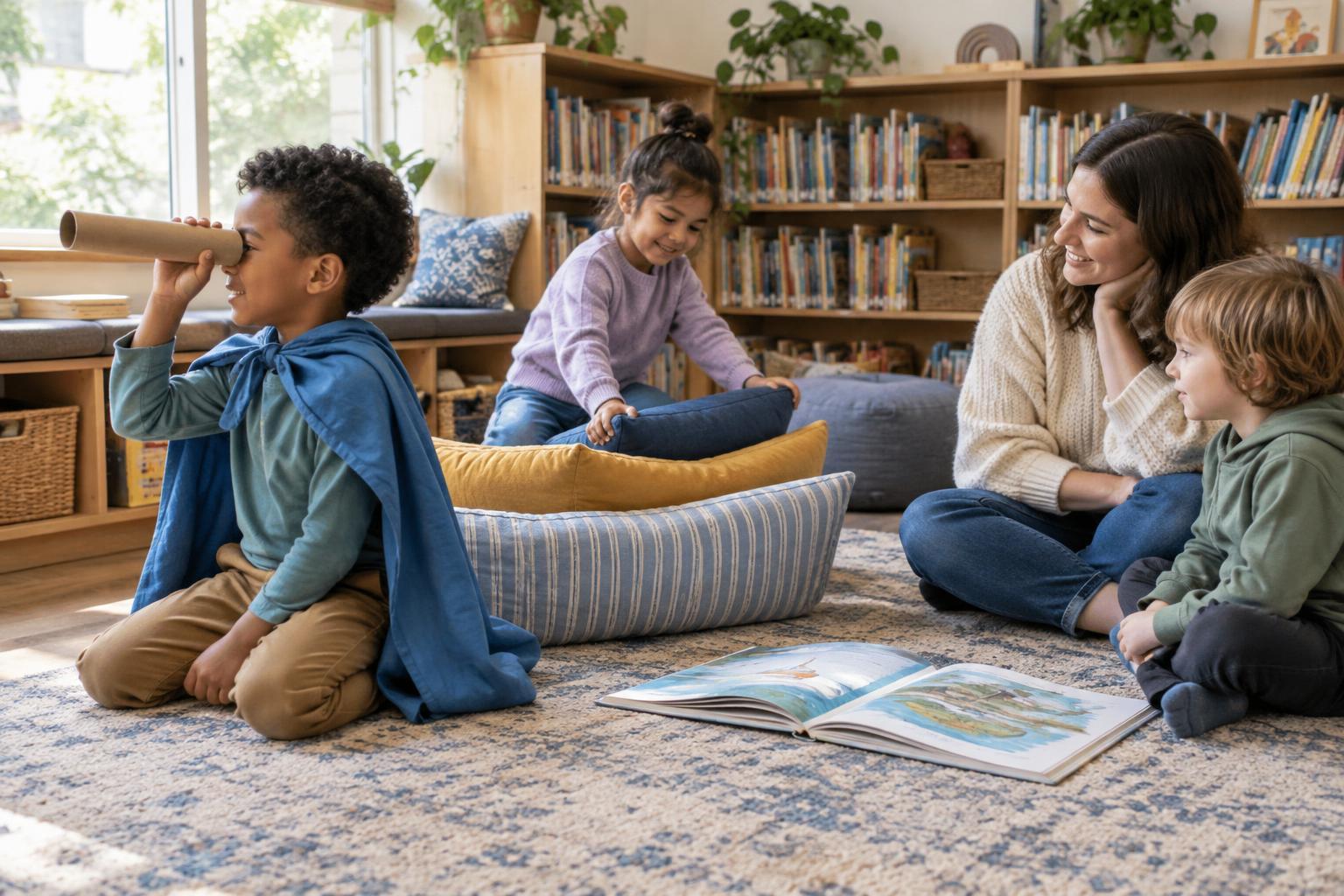
Keep materials simple and optional. A scarf might become a river, a chair a mountain and a cardboard box a doorway. Children can decide what an object represents, and it is fine if its meaning changes mid-game. Before gathering props, check that there is enough space to move safely. If the group prefers to stay seated, small figures, paper shapes or hands can carry the action instead.
Make room for different kinds of participation
Being a character is only one way to join in. A child might narrate, suggest a sound effect, move a prop, invent the weather or help decide what happens next. Someone who does not want to speak can point, gesture or choose between two ideas. Watching can be participation too, especially when a child is taking time to understand the game. Avoid assigning a role solely because it seems to match a child’s personality.
For a group, name the available roles and ask who wants each one. If several people want the same role, they can take turns, share it or imagine more than one version of the character. A gentle boundary helps: pretend danger is fine, but pushing, grabbing or frightening someone who has not agreed to it is not. Keep the rules brief so they support play rather than interrupt it.
Guide lightly and follow the players
An adult can help by setting the scene in a sentence or two: “The travelers have reached the locked gate. What do they notice?” Then leave space for responses. If the action stalls, offer a choice rather than a solution: “Should the gate open, or should they look for another way?” Questions such as “What might your character try?” keep the children in charge of the next move.
The play does not have to match the book exactly. A lost key may turn into a talking cloud, and the quiet side character may become the hero. Those changes show how readers are using a story as a starting point. If children disagree, pause and ask what each person wants to happen. They may be able to combine ideas, or they may prefer to play two short versions of the scene.
End before the fun becomes a chore
A brief, satisfying scene often works better than a long activity with a forced finale. Look for a natural stopping point, such as finding the missing object or reaching a new place. You can say, “Let’s see what happens in one more turn,” so the ending does not arrive as a surprise. Leave time to put away props together without treating cleanup as part of the story unless the players want it to be.
Afterward, offer an easy way to reflect: “What part was fun to imagine?” or “Would you change anything next time?” There is no need to quiz children on the plot or ask them to explain a lesson. Some may want to draw the place they invented; others may be ready for another book. The goal is not a polished show. It is a welcoming chance to stay with a story a little longer.