Choose one moment, not the whole book
A book can suggest a world far bigger than a short film can hold. Start by choosing one visual idea: a mysterious door opening, a traveler crossing a map, or a garden changing with the seasons. You could recreate a moment from the story or invent a new scene that captures its mood. Either way, aim for an action you can show without much dialogue.
Write down what happens at the beginning, middle and end in three sentences. For example: A paper boat appears on a desk. It sails across a blue cloth sea. It reaches an island made from a stack of books. This gives you a clear sequence to film while leaving room for playful details. A finished film of ten to twenty seconds is a satisfying first goal.
Build a small world and a simple storyboard
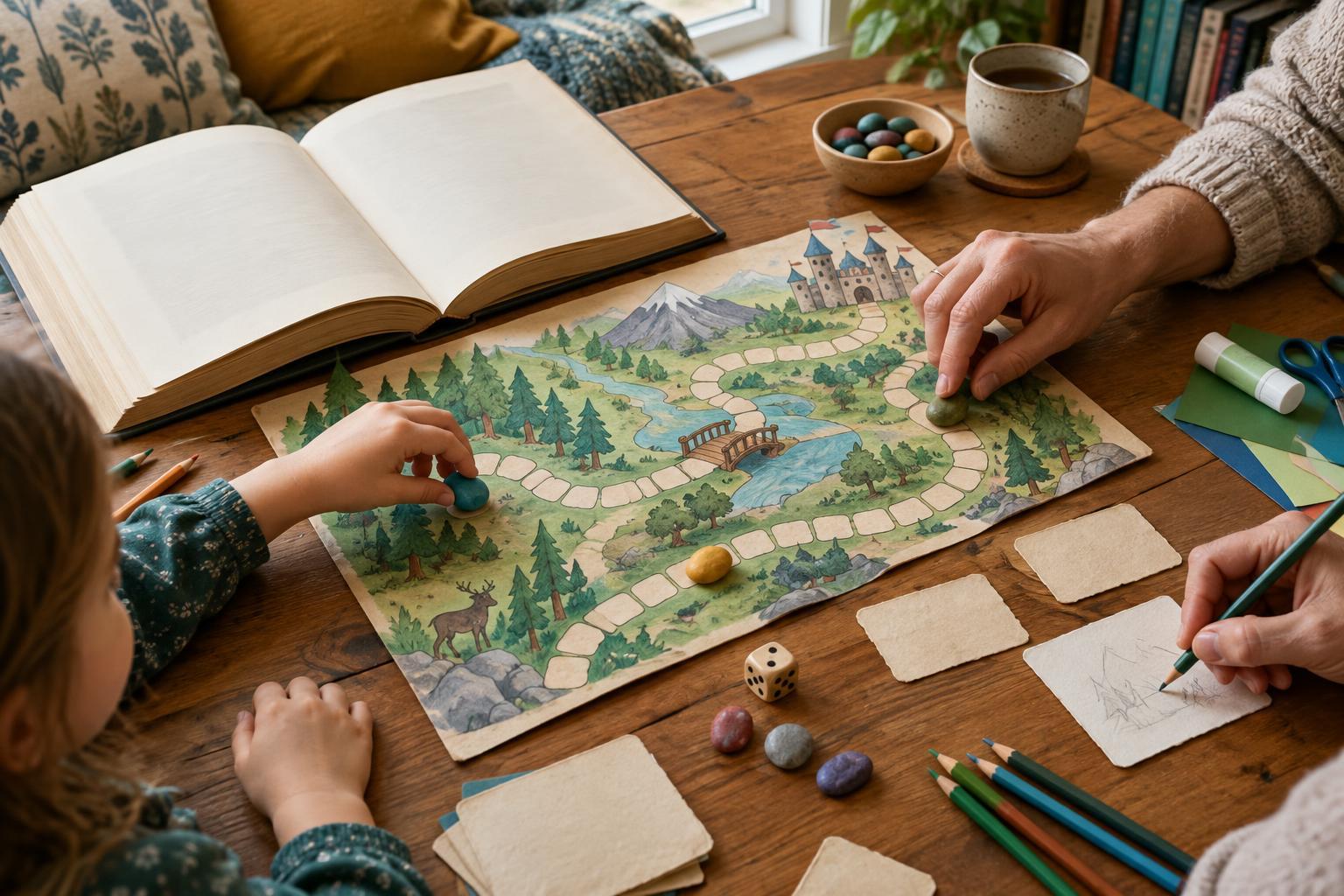
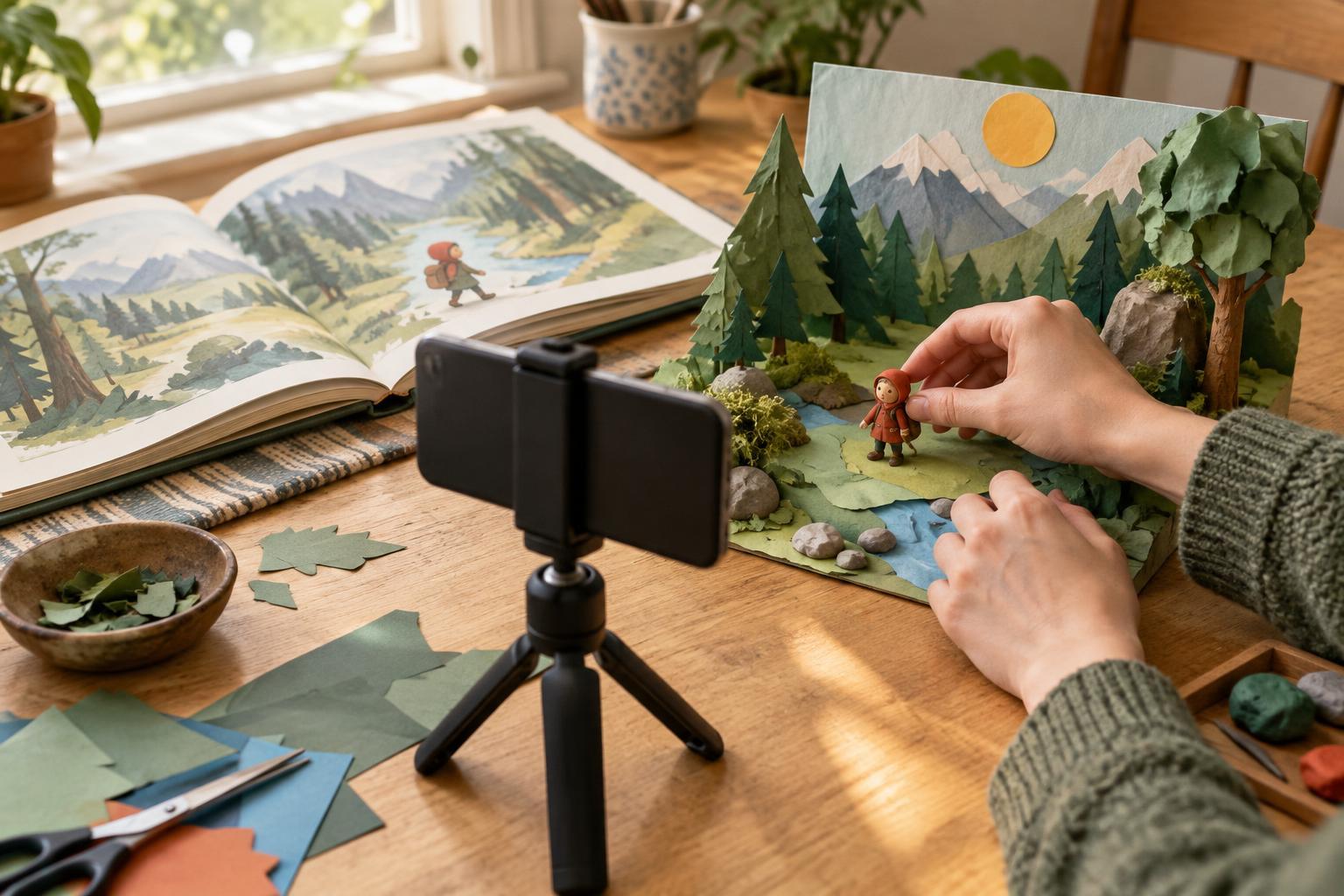
Gather materials you already have: paper, cardboard, fabric scraps, building blocks or small toys. A tabletop makes a useful stage. For characters from a book, you might create your own paper figures or use shapes and colors that evoke them, rather than trying to reproduce every detail. Keep the background simple enough that viewers can tell what is moving.
Sketch four to six rough boxes showing the main changes in your scene. These are your storyboard; stick figures are fine. Note where each object starts, where it ends and whether anything enters or leaves the frame. If you are working with children, let them choose a prop or design a surprise ending. If several people are involved, agree on who moves the objects and who takes the photographs so the process stays orderly.
Set up the camera and make things move
Place a phone or tablet where it will not shift between pictures. A stand is helpful, but a sturdy pile of books can also support it. Check that the stage fits inside the frame, and take a test photograph. Use steady lighting if possible; daylight can change as clouds pass, so a lamp in a room may be easier to control. Keep hands, shadows and spare supplies out of the shot unless they are part of the story.
Stop-motion works by showing still photographs in quick succession. Take one photograph, move an object a tiny amount, then take another. Small, consistent movements usually look smoother than large jumps. If your editing app plays six photographs per second, a ten-second film needs about sixty photographs. That is a guide, not a rule: fewer frames can give your film a lively, handmade look.
Before photographing a long sequence, make a short test with an object moving across the stage. Play it back to see whether the motion is clear and whether the camera stayed still. Then film your scene in manageable parts. If someone bumps the setup, you can retake a few photographs without starting the entire project again.
Edit for clarity, then add sound
Import the photographs into a stop-motion or video-editing app and place them in the order you took them. Adjust the playback speed until viewers can follow the action. If a movement happens too quickly, you can add more photographs next time or hold a still image for an extra beat. Trim accidental shots of hands or an empty stage, but do not worry about making every movement perfectly smooth.
A title card at the start can tell viewers which book sparked the idea. Sound is optional: a film can work beautifully in silence. If you do add narration or effects, try recording your own footsteps, rustling paper or a spoken line you wrote. Choose music you have permission to use, especially if you plan to post the film publicly. Keep sound levels low enough that they do not distract from the images.
Share the film and talk about the story
Screen your finished film for a friend or family member and ask what they noticed first. Did the action make sense without an explanation? What feeling did the colors, movement or sound create? These questions can lead back to the book: which details did you borrow, and which did you invent? A film does not need to summarize the story to start a good conversation about it.
If you want to share your work beyond a private viewing, think about the book material and the people in your film. Original artwork and sounds give you more control over what you share; if you use recognizable book illustrations, text or other protected material, check whether you have permission to publish it. Ask before posting anyone’s voice or image. Then keep your props and storyboard together: they may become the starting point for your next tiny story.