Start with an agreement, not a sorting marathon
When books from several people end up on the same shelves, the first question is not whether to arrange them by author, subject or color. It is which books are available for everyone to read, which may be borrowed after asking, and which should stay with their owner. A short conversation about those boundaries will save more confusion than an elaborate catalog.
Try three broad categories: shared books, personally owned books that others may borrow, and books that are not for general borrowing. Include gifts, schoolbooks, signed copies and books with sentimental value in the conversation. An owner may be happy to share a favorite novel but prefer that it never leave the house. Children can help decide where their own books belong, too; the system works better when everyone understands it.
Give ownership a quiet, visible home
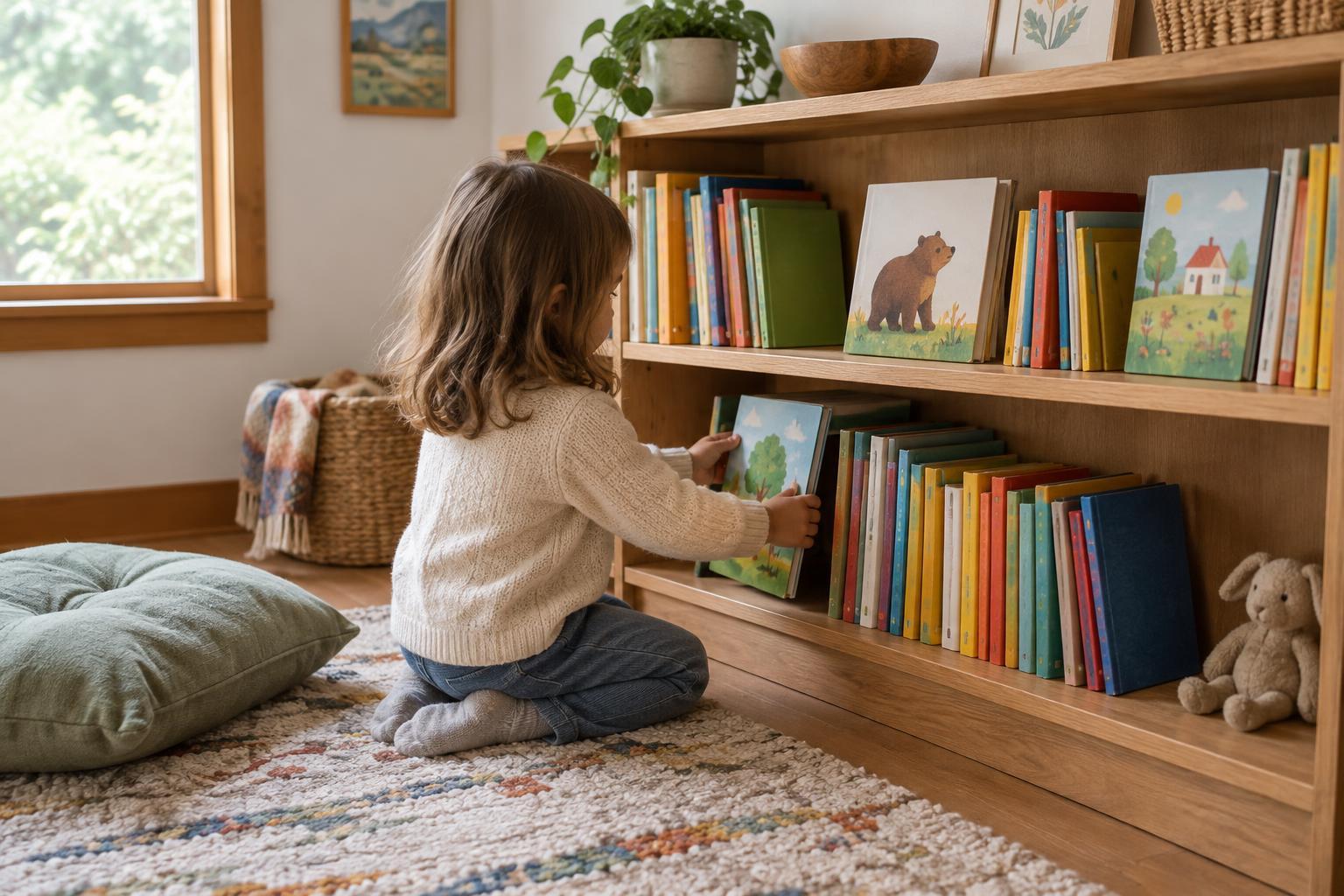
Separate shelf areas are often the simplest starting point. A common shelf can hold books anyone may pick up, while each person has a shelf or bookend-defined space for their own collection. If space is tight, small shelf labels can identify an owner without requiring a separate bookcase. Keep the labels broad enough to remain useful as the collection changes.
For books that wander between rooms, add a discreet ownership mark. A name written on the inside cover, a removable bookplate or a small initial on a slip of paper can do the job. Check before marking anyone else’s books, especially collectibles or volumes they hope to keep unaltered. For an edition that should remain untouched, a record in a household list may be a better choice.
Ownership and location are different pieces of information. A book can belong to one person yet live on the shared cooking shelf because everyone uses it. Make that distinction clear in your labels or list: “belongs to Mira” is not the same as “stored in the kitchen.”
Organize for finding, not for perfection
Within each shelf area, choose an arrangement people can maintain without thinking too hard. You might group books by broad subject, keep a series together, or place frequently used books at an easy-to-reach height. A complicated system will soon unravel if every returned paperback requires a decision about its exact place.
Create one obvious spot for books awaiting reshelving. It could be a basket beside the bookcase or a clear section of a shelf. When someone finishes a book but cannot remember where it belongs, they can put it there rather than guessing. During a brief regular tidy-up, an owner or another household member can return those books to their places. This also gives misplaced items a predictable place to turn up.
Track loans only as closely as you need to
Most households do not need a record of every book someone reads at home. A simple log becomes useful when a book leaves the house, crosses between households or is especially important to its owner. A notebook near the shelves, a shared note or a card tucked into a designated spot can record the title, owner, borrower and approximate return plan.
Keep the process friendly: ask before taking a personally owned book, make a note if the owner wants one, and let them know when it comes back. If recording reading choices feels intrusive, log only books that leave the household. The aim is to make returning books easier, not to monitor anyone’s reading.
Make room for the collection to change
Shared shelves are never finished. New books arrive, interests shift and people move rooms or move out. A periodic check-in can answer practical questions: Which books have become shared favorites? Are there books waiting to go back to a relative or friend? Does someone need more room for their own titles?
Before donating, lending onward or giving away a book, confirm who owns it. A shared location does not make it communal property. With clear boundaries and a light-touch routine, the household can enjoy the best part of a common collection: discovering a book someone else loved, while knowing it will find its way back to the right person.