Start with a story clue, not an imagined recipe
A book may describe a picnic, a busy market or the comfort of coming home to a warm meal without telling readers how to make anything. That is enough to begin. Ask participants what they noticed: Was there a food someone shared? Did a meal mark a celebration or a difficult conversation? Did a setting suggest a color, shape or smell? The activity can respond to one of those details rather than attempt to reproduce a dish the author never specified.
Keep the distinction clear when introducing the plan. You might say, “The story mentions a picnic, so we’re making our own picnic snack.” This leaves room for imagination without presenting your choice as the book’s recipe. If the story names a dish from a culture unfamiliar to your group, avoid treating a quick approximation as its definitive version. Choose a different connection to the scene, or seek a suitable recipe separately and describe it as one interpretation.
Choose a manageable kitchen project
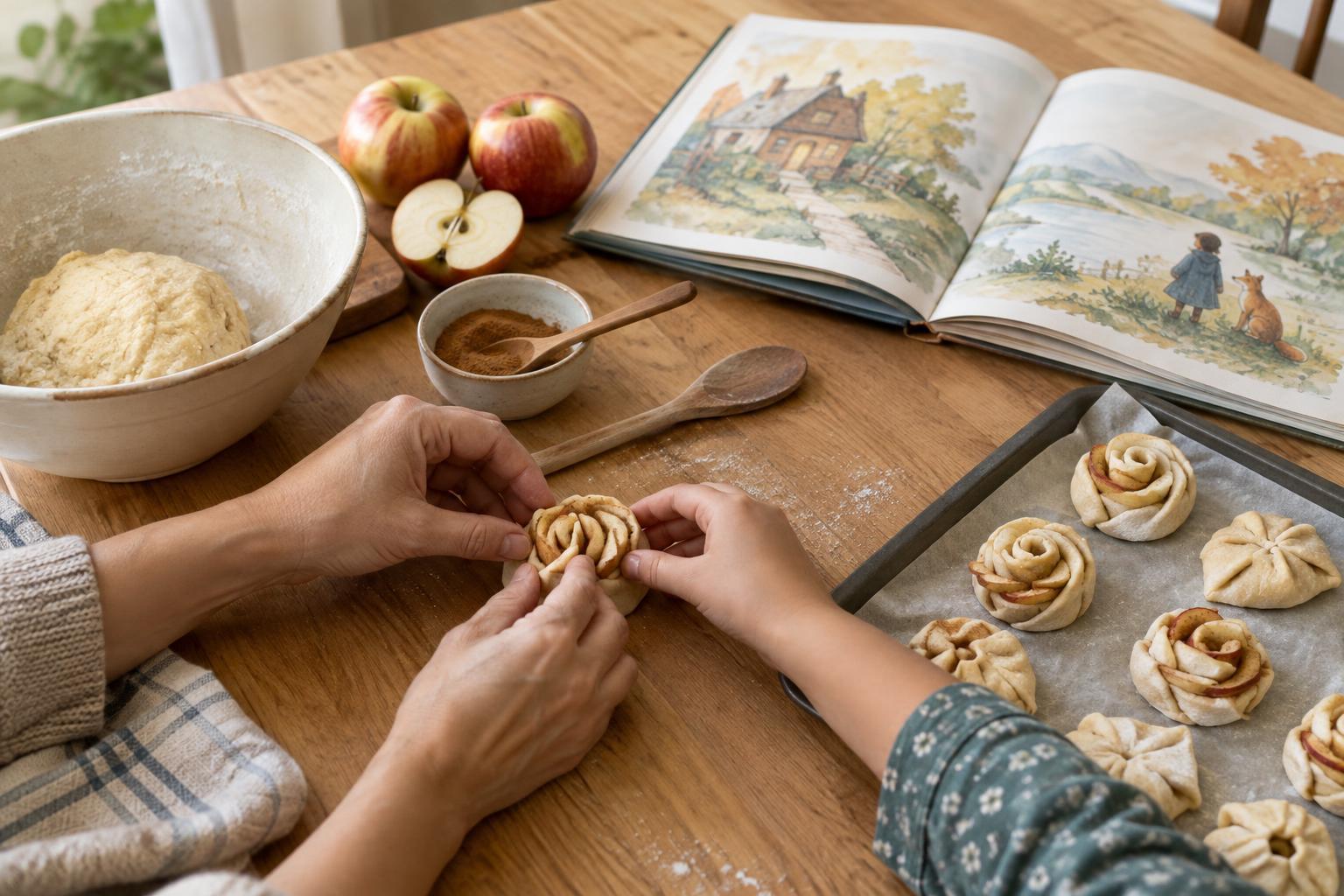
Match the activity to the time, space and people you have. A scene featuring a garden could inspire assembling vegetable wraps; a tale about a journey might prompt portable snack boxes. Neither choice has to appear on the page. A good project has a few clear steps and offers participants something meaningful to do, such as washing produce, measuring ingredients or arranging food on a plate.
Decide where the cooking instructions will come from before the session. Use a recipe you know works, or select one that fits your equipment and ingredients, then read it all the way through. Check preparation time, chilling or baking time, and what needs to be done in advance. If an oven, sharp tools or complicated timing would distract from the book, choose a no-cook assembly activity instead. Simple can still feel special when readers get to name their creations or explain how each one connects to the story.
Make participation comfortable and safe
Ask about food allergies and dietary needs before choosing ingredients, and check packaging when preparing food for others. Make a plan for participants who cannot eat or do not want to taste the finished dish. They might help design a menu card, arrange a table setting or describe what the food could mean to a character. Participation should not depend on eating.
Set up a clean workspace and assign tasks according to each person’s abilities and the supervision available. An adult can manage heat and sharp implements while younger participants tear herbs, mix ingredients or assemble portions. Allow extra time for handwashing and cleanup. For a library or classroom, check the venue’s food rules before promising a cooking activity; a paper-menu workshop or food-free sensory description game can preserve the story connection when preparing food is not possible.
Let readers make the imaginative choices
Offer a small choice that invites interpretation rather than a test with a correct answer. If characters gather for a meal, participants might choose a snack to represent the mood of the scene. If the story describes a long trip, they could decide what would be practical to pack and explain why. Keep the prompts tied to what the text actually says: “Which detail gave you that idea?” is more useful than asking readers to guess what the author intended to cook.
A short activity card can help. Give it three spaces: “A detail from the story,” “Our food idea” and “Why we chose it.” Readers who prefer not to write can draw or talk through their answers. For a group, let people compare their different ideas before preparing the food. Differences are a strength here; the aim is to show how one story can spark more than one thoughtful response.
Return to the book after the last bite
Leave a few minutes to revisit the scene that started the activity. Did preparing food change how readers pictured it? Did they notice who cooked, who ate together or who was left out? The conversation can be brief, especially with younger readers. Even a question such as “What would you offer this character?” can bring the focus back to the story.
Save the activity card alongside the book notes or in a home reading journal. Record the recipe used separately, so nobody later mistakes it for one supplied by the book. Next time, the group can try a different approach: an edible project, a pretend café menu or an illustrated picnic plan. The best story-inspired cooking activity does not need to recreate the page. It gives readers another way to pay attention to it.