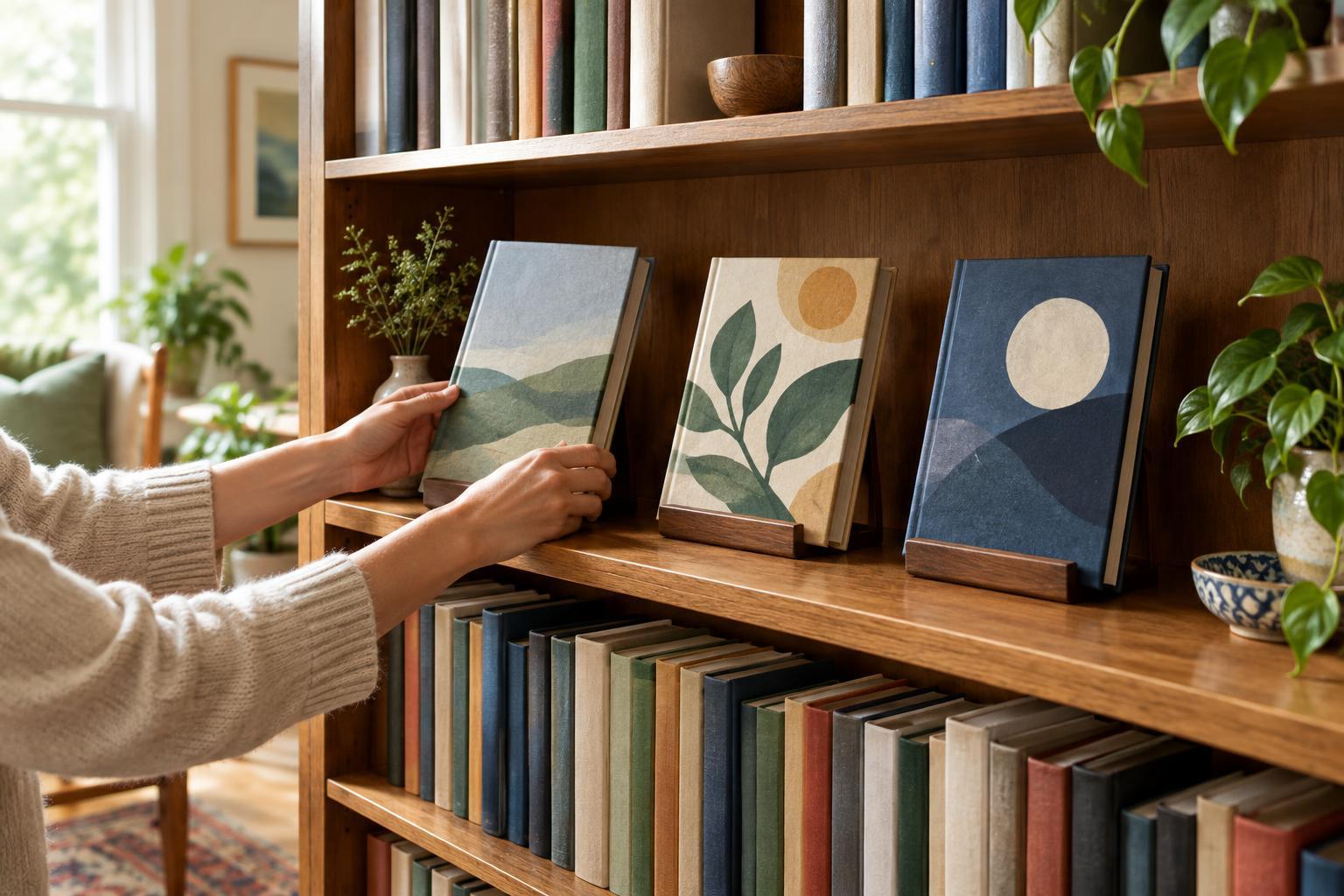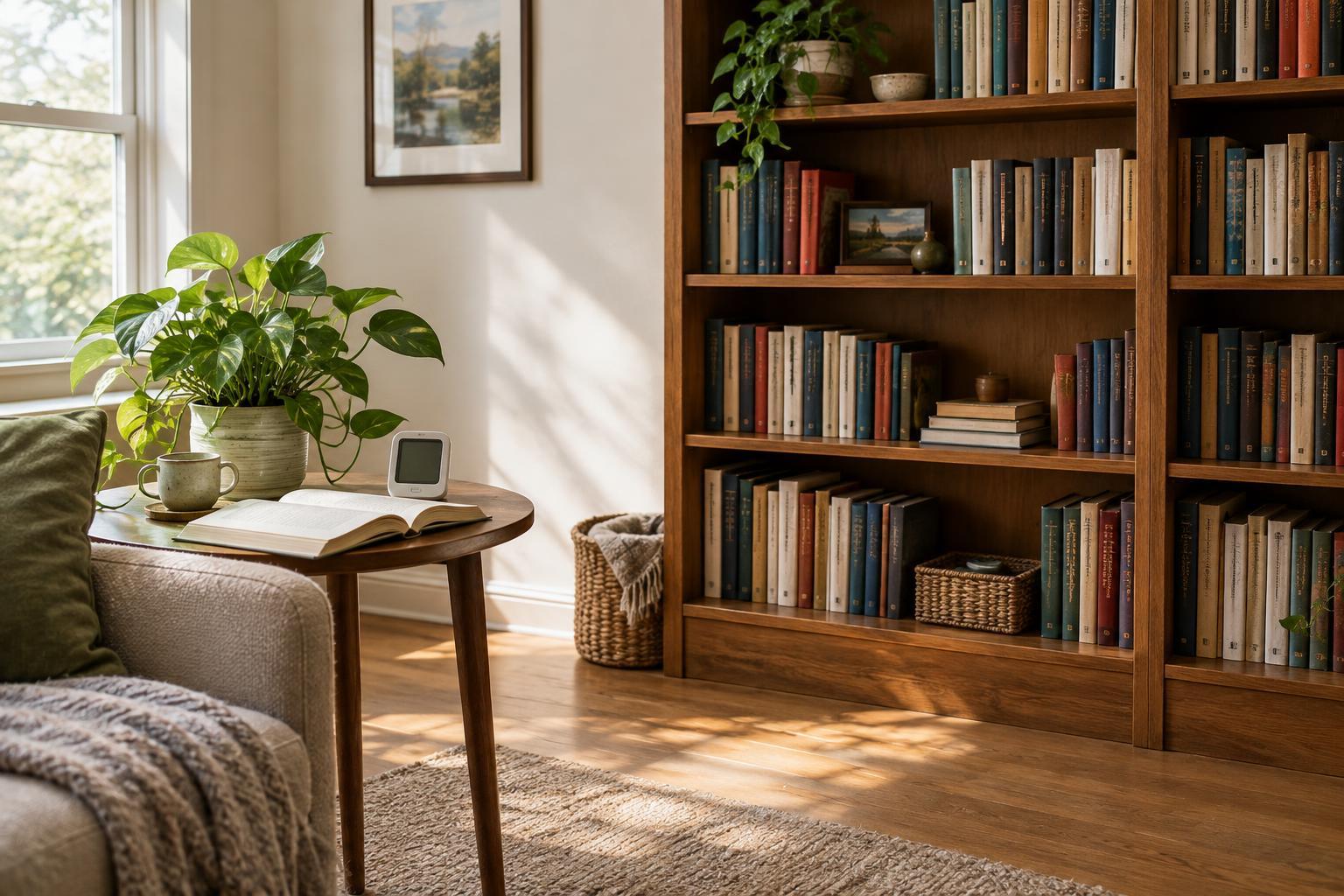
Start with the room, not the bookshelf
A well-loved book can tolerate ordinary handling, but its surroundings matter when it sits on a shelf for months or years. Strong light can fade covers and dust jackets. Excessive heat may make paper and bindings more brittle over time, while damp conditions encourage musty smells, warped pages and mold. The most useful goal for a home library is not a perfect reading room. It is a reasonably comfortable space without prolonged extremes or frequent swings between hot, cold, damp and dry.
Walk through your home at different times of day before choosing a spot. Notice where sunlight falls, which walls feel chilly or damp, and whether a heater, radiator or air-conditioning vent blows directly onto a shelf. A bookcase on an interior wall in a regularly used room is often a better choice than one pressed against a sunny window, a hot appliance or an exterior wall prone to condensation.
Keep sunlight off the spines
Direct sunlight can gradually change the color of a book’s spine or cover, sometimes leaving a sharp line where a neighboring book shaded it. Moving a book out of a bright window is more dependable than trying to reverse fading later. If the only available shelves receive sun, consider shifting the bookcase, adding curtains or blinds, or reserving that spot for books you are less concerned about preserving.
Pay special attention to illustrated covers and colorful dust jackets, which may show fading sooner than plain bindings. You can also rotate books that serve as displays, giving each one a break from the brightest spot. A closed cabinet may reduce light exposure, but avoid treating it as a sealed container: books still benefit from a clean, dry space with some air circulation.
Avoid heat and sudden changes
A shelf beside a radiator may seem inviting in winter, but the books nearest the heat can spend long periods in unusually warm, dry air. Attics can become hot, and garages may shift markedly with the weather. For books you hope to keep, choose a space that stays fairly steady through the seasons. Leave a little distance between shelves and heat sources, and do not stack books directly on warm equipment.
Steadiness matters more than chasing an exact setting. In a room that is comfortable for people and free of obvious dampness, ordinary shelving habits usually do more good than complicated equipment. If you use heating or cooling, try not to aim the airflow straight at the books. When moving a collection from a cold or humid space, give it time to adjust in its new location rather than packing it immediately into airtight storage.
Watch for moisture without sealing books away
Humidity deserves attention because paper absorbs moisture from the air. Warning signs can include a persistent musty odor, wavy pages, damp-feeling shelves or condensation nearby. Check books along exterior walls and in basements more often, especially after a leak or a stretch of humid weather. Address the source of water first; rearranging books will not solve a dripping pipe or a damp wall.
Leave a small gap between the back of a bookcase and a wall that tends to feel cool, and avoid packing shelves so tightly that you cannot remove a book comfortably. Keep books off floors where minor spills or leaks might reach them. For everyday storage, a sturdy shelf in a dry room is generally preferable to a plastic bag or tightly sealed bin that could trap moisture already present. If books must go into boxes, make sure they and the storage area are dry first.
Make care part of your browsing routine
You do not need a formal inspection schedule. When you pull out a book, glance at the shelf behind it for dust, moisture or discoloration. Dust shelves gently and let them dry fully before replacing books. Stand most books upright with enough support that they do not lean heavily; place unusually large volumes flat if standing them strains their bindings. These small habits make problems easier to spot before they affect a whole row.
If you find a book that is wet or appears to have mold, separate it from the rest of the collection and deal with the moisture problem promptly. Avoid brushing suspected mold around indoors or returning a damp book to a crowded shelf. For a rare or especially meaningful volume, a book conservator can advise on next steps. For the everyday collection, the best protection remains simple: shade, a stable room, dry shelves and a little attention whenever you browse.