Give the display a small, clear job
A home book display works best as an invitation to browse, not a second storage system. Choose one purpose for each rotation: a few books you hope to read soon, stories connected by a theme, or old favorites you want to revisit. Limiting the display to the space you can comfortably spare makes each cover easier to see and reduces the temptation to stack books wherever they fit.
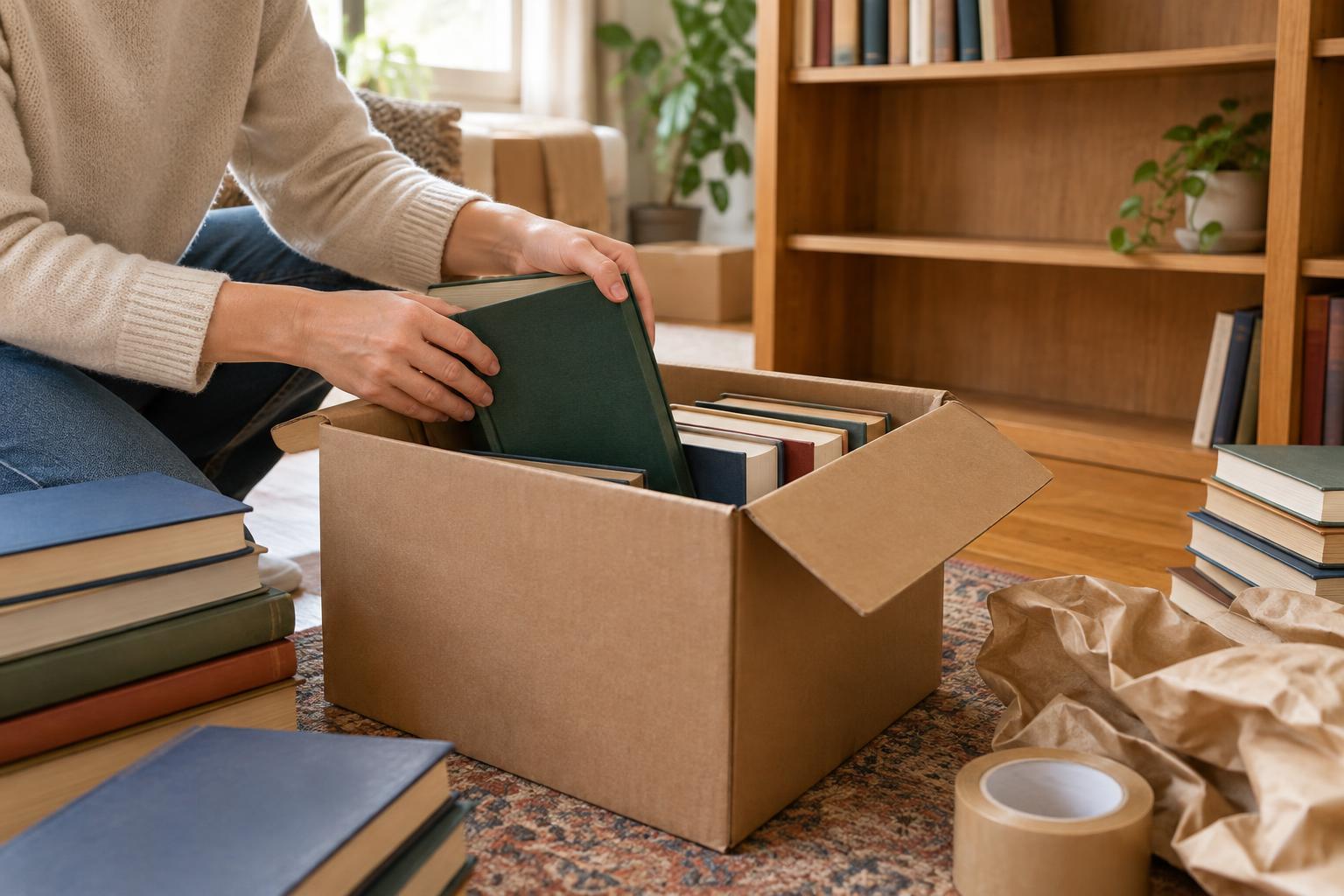
Before pulling anything from the shelves, decide where displayed books will go when their turn ends. If your collection is arranged by author, subject, or reader, return books to those same places. A small note on your phone or a slip of paper listing the displayed titles can help if several people share the shelves. The aim is to make a book more noticeable for a while without making it harder to find later.
Keep the rest of the shelf browsable
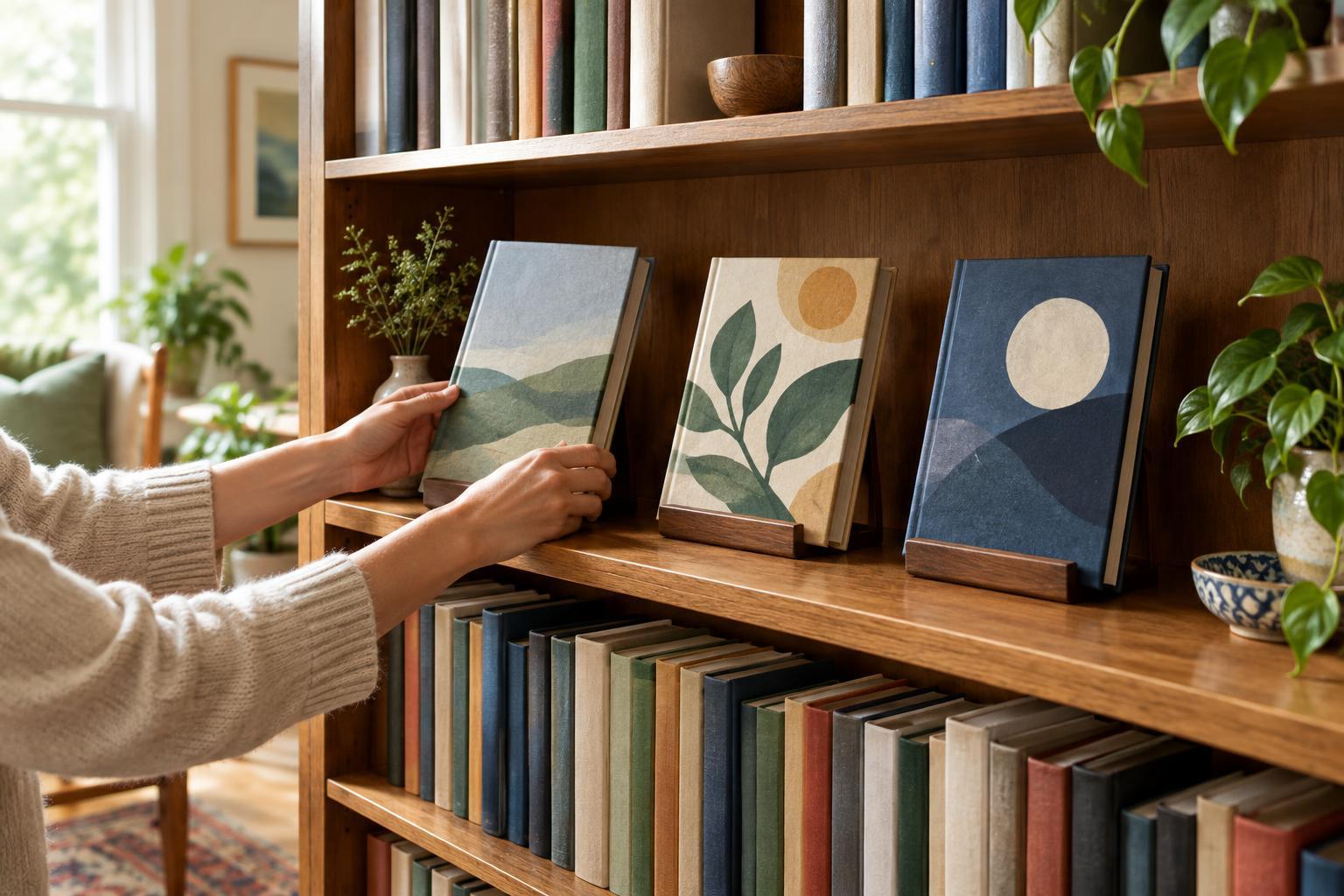
Face-out books draw attention, but they can conceal the spines behind them. On a crowded shelf, try displaying just one or two covers at the end of a row, with the remaining spines still readable. Another option is to dedicate a shallow shelf or a stable ledge to featured books, leaving the main collection in its usual order. If a book must sit in front of others, choose a spot where it can be lifted away easily rather than wedging it into a tight row.
Think about who uses the collection. A child may enjoy choosing from a low, face-out selection, while an adult looking for a particular title may appreciate an uninterrupted alphabetic shelf. Displays can serve both: keep a modest selection within easy reach and preserve a predictable home for the rest. If a rotation repeatedly leaves people asking where a book went, reduce the number on display or move the display away from the main shelves.
Support the book, not just its cover
A book on display should rest securely without being forced open or balanced on its binding. For a closed, face-out book, use a broad, stable stand or a shelf lip that supports the lower edge. Check that the stand does not pinch the cover or let the book slide. Large or heavy books may be better displayed flat on a sturdy surface, provided they are not placed where someone must move them constantly.
Avoid tape, adhesive dots, clips, and tight bands on books you want to keep in good condition. They can mark surfaces or put pressure on edges. If you display a book open, let it rest at a comfortable angle with support beneath both sides; do not flatten the pages to hold a favorite illustration in view. For fragile books, a closed display or a clear space on the regular shelf is often the gentler choice.
Choose a spot that is kind to books and people
Position displays away from strong direct sunlight, damp areas, and heat sources where possible. Light can fade covers over time, while moisture and fluctuating conditions may be unkind to paper. A window may look like the perfect backdrop, but an interior shelf can be a better everyday home. Leave enough room to pick up a book without scraping its corners against a wall, stand, or neighboring volume.
Stability matters as much as appearance. Keep heavier books low, check that stands sit firmly on their surface, and avoid displays that project into a busy walkway. In a household with young children, choose a reachable display for books they are welcome to handle and keep delicate or heavy volumes somewhere more secure. The best-looking arrangement is one people can use without worrying about knocking everything over.
Make rotation an easy habit
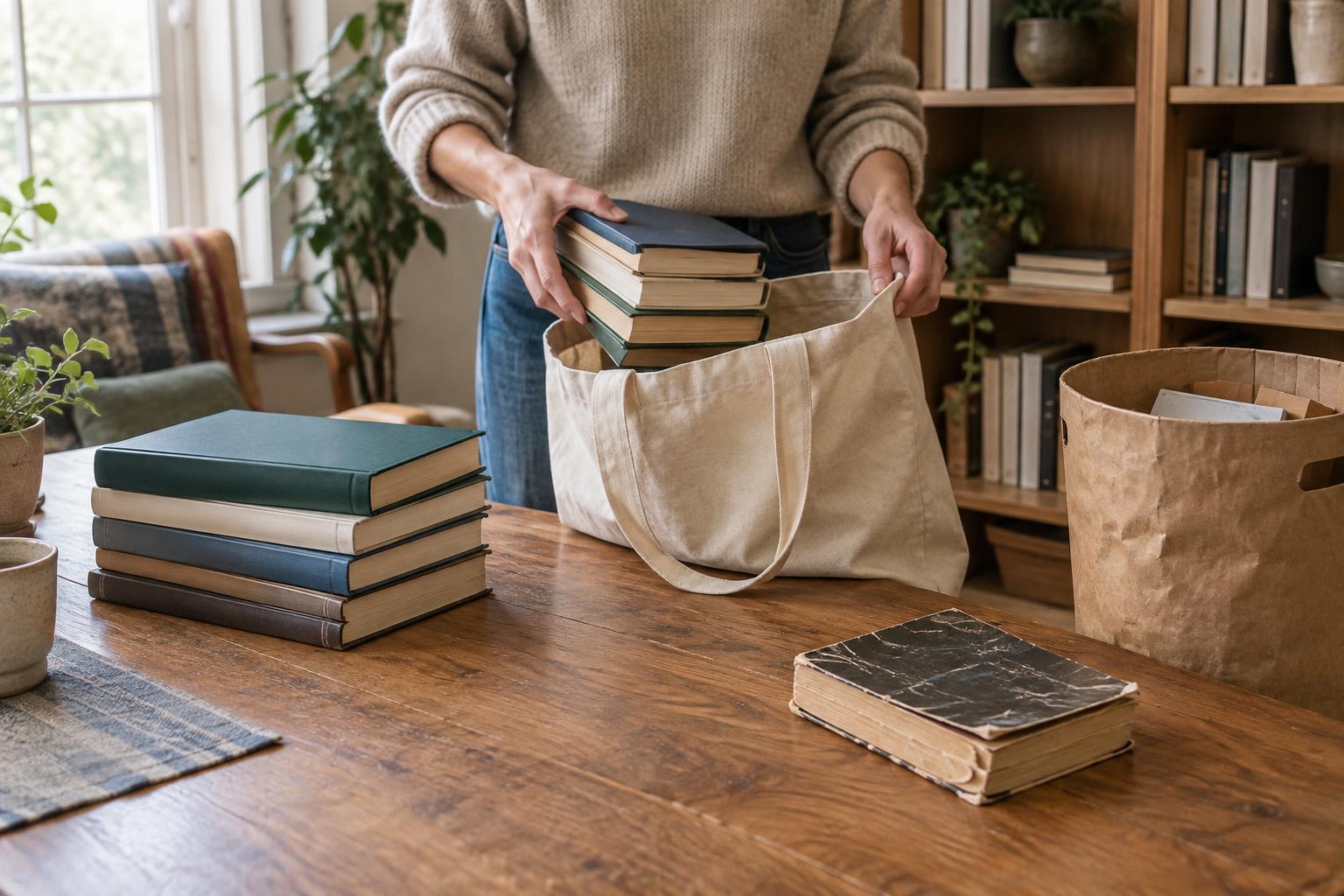
There is no need to change every display on a fixed schedule. Swap a few titles when the selection stops catching your eye, when someone finishes a featured book, or when a new reading interest emerges. Returning each book to its usual place before choosing its replacement keeps the task short and prevents a growing pile of displaced titles.
Use the swap as a quick care check. With clean, dry hands, lift books by their covers or sides rather than tugging at the top of the spine. Brush dust from the shelf, notice any slipping stands, and give crowded rows a little breathing room. A thoughtful rotation should leave your books as easy to locate and pleasant to handle as they were before—just with a new reason to pick one up.