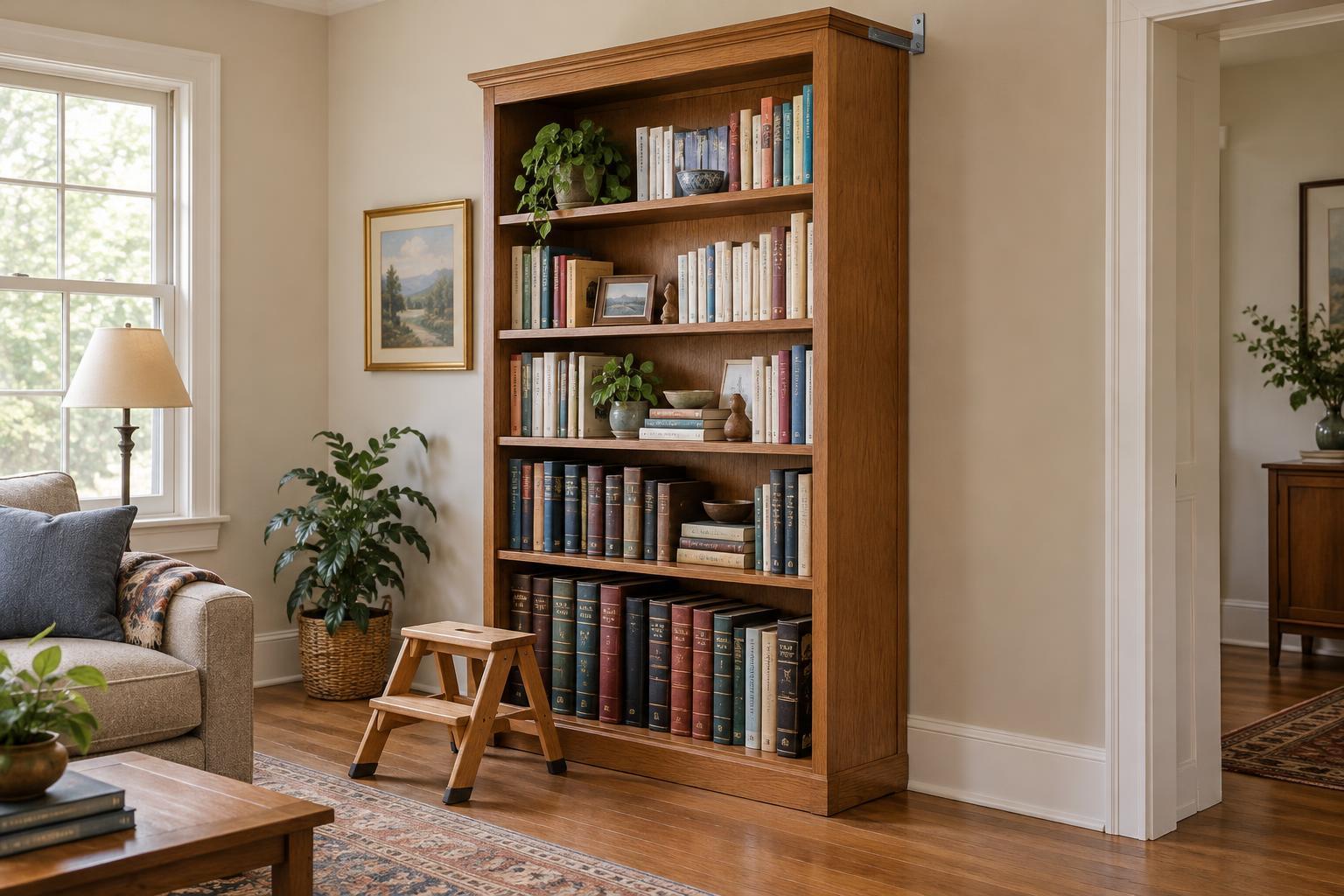
Start with the bookcase and its location
A well-loved book collection can become surprisingly heavy. Before filling a bookcase, check that the unit is sound: joints should be tight, shelves should sit securely on their supports, and the frame should not rock or lean. Follow any assembly instructions and stated load limits. If a shelf bows noticeably or a unit feels unstable when empty, rearranging the books alone will not solve the underlying problem.
Choose a level spot where the bookcase will not obstruct a doorway or narrow passage. Uneven flooring can make a unit wobble; use leveling feet if provided, or suitable furniture shims, rather than relying on a stack of paper or cardboard. Avoid placing a tall case where an open door is likely to strike it. Think about who uses the room, too: a tempting top-shelf book may encourage a child to climb.
Anchor tall bookcases against tipping
Wall anchoring helps prevent a bookcase from tipping forward if someone pulls on it, climbs it, or opens a heavy door nearby. Use the anti-tip hardware supplied by the manufacturer when available, and follow its directions for both the furniture and the wall connection. A loose strap or an attachment fixed only to a thin backing panel may not provide the intended protection.
The right wall fixing depends on what is behind the surface. Wood studs, masonry, and hollow walls require different fasteners; a screw placed in drywall alone is not a substitute for a suitable anchor. If you are unsure what the wall is made of or where it is safe to drill, ask a qualified installer. Check for possible electrical or plumbing services before drilling, and get permission where required if you rent. In places where earthquakes are a concern, follow relevant local guidance as well as the furniture instructions.
Anchoring is not a one-time excuse to ignore the rest of the setup. After moving a case or adding shelves, check that the fittings are still secure and that the furniture remains level. Keep any supplied anti-tip parts with the bookcase if you rearrange the room so they can be fitted again.
Put the heaviest books low
A useful rule for loading shelves is to keep the center of weight low. Place oversized art books, encyclopedias, and tightly packed hardcovers on the bottom shelves. Lighter paperbacks, small displays, and less frequently handled items can go higher. This also makes the heaviest books easier to lift without reaching above your shoulders.
Spread weight across each shelf rather than crowding everything at one end. Check the bookcase’s shelf-load guidance if it is available, especially for long shelves that may sag under a continuous row of books. Bookends can keep a partial row upright, but they do not increase a shelf’s load capacity. If a shelf bends, reduce its load and inspect its supports; do not assume it will straighten once more books are added elsewhere.
Make safe browsing an everyday habit
Leave a little room to remove books without tugging hard on a packed row. Keep rolling ladders, step stools, and other climbing aids appropriate to the space and in good condition; never use the shelves themselves as steps. In a household with young children, store especially appealing items within easy reach and explain that bookcases are for books, not climbing.
Recheck your arrangement as the collection grows. A stable case can become overloaded gradually, and a shelf that once held a few novels may later carry stacks of large hardcovers. A brief look for leaning, loose fittings, sagging shelves, and crowded walkways helps keep the home library as welcoming as it is practical.