Begin with the claim you have
A quotation may look convincing because it appears beside a familiar name or inside an article you trust. But a name is not a source. Words can be shortened, paraphrased or copied with an error, and a claim about what someone said may differ from the words they actually used. Tracing a quotation means finding the earliest relevant record you can examine, then checking whether it supports the version in front of you.
Start by saving the claim as you found it. Note its exact wording, the person or organization it is attributed to, and where it appeared. Keep any details that might help you search: a book title, speech venue, publication name or subject. If the claim includes numbers, record them too. This small snapshot gives you something to compare with later versions, rather than relying on your memory of a striking sentence.
Follow the trail backward
Search for a distinctive phrase from the quotation inside quotation marks. If the results only repeat the same short excerpt, try a longer phrase, a shorter unusual phrase or a key idea without quotation marks. Search the attributed speaker’s name alongside a topic or a title. A slightly different wording may reveal that the popular version is a paraphrase rather than a direct quotation.
As you open results, look for where each writer got the claim. An article may link to a report; that report may cite a book; the book may identify an interview or letter. Follow those references rather than counting repeated appearances as independent confirmation. Ten pages copying one unsourced quotation are still one unverified trail. If a page offers no citation, it may help you find search terms, but it cannot tell you where the words began.
Find a source you can inspect
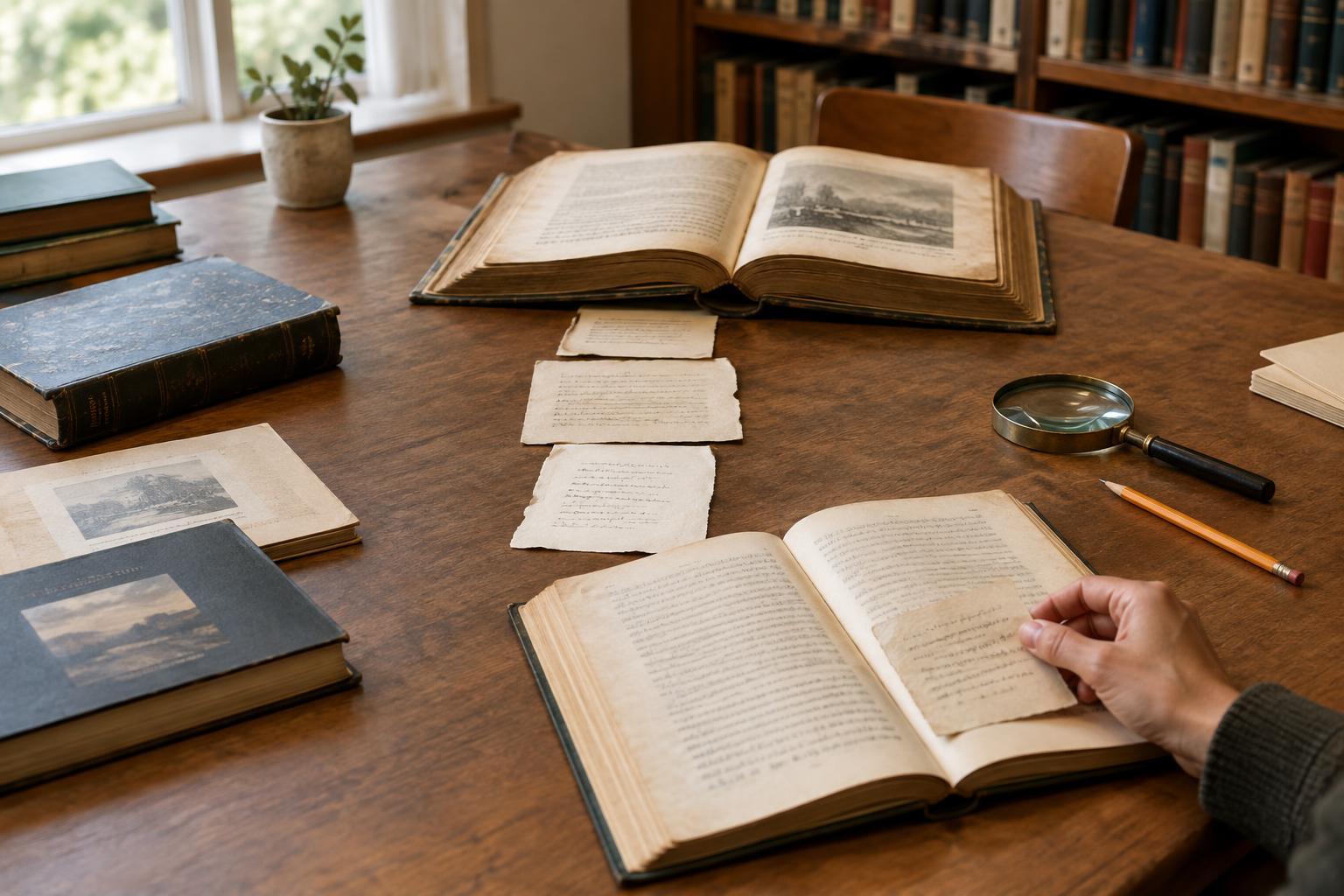
The best stopping point depends on the claim. For a line attributed to a novel, look for the passage in the novel and identify the edition if page numbers matter. For remarks from a talk, a full recording or transcript is more useful than a clip. For a reported finding, look for the underlying report or study rather than a headline about it. An original source is the record most directly connected to the words or evidence you are checking; it is not automatically proof that every statement within it is true.
Use the clues in citations carefully. A reference to a chapter, page or document title can lead you to a library catalogue, publisher preview, archive or other accessible copy. Check that you have the right work and version. If you cannot view the source itself, say so in your notes. A reliable intermediary that gives a precise citation is useful, but it is different from reading the cited passage yourself.
Read beyond the quotable line
Once you find a likely match, read the surrounding paragraph or section. Who is speaking, and to whom? Is the sentence a firm conclusion, a question, a hypothetical example or a description of someone else’s position? Watch for small changes that alter meaning: removing “may,” swapping “some” for “all,” or cutting a sentence before its qualification. An accurate string of words can still create a misleading impression when lifted from its setting.
Check the attribution as well as the wording. In a book, a character’s speech is not necessarily the author’s view. In an interview, a journalist’s summary is not a verbatim remark. If the quote concerns a statistic, inspect what was counted and how the source defines its terms. Your aim is not merely to find matching words, but to learn what the original record supports.
Share what you found—and what you did not
When the trail holds up, give others enough information to follow it: the creator, work or document title, and a useful location such as a chapter, page or section when available. You can briefly explain whether you found an exact quotation or a fair paraphrase. If the wording has changed, quote only the portion you verified and describe the difference plainly.
Sometimes the trail ends at an inaccessible book, a broken reference or a page that names no source. That is a finding, not a failure. You might say, “I found this wording repeated in several places, but I could not verify it in the attributed work.” Keeping that distinction between found, inferred and unverified makes your own writing more trustworthy—and gives the next curious reader a better place to begin.