Choose a scene small enough to draw
A comic strip is a playful way to spend more time with a story after closing the book. You do not need to draw every chapter, or even everything that happens on one page. Pick a single moment with a clear change: someone discovers a clue, makes a choice, meets a new character or realizes they were mistaken. That change gives your strip a beginning, middle and end.
Before picking up a pencil, describe the scene in one sentence: “The character opens the box and finds something unexpected.” Then ask what a reader must know to understand that moment. Perhaps the box has been hidden, or the character expects it to be empty. You can show that information in a picture or a few words. Leave out details that do not help the scene make sense.
Plan the action in a few panels
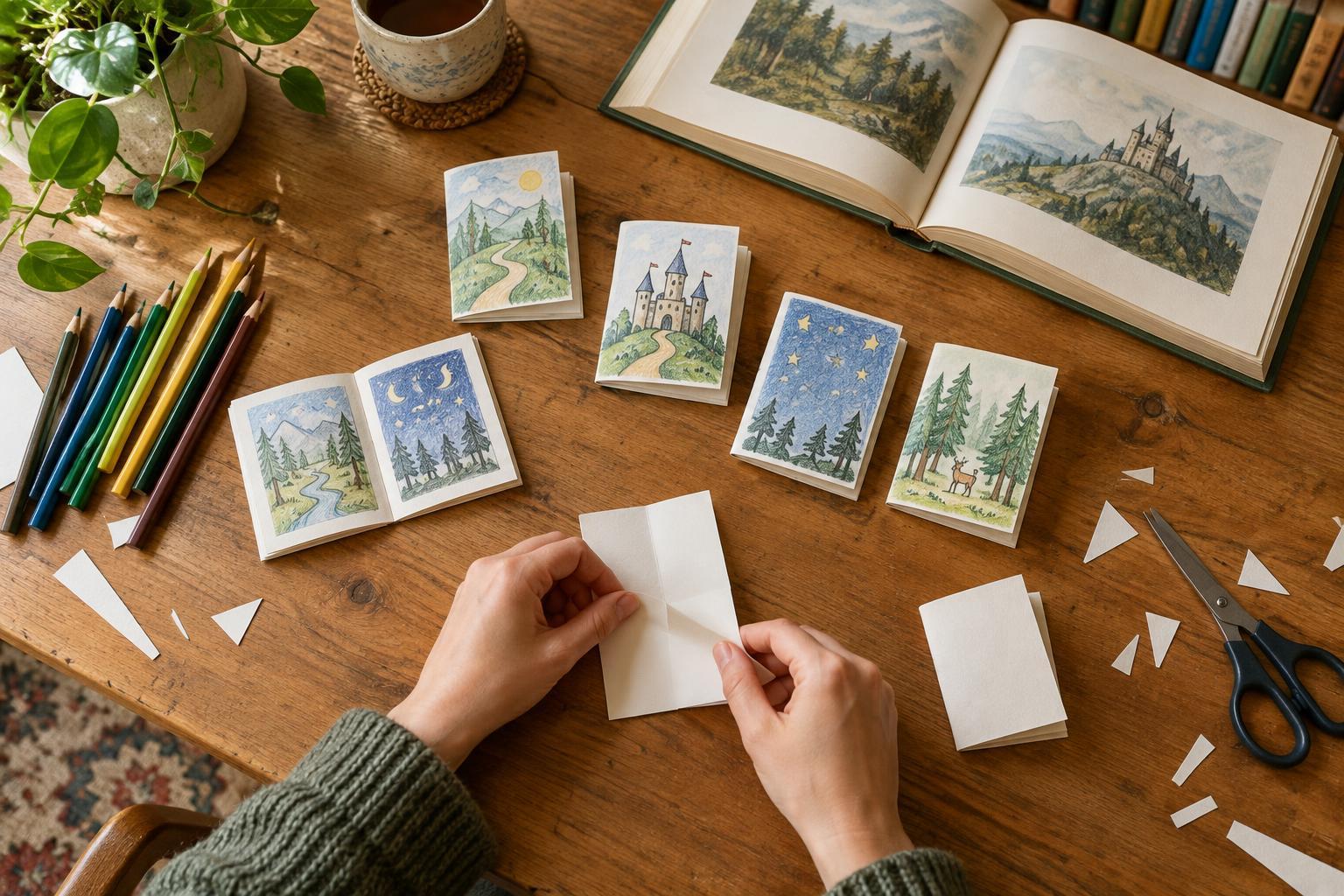
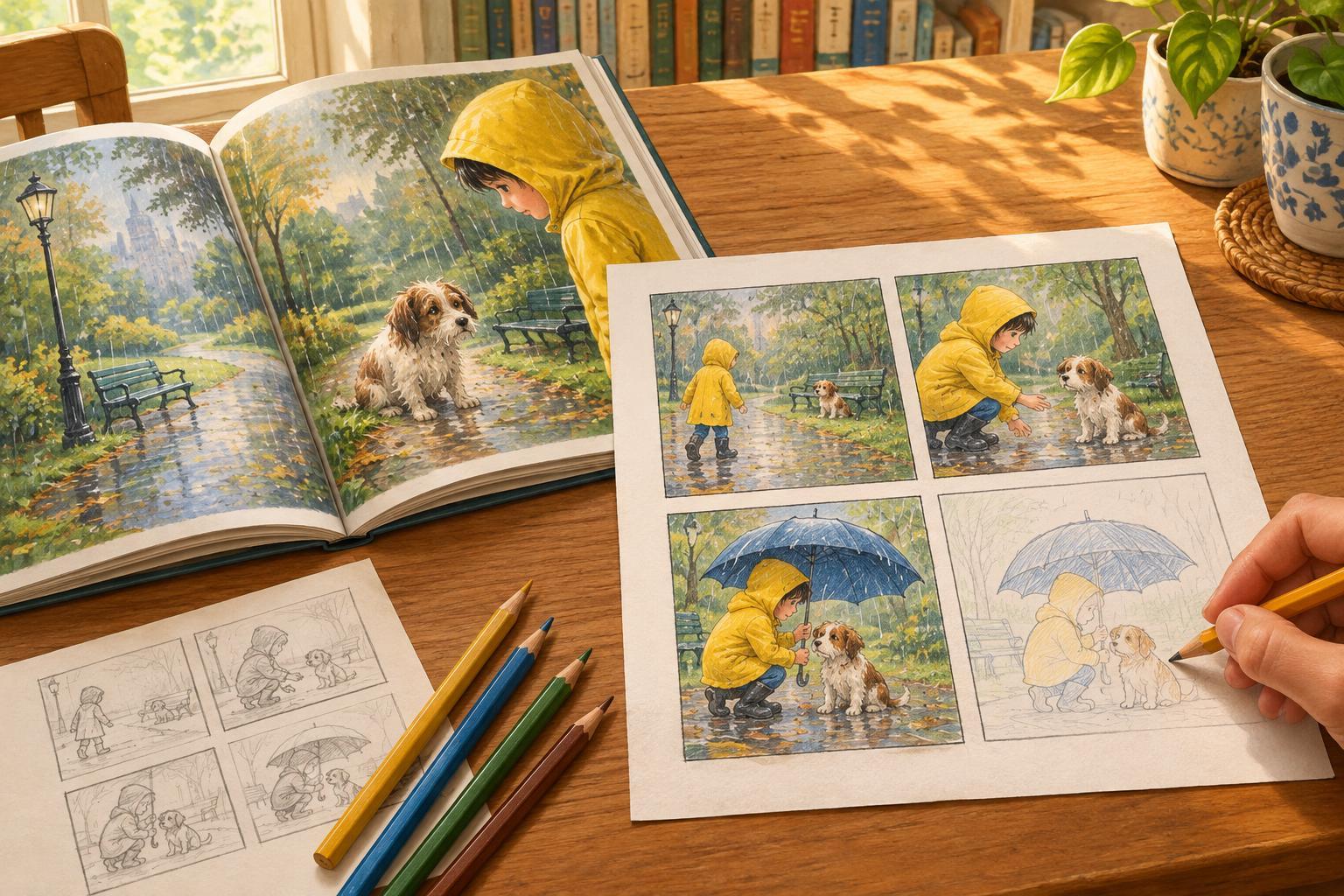
Fold a sheet of paper into four or six spaces, or draw boxes lightly in pencil. Each box is a panel: one step in the action. For a four-panel strip, you might show the character approaching the box, reaching for its lid, seeing what is inside, and reacting. This quick plan is a storyboard. Stick figures are enough for now; the point is to decide what the reader will see and in what order.
Give an important moment room to breathe. A panel showing a hand hovering over the lid can build anticipation, while a close-up of the character’s face can make the discovery feel personal. You can also change the size of a panel to emphasize a surprise. If the sequence feels confusing, number the panels temporarily and ask someone to explain what happens just by looking at them.
Let pictures and words share the work
Comics do not need a sentence for every movement. A raised eyebrow, a dropped bag or a door left ajar can tell the reader plenty. Use speech bubbles for words characters say and thought bubbles, if you like, for thoughts they keep to themselves. A small caption can establish a place or a passage of time, such as “Later, in the library.” Keep lettering large enough to read, and leave space for it before filling a panel with drawings.
Try choosing one detail from the book that helps the scene feel recognizable: a muddy boot, a peculiar key or a character’s habit of looking over their shoulder. Then decide what your version will add. You might focus on a quiet reaction the prose only hints at, or draw the scene from another character’s viewpoint. You are not trying to replace the book. You are exploring one way its words could become images.
Make a draft, then check the reading path
Draw the whole strip lightly before adding ink or color. Follow it as a reader would, moving from one panel to the next. Is it obvious who is speaking? Does the character stay recognizable? Can you tell where the action happens when that matters? Simple fixes often help more than extra detail: move a speech bubble closer to its speaker, repeat a distinctive piece of clothing, or add a background object that anchors the setting.
Do not worry about polished art. Clear shapes and expressive poses can carry a scene even when the characters are simple. If drawing feels daunting, make a collage with cut paper, use small objects as characters, or sketch each panel as a series of basic shapes. For a group activity, everyone can choose the same scene and compare the different choices they made about what to show.
Finish with a question about the story
Once the strip is complete, give it a title and note the book and author that inspired it. If you share it with friends or family, invite them to identify the turning point and ask what they think the character feels. Their answers may reveal which details in your strip speak clearly and which could use another clue.
Finally, look back at the original scene. What did the book convey easily in words that was tricky to draw? What could your pictures show without explanation? Those questions turn a craft project into a closer look at storytelling. You may find that the next scene you want to draw calls for fewer panels, a different viewpoint or a longer pause before the surprise.