Begin with an image that stays with you
Some books leave behind a picture in your mind: a path disappearing into trees, a crowded kitchen, a coat hanging by a door. A found-object collage gives that picture a physical form using things you already have. It does not need to illustrate a whole plot or match a description exactly. It can capture a color, a texture, a place, or the feeling of a particular moment.
Choose a book you have read recently, or return to a passage you remember vividly. Notice two or three concrete details, such as rain on a window or the shape of a key. Then ask what seems important about them. Is the window a sign of shelter, or does it make the room feel closed in? Your answer becomes a starting point, not a rule the finished collage must follow.
Gather objects with possibility in mind
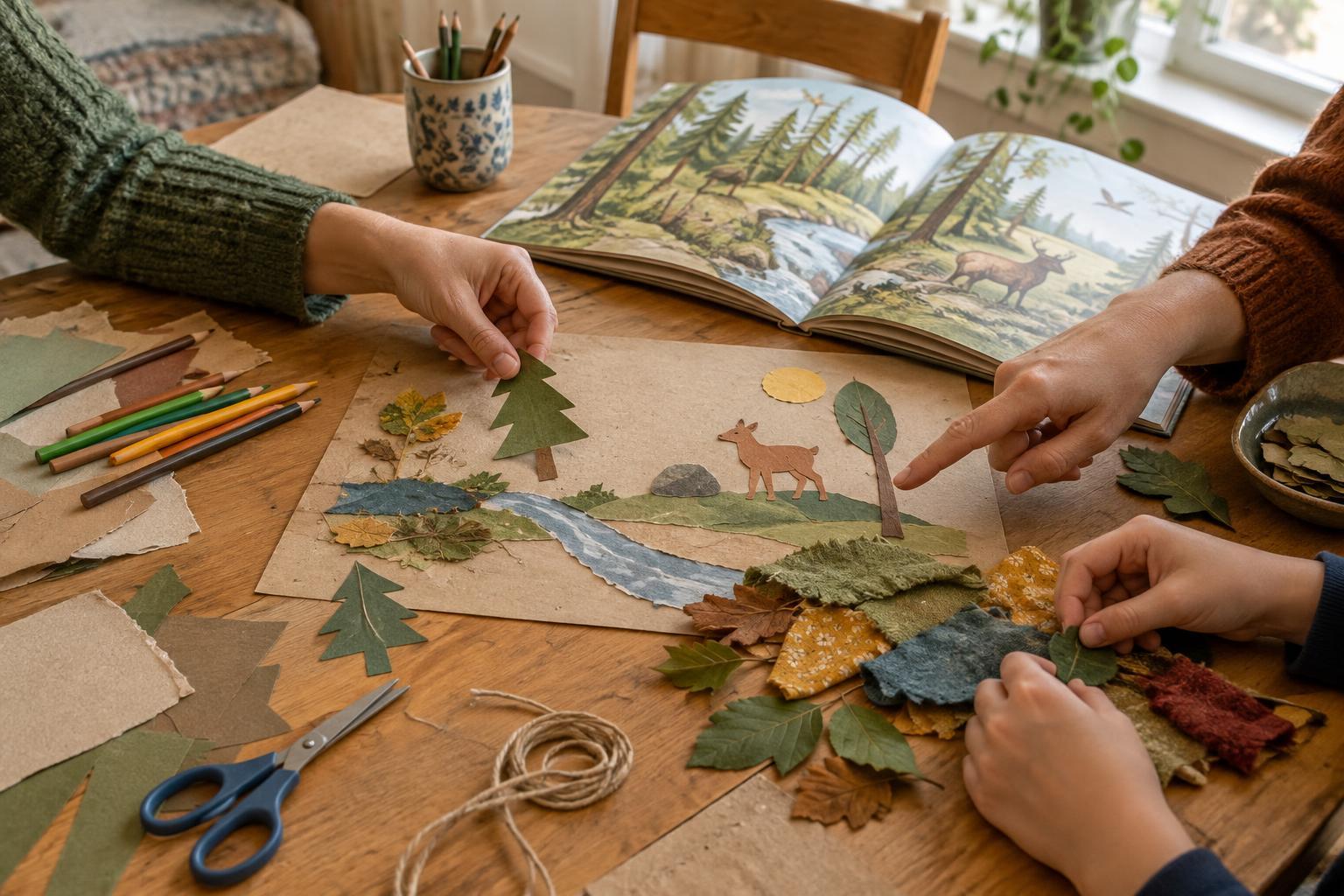
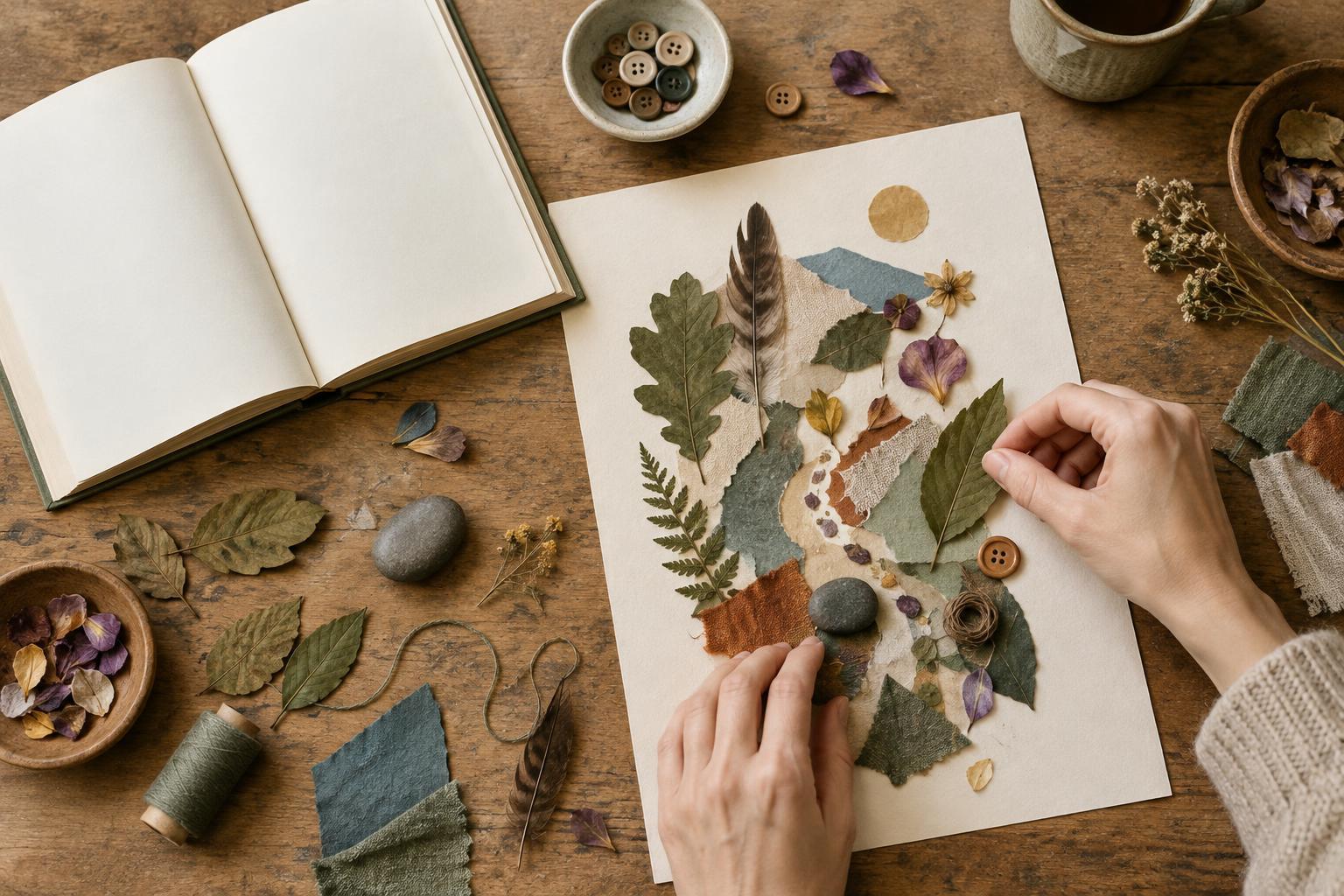
Start with a base such as a piece of cardboard, a paper bag cut open, or a sheet of sturdy paper. Look for clean, lightweight materials: scrap paper, fabric offcuts, ribbon, packaging, leaves that have already fallen, or buttons from a craft box. A torn envelope might become a doorway; a strip of blue fabric might suggest water or evening light. Set out scissors, glue or tape if you want to attach the pieces.
Make the search part of the activity. Rather than asking, “What looks like a tree?” try, “What has the roughness or branching shape I noticed in the story?” Keep borrowed items, library books, and anything someone wants to use again away from scissors and glue. If young children are joining in, choose larger, blunt-edged pieces and supervise materials that could be swallowed or cut fingers.
Build the collage before fixing it in place
Lay your objects on the base without attaching them. Try placing the most important image first, then move smaller pieces around it. A large dark shape at the edge can make a small bright shape feel distant; overlapping pieces can suggest a busy room or a hidden object. Turn materials over, fold them, or leave gaps between them. Empty space can convey as much as a carefully filled corner.
If you feel stuck, give yourself one gentle constraint. Use only three colors, arrange everything around a single object, or make a collage of the setting without including any characters. You can also work without glue at first and photograph each arrangement before changing it. Once a version feels right, attach what you want to keep. There is no need to preserve every experiment.
Let your interpretation lead
A collage inspired by a book is not a test of how accurately you remember it. Two readers might choose the same scene and make very different work. One might use soft cloth and warm paper to show comfort; another might use crowded, jagged shapes to show unease. Both can be thoughtful responses if the choices connect to what each reader noticed.
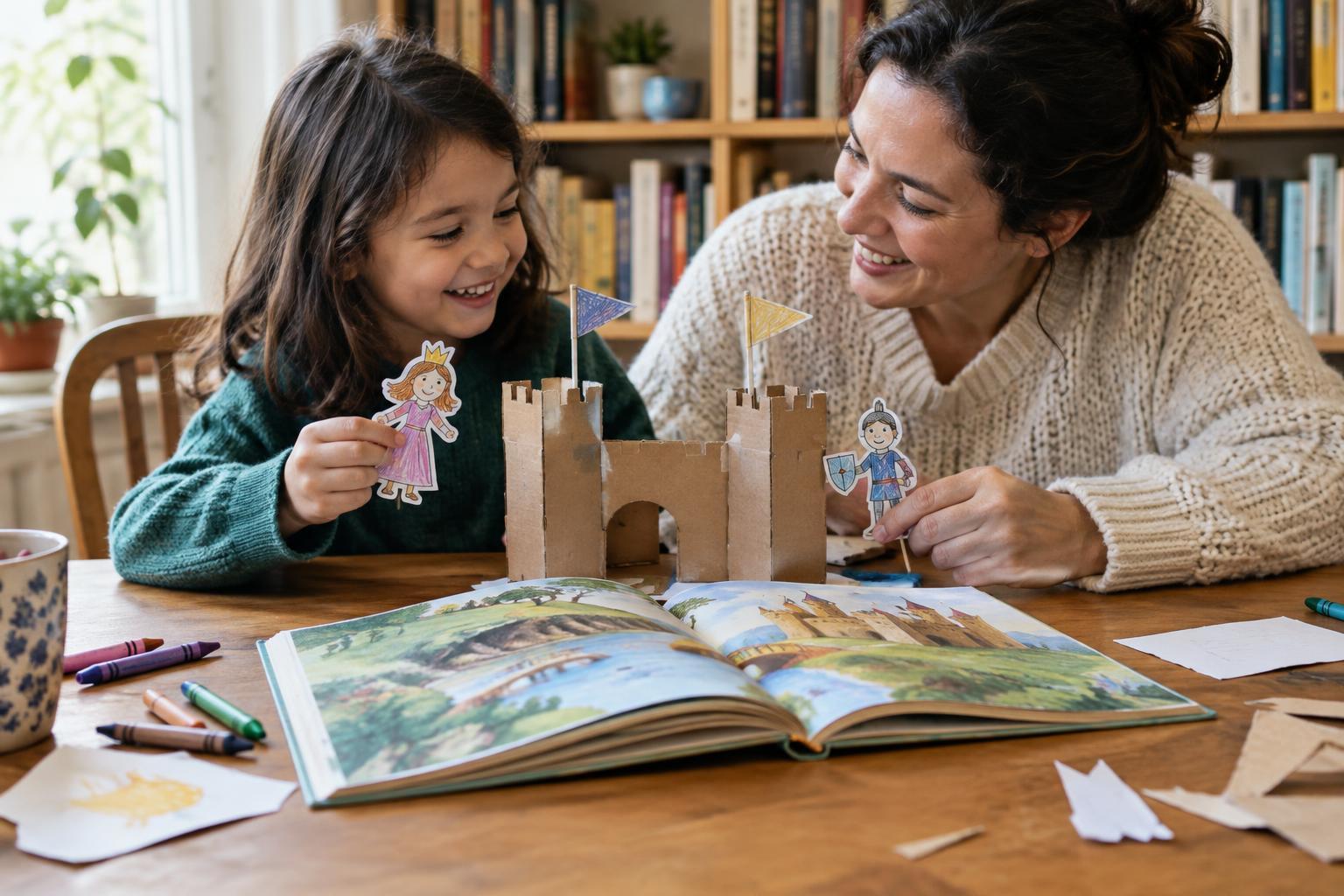
For a group activity, invite everyone to choose their own image from the same book, or let each person bring a different book. Give people room to explain a choice without requiring them to defend it. A simple prompt such as “Which piece carries the strongest memory of the story?” can open a conversation about imagery while keeping attention on the makers’ ideas.
Share the story behind the materials
When the collage is finished, give it a title or write a few sentences about its objects. You might describe what a material stood for, or how its meaning changed while you worked. A scrap chosen for its color may turn out to represent a character’s mood; an accidental gap may become the most interesting part of the scene.
Display the collage beside the book on a shelf, or keep a photograph with a note about the passage that inspired it. If you make another collage after rereading, compare what caught your attention each time. The aim is not to produce a perfect picture. It is to spend a little longer with the images a book has given you—and discover what ordinary objects can help you say about them.