Start with the books people reach for
A home library does not need a perfect catalog to be useful. Start by noticing how people actually choose books. Do they look for a favorite author, a type of story, a school subject or whatever looks inviting? The best arrangement is one that helps those searches without making the shelves feel too precious to touch.
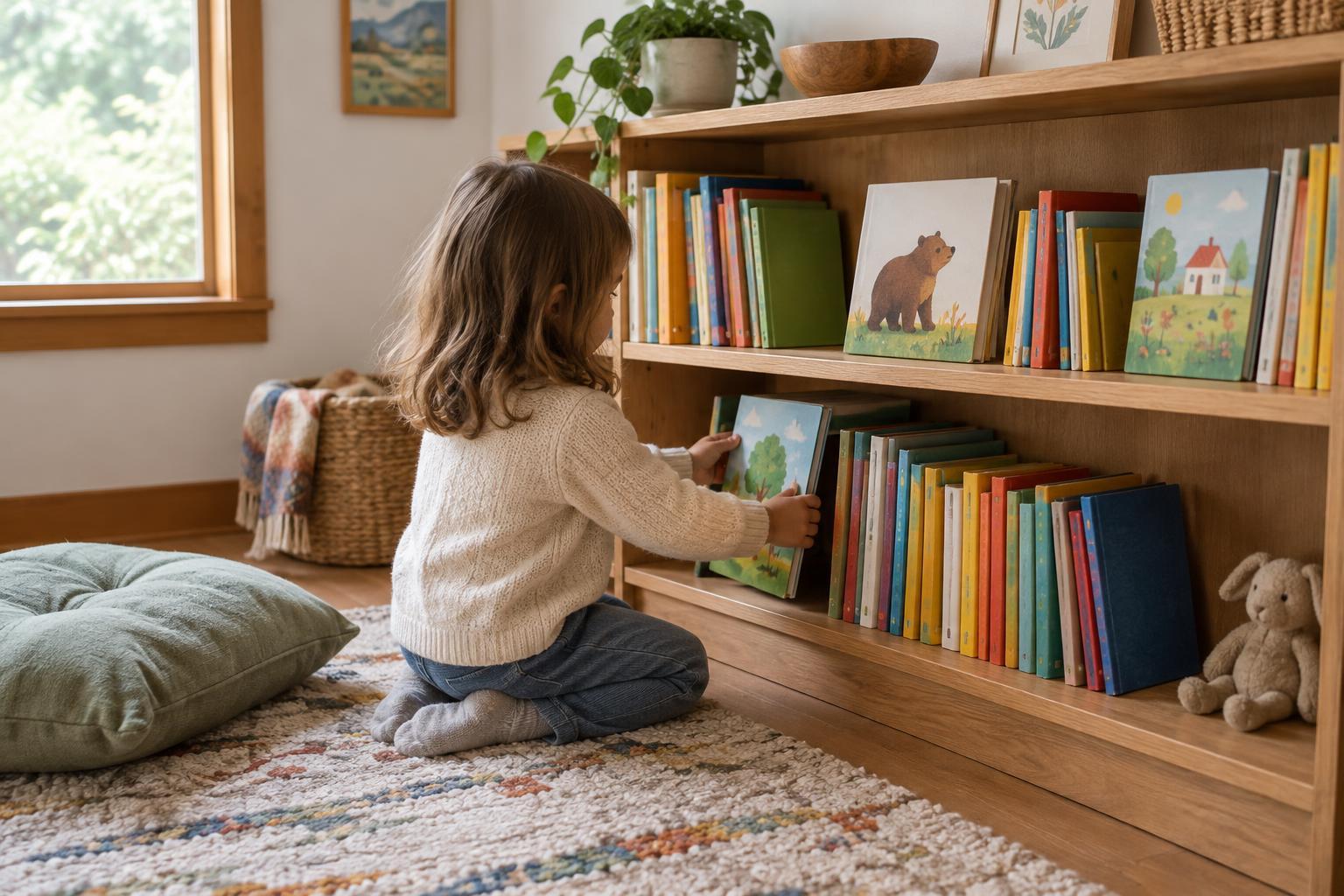
Put frequently used books where their readers can reach them comfortably. Keep everyday choices between a low bend and a high stretch when your space allows. Reserve harder-to-reach shelves for books used less often, and avoid placing heavy volumes where someone must lift them overhead. If several people share the collection, their comfortable reach may differ; a child's picture books, for example, may belong on a lower shelf than an adult's cookbooks.
Make reaching a book feel straightforward
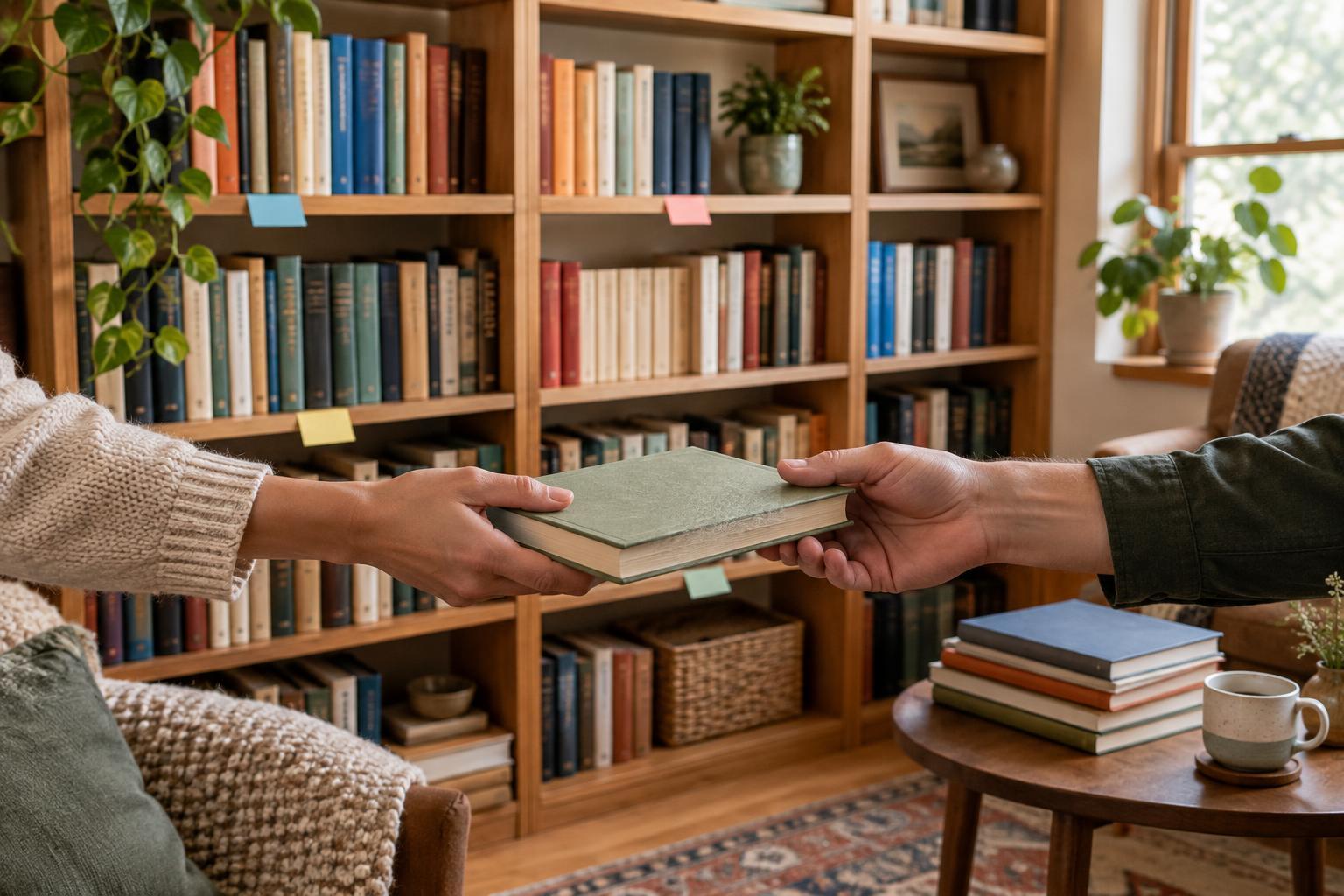
Walk up to each shelf as though you were choosing a book for the first time. Is there room to stand, turn and pull it out? Can you see the spines without moving a stack? Clear the floor around bookcases and leave enough space between books to remove one without tugging at its neighbors. A shelf packed tightly may hold more, but it can make browsing frustrating.
Display a few books face-out if you have the room, particularly for young readers who recognize covers more readily than spines. Baskets or sturdy bins can hold thin books that disappear on a shelf, provided they are not so full that titles become difficult to see. Keep the heaviest items on stable, lower shelves and follow the furniture maker's guidance for securing tall bookcases. A step stool may help some readers, but it is no substitute for putting their regular choices within easy reach.
Choose a system that is easy to remember
A useful home arrangement can be simple: fiction in one area, practical books in another, and a spot for books waiting to be read. Within those areas, you might group by author, subject or reader. There is no need to impose the same rule on every shelf. The point is to give each book a place that makes sense to the people who use it.
Before creating many categories, try sorting a small section and living with it for a while. A label such as “Nature” may be more helpful than several narrow divisions if you own only a handful of related books. Leave a little spare space for new arrivals, and make an obvious place for books to be returned. That one landing spot can prevent an orderly system from turning into a scavenger hunt.
Write labels people can read at a glance
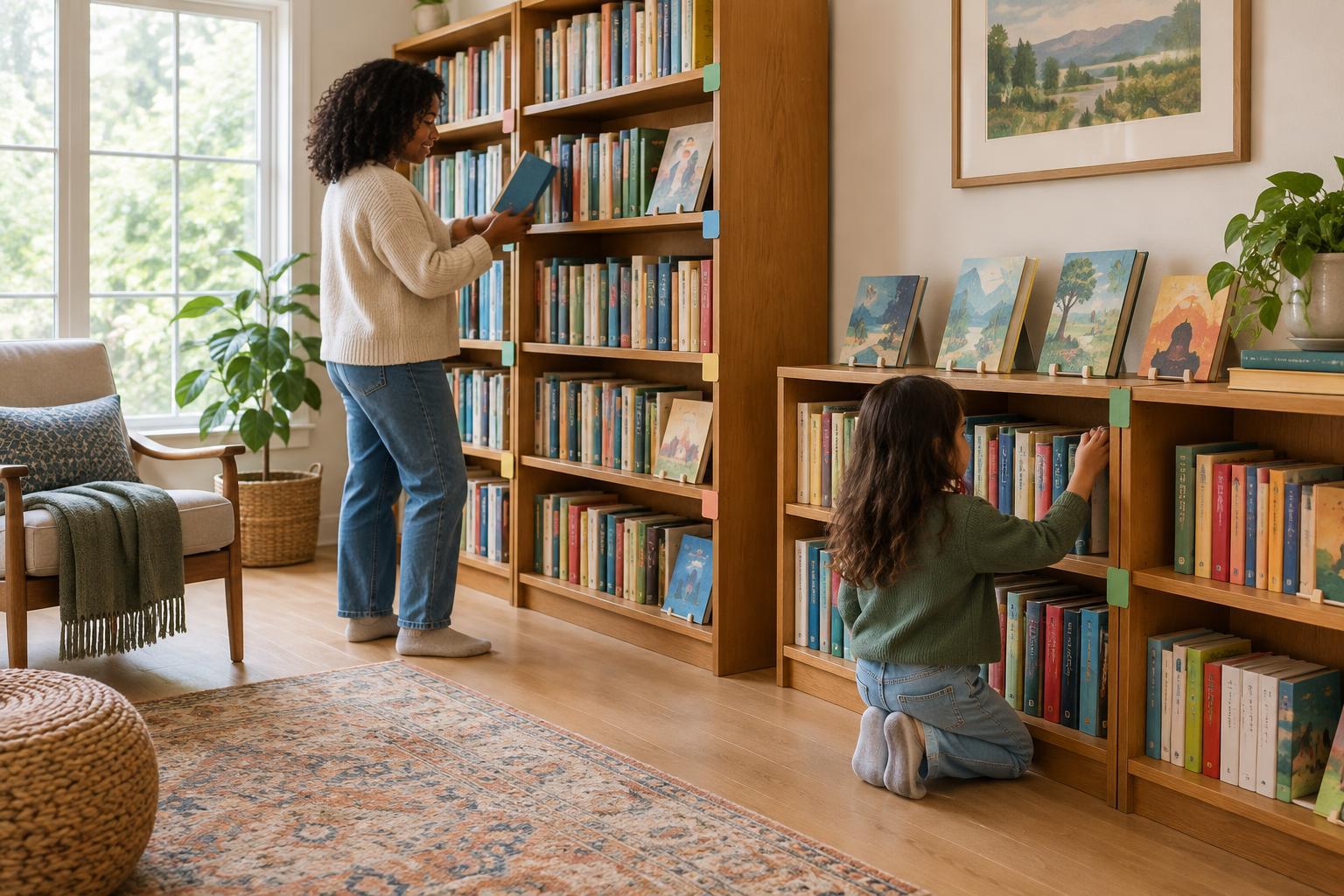
Labels help most when they are short, consistent and visible from the place where someone browses. Use familiar words such as “Mysteries” or “Cooking” rather than clever names that need explaining. Choose clear lettering with strong contrast against its background. Before making a full set, put up one sample and check whether you can read it from a comfortable distance in the room's usual light.
Place labels on shelf edges, dividers or bins rather than where books will hide them. Pairing words with simple pictures can help children and anyone still learning the language used on the labels. You can also label both the shelf and a removable bin so its contents remain identifiable if it gets moved. Avoid relying on color alone to mark categories: a word or picture keeps the system understandable without having to remember what each color means.
Let the shelves change with their readers
A home library is a working space, not a finished display. Children's reach and interests change; a new hobby can suddenly make one section busy; a reader may prefer larger print or an easier path to a favorite series. An occasional look at what is being borrowed, left out or ignored can reveal where the arrangement is helping and where it is getting in the way.
Invite the people who use the shelves to test them. Ask someone to find a book and then put it back without directions. If they hesitate, the answer may be a clearer label, a less crowded shelf or a different location for the whole category. Small adjustments are easier to keep up than a grand reorganization, and they make the collection feel like a place to explore rather than a puzzle to solve.