Start with the books and the room
Before choosing a bookcase, look at what you own and how you use it. A small collection of novels may fit neatly on standard shelves, while tall art books, heavy reference volumes and picture books need more considered spacing. Notice which books you reach for every week and which you mainly want to keep safe. Storage works best when the most-used books are easy to see, lift and return.
Measure the available floor space, but also check ceiling height, door clearance and the path through the room. Leave enough space to pull out a book without moving a chair or opening a cabinet door into a walkway. If your collection is still growing, plan for some empty shelf space rather than filling every unit on the day it arrives. These observations will make it easier to judge which storage style suits your home.
Open shelves make browsing easy
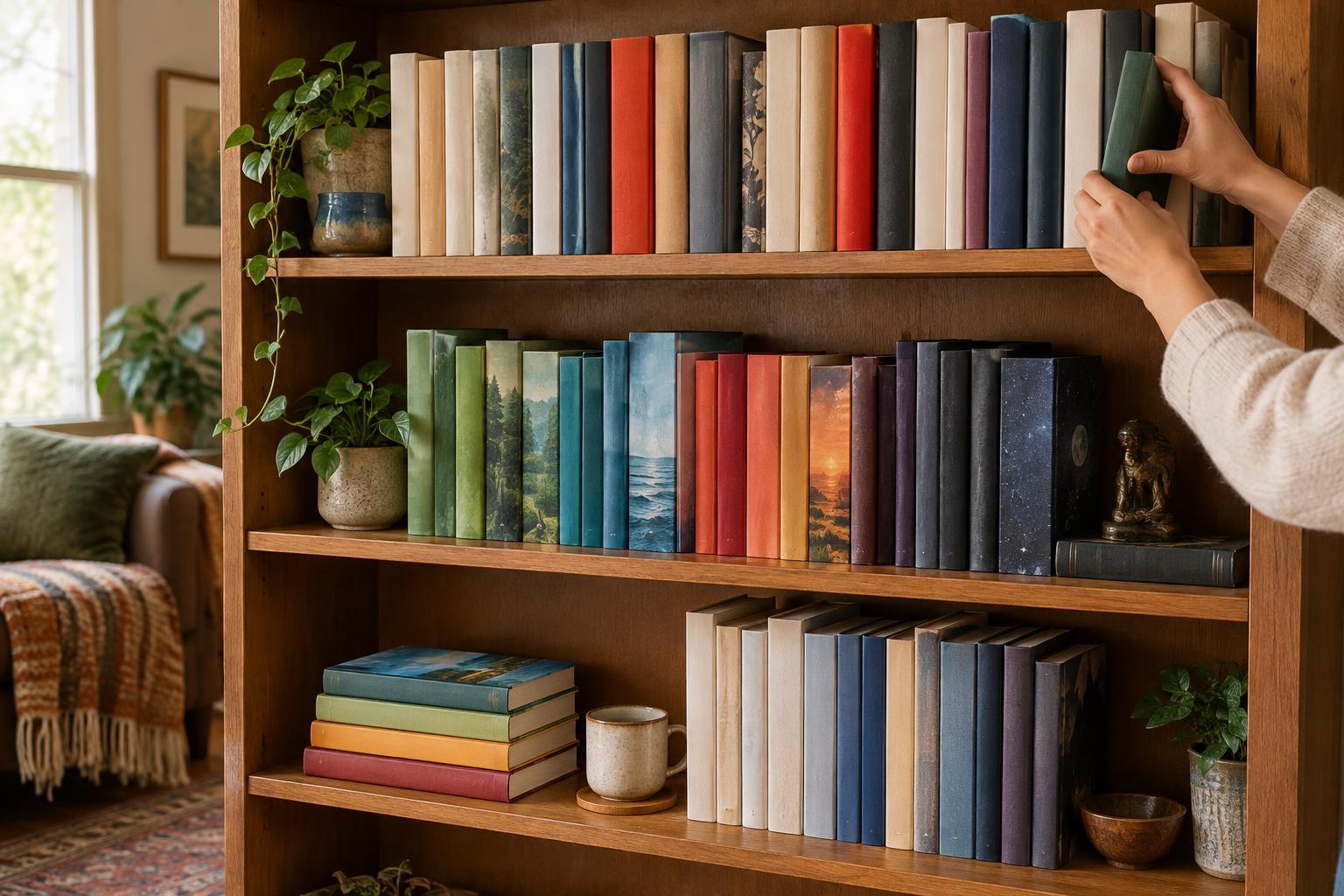
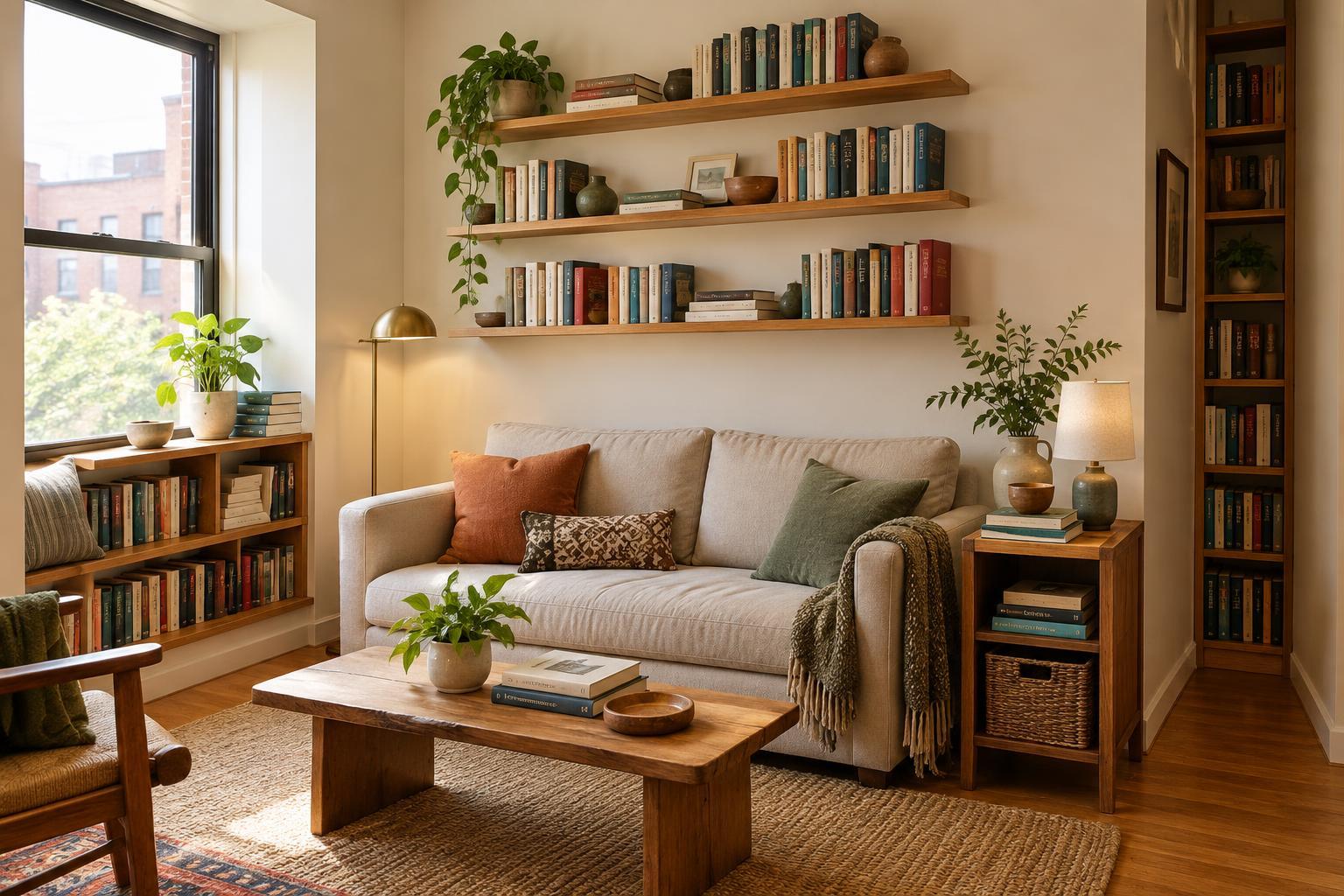
Open shelves turn books into a visible part of the room. They invite browsing, make it simple to find a familiar spine and help children see the choices available to them. Adjustable shelves are especially useful if your books vary in height: you can give picture books or oversized volumes the space they need without wasting it above smaller paperbacks.
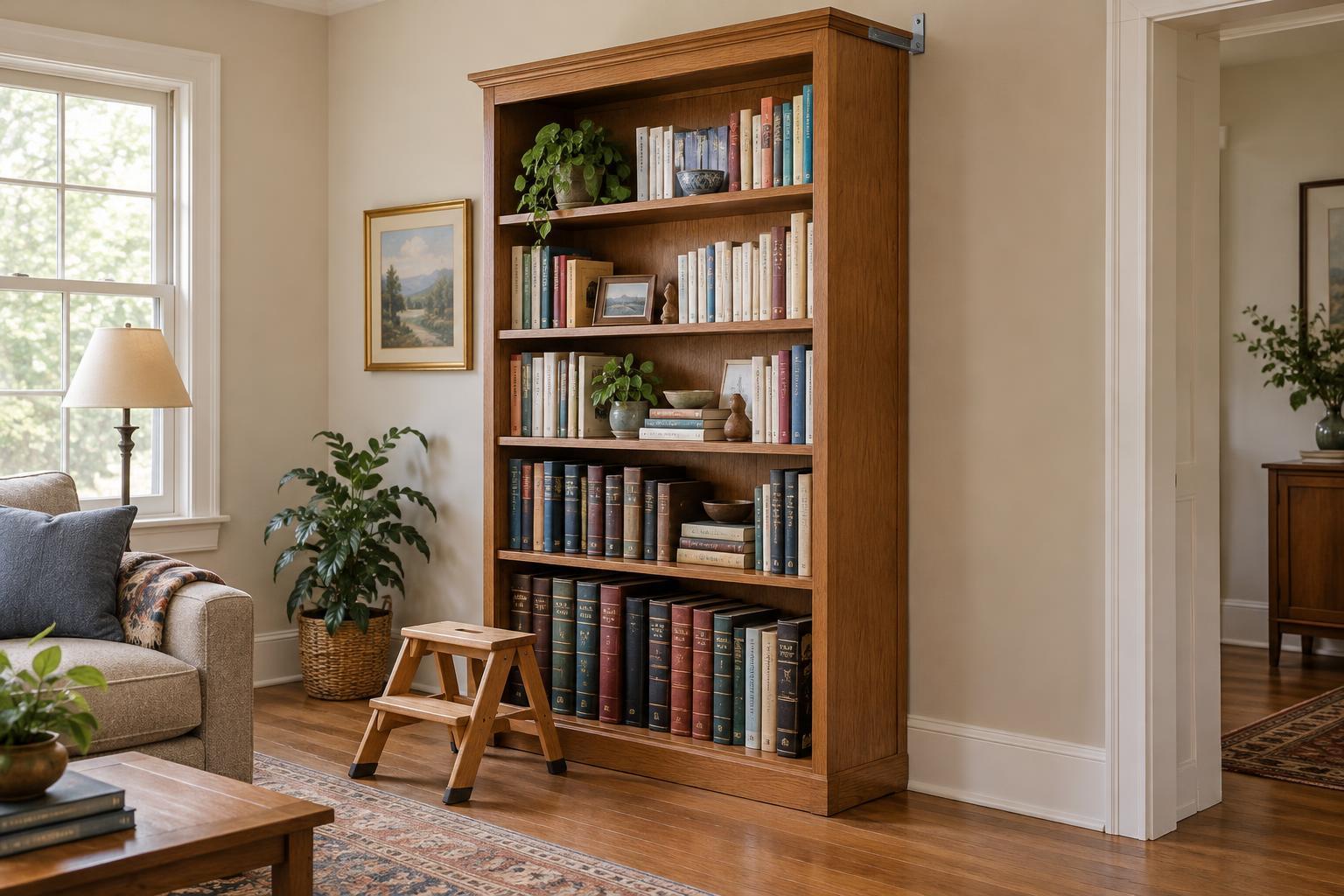
The trade-off is exposure. Books on open shelves collect dust and may receive too much direct sunlight if the unit faces a bright window. Putting a shelf in a less sunny spot and allowing a little room to remove and replace books can help you care for them. Think about reach, too. Keep heavy books low, and reserve higher shelves for lighter volumes you use less often.
Closed cabinets create a calmer look
Cabinets with doors can make a busy collection feel quieter, particularly in a shared living room. Solid doors hide mismatched book heights and the occasional untidy stack; glass doors keep the books visible while reducing the need to dust them as often. A cabinet may also be useful when you want to separate keepsakes or less frequently used books from the everyday reading pile.
Doors add another step between a reader and a book, so cabinets may be less inviting for casual browsing. Check that the doors can open fully in the space you have, and that the shelves can carry the books you intend to store. Avoid crowding books tightly against the back or sides. If a cabinet sits in a room prone to dampness, doors alone will not protect its contents; a drier location is the better choice.
Modular units leave room for change
Modular storage is built from sections that can be arranged or expanded over time. It can suit a collection that moves between rooms, grows with a young reader or includes objects as well as books. Cubes and stackable components make it possible to group books by reader or purpose: current reads in one section, borrowed books in another and favorites nearby.
Flexibility does not mean every arrangement will work equally well. Before buying extra sections, check whether new pieces are compatible with the units you already have and whether the finished arrangement will be stable. Follow the maker’s assembly and anchoring guidance, especially for tall units or in a home with children. As with other bookcases, place heavier volumes toward the bottom rather than loading the top.
Choose for the habits you want to encourage
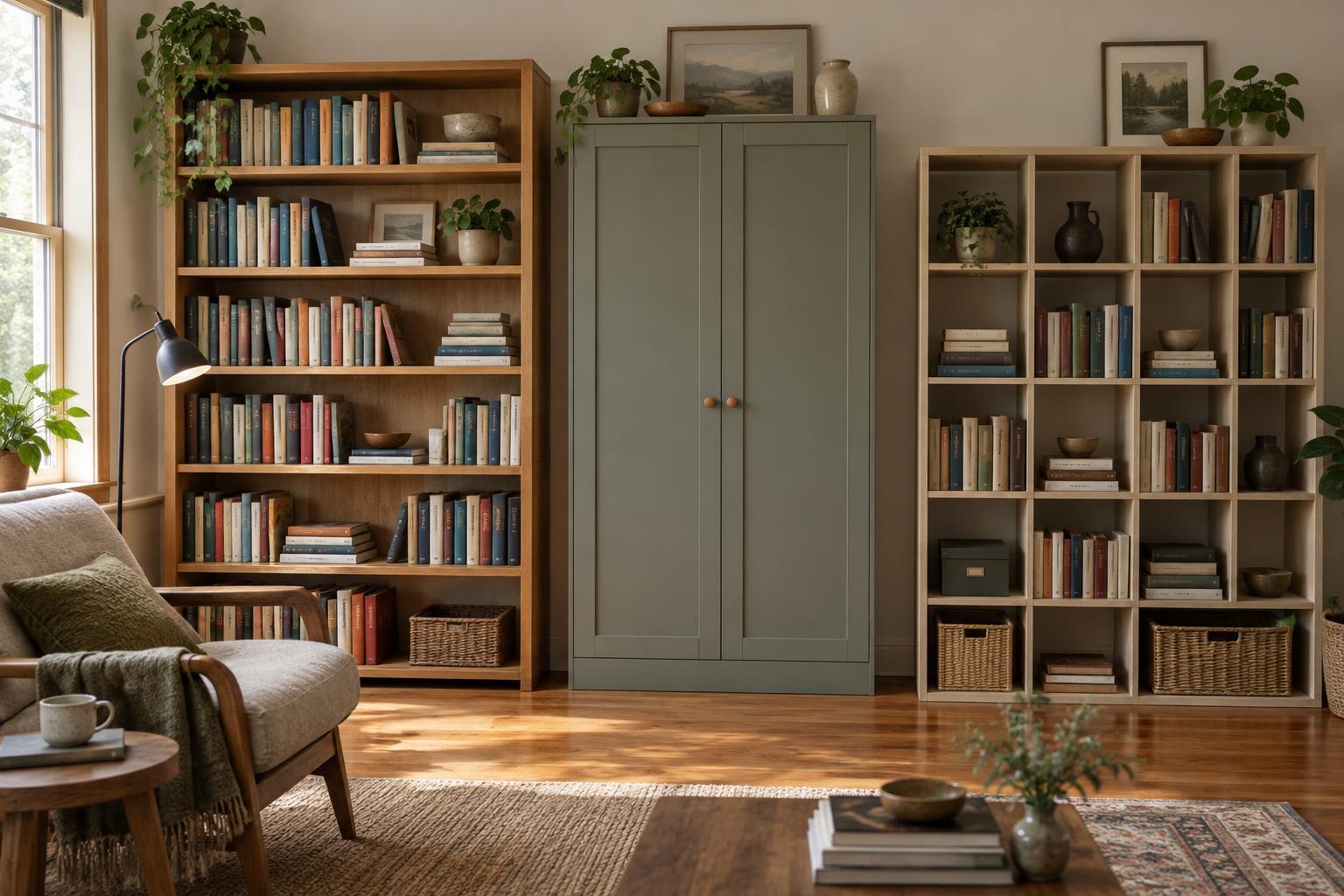
You do not have to use one storage style throughout the house. Open shelves may suit the books everyone borrows, a closed cabinet may hold a quieter collection, and a low modular unit may give a child an inviting place to choose a story. Mixing styles can also solve an awkward room more effectively than trying to fit one large bookcase into it.
Once the storage is in place, test it in daily life. Can readers find what they want without shifting piles? Can books be returned without squeezing their covers? Is there somewhere for new arrivals to go? A good home library need not look perfectly arranged. It needs to make reading and caring for books feel easy enough to do again tomorrow.