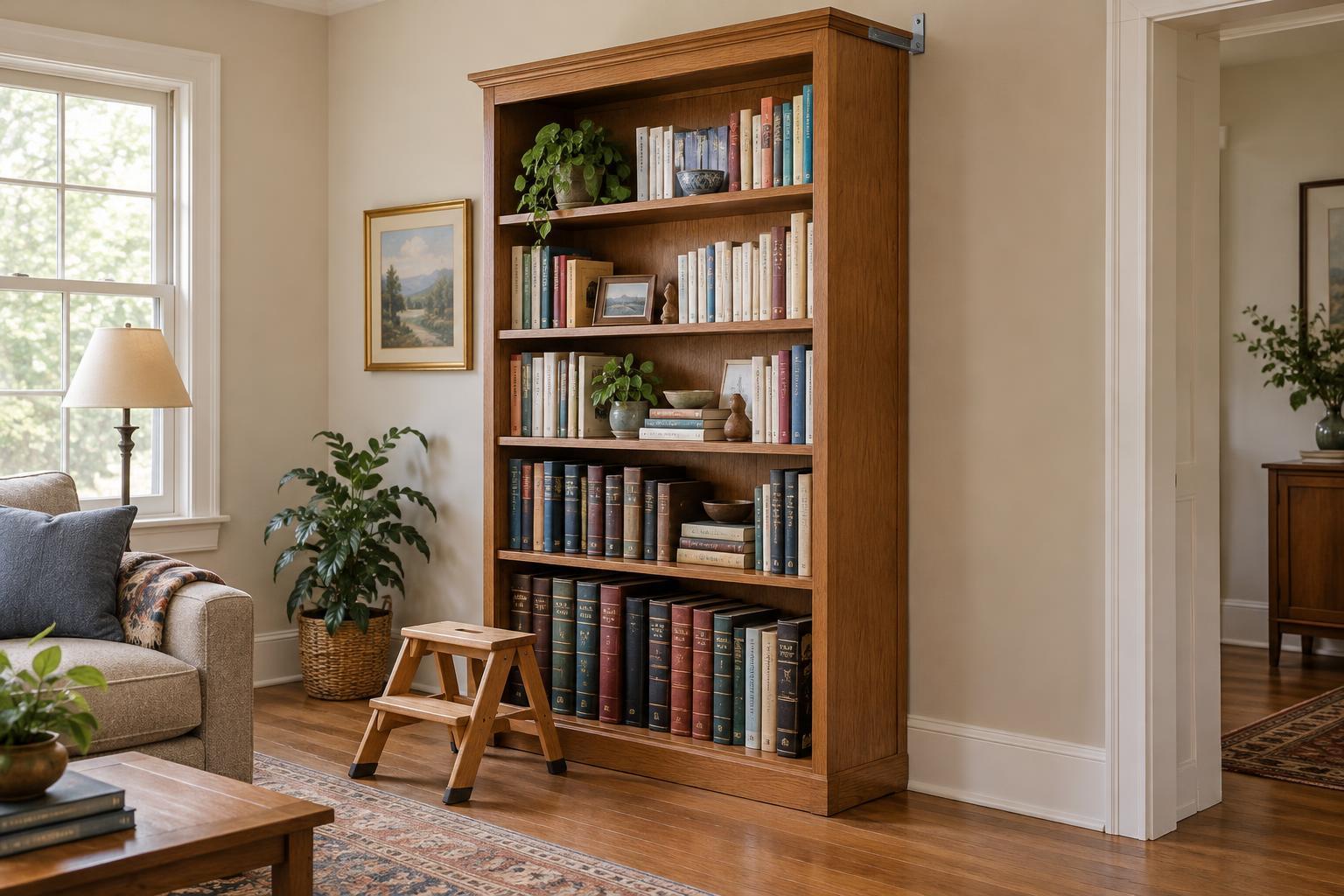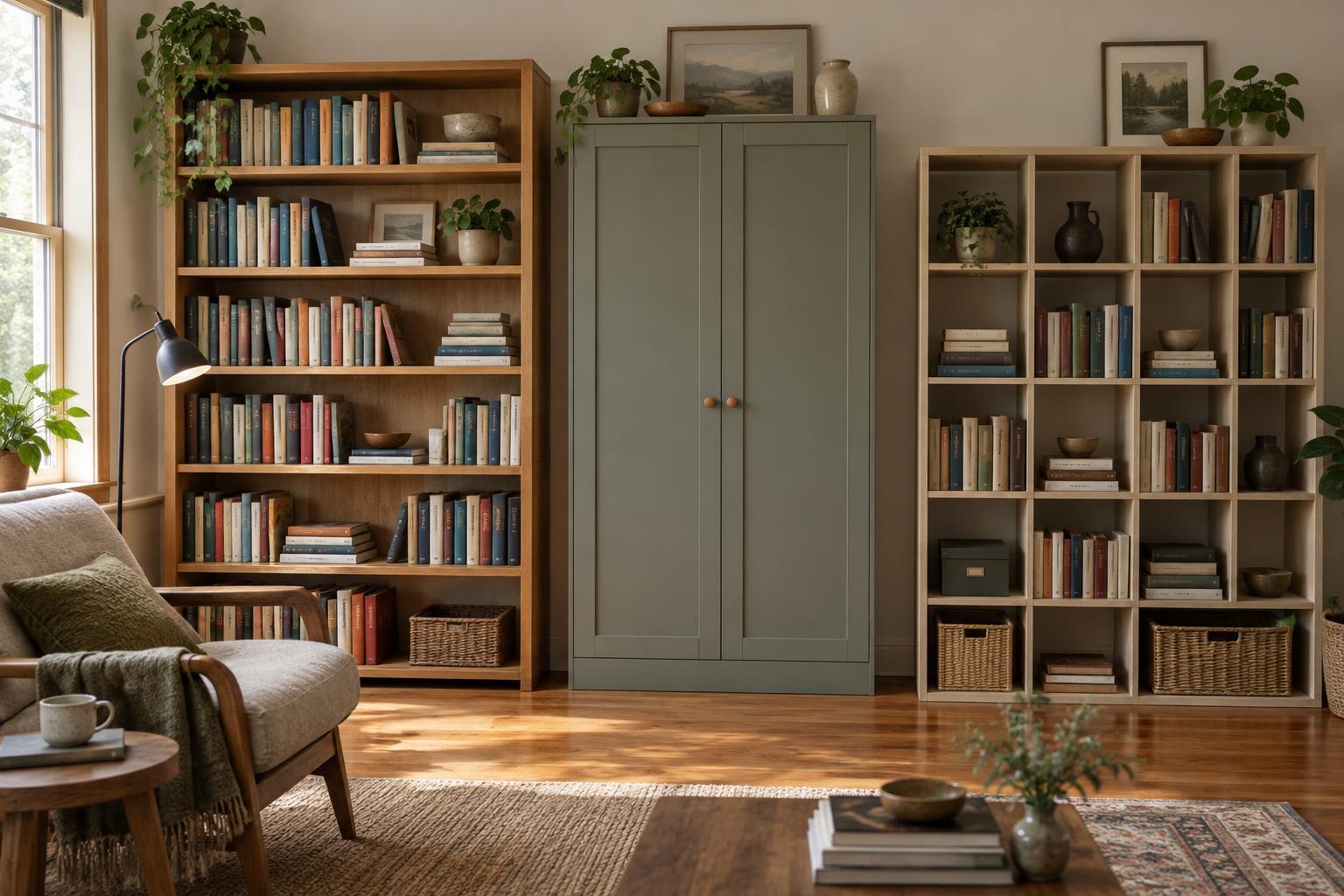
Start with the question your shelves need to answer
The best way to organize a home library is the one that helps you do what you actually do with your books. If you often think, “Where did I put that novel by this writer?” arranging by author may help. If you browse for a mood or subject, genre might be more useful. If your main challenge is remembering what you meant to read next, a reading-status shelf could earn its space.
Before moving every book, notice where friction happens. Are books hard to find, hard to choose or hard to return after reading? Think, too, about who uses the shelves. A shared family bookcase may need broad, visible groups that everyone understands, while a personal collection can follow more particular habits. You can test a new arrangement on one shelf before committing the whole room.
By author: dependable when you know whom you want
Arranging fiction alphabetically by an author’s last name gives familiar writers a predictable place. It works especially well if you collect several books by the same people, lend books to friends or regularly reread favorites. Keeping a series together can make the next volume easy to locate; within an author’s group, you might put the series in reading order.
Author order is less helpful when you cannot remember who wrote a book. It can also feel awkward for anthologies, books with several contributors and nonfiction that you usually seek by subject. Give those books a simple, consistent home rather than forcing them into a rule that makes them disappear. A small collection may not need strict alphabetizing at all: grouping books by author and placing groups in a rough A-to-Z order may be enough.
By genre: inviting for browsers
Genre shelves make it easy to ask, “What am I in the mood for?” You might group mysteries, fantasy, poetry, cookbooks and history, or use broader labels such as stories, practical books and books about the world. The right number of groups depends on your collection. If a category holds only two books, it may not need its own shelf; if one category overflows, consider dividing it.
The tricky books are the ones that fit more than one label. A historical mystery could live with mysteries or historical fiction. Choose the place where you are most likely to look, and apply that choice consistently. If other people share the shelves, ask how they would search for a book. Clear labels can help, particularly when children are learning to put books back. Leave a little room in each group if you can, so new arrivals do not require an immediate reshuffle.
By reading status: useful for deciding what comes next
A status-based system sorts books by your relationship to them: unread, currently reading, finished or perhaps ready to lend or give away. It is less a catalog than a way to make intentions visible. A modest “read next” area can turn a vague pile into a manageable choice, while a separate spot for library books helps keep borrowed titles distinct from your own.
Status changes, though, so this system needs occasional upkeep. A large unread shelf can become another place to lose a book, and an ambitious “currently reading” stack may not tell you what you really want to pick up. Keep status groups small and give them clear boundaries, such as one basket or one shelf. There is no obligation to keep finished books apart unless seeing them together is useful or satisfying to you.
Build a hybrid you can maintain
Most home libraries benefit from a main rule and one or two exceptions. You could arrange most books by genre, group prolific authors within each genre and keep a small “read next” shelf nearby. Or you could organize fiction by author and nonfiction by subject. The goal is not to make every book fit an elaborate scheme; it is to know where you would look first.
Try your chosen system for a few weeks. When a book takes too long to find or put away, notice why. Did its category feel unclear? Was its shelf inconvenient? Move it to a more intuitive place or simplify the group. A useful system can change as your collection and reading habits change. If you can find a book, pick your next read and return it without much thought, your shelves are doing their job.