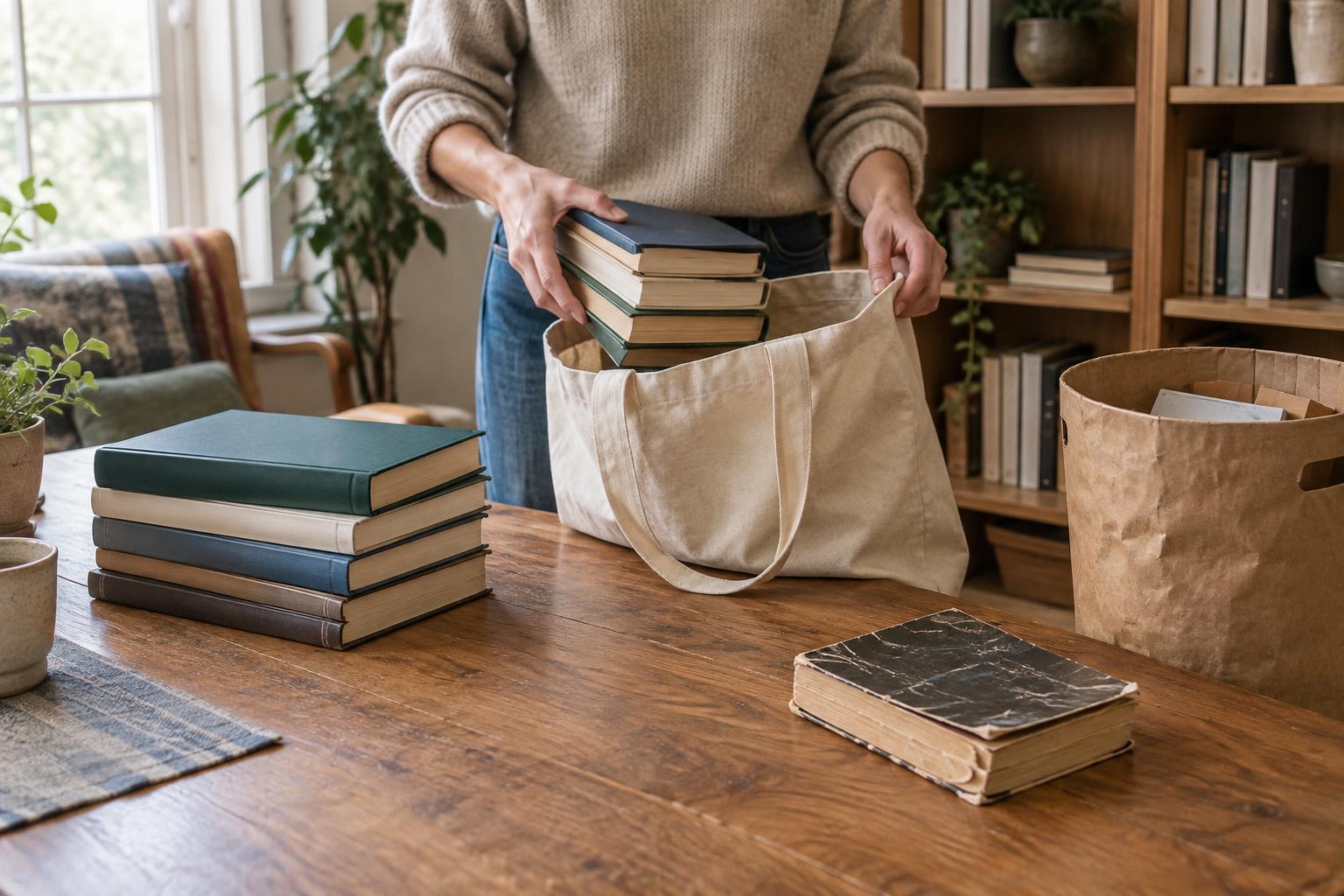
Decide what is coming with you
Before reaching for a box, walk through the shelves and decide which books you want in your next home. A move offers a natural chance to notice duplicate copies, books you no longer expect to use and volumes that belong to someone else. You do not need to make a case for keeping every title. A beloved childhood book, a battered reference work and an unread novel can all earn their place for different reasons.
Make a few simple groups: keep, pass along, return and decide later. The last group helps you keep moving when one book brings the whole project to a halt. If you have time, offer unwanted books to people or organizations that can use them; check their acceptance guidelines before arriving with a stack. Set aside borrowed books now so they do not disappear into a moving box.
Plan around weight, not shelf space
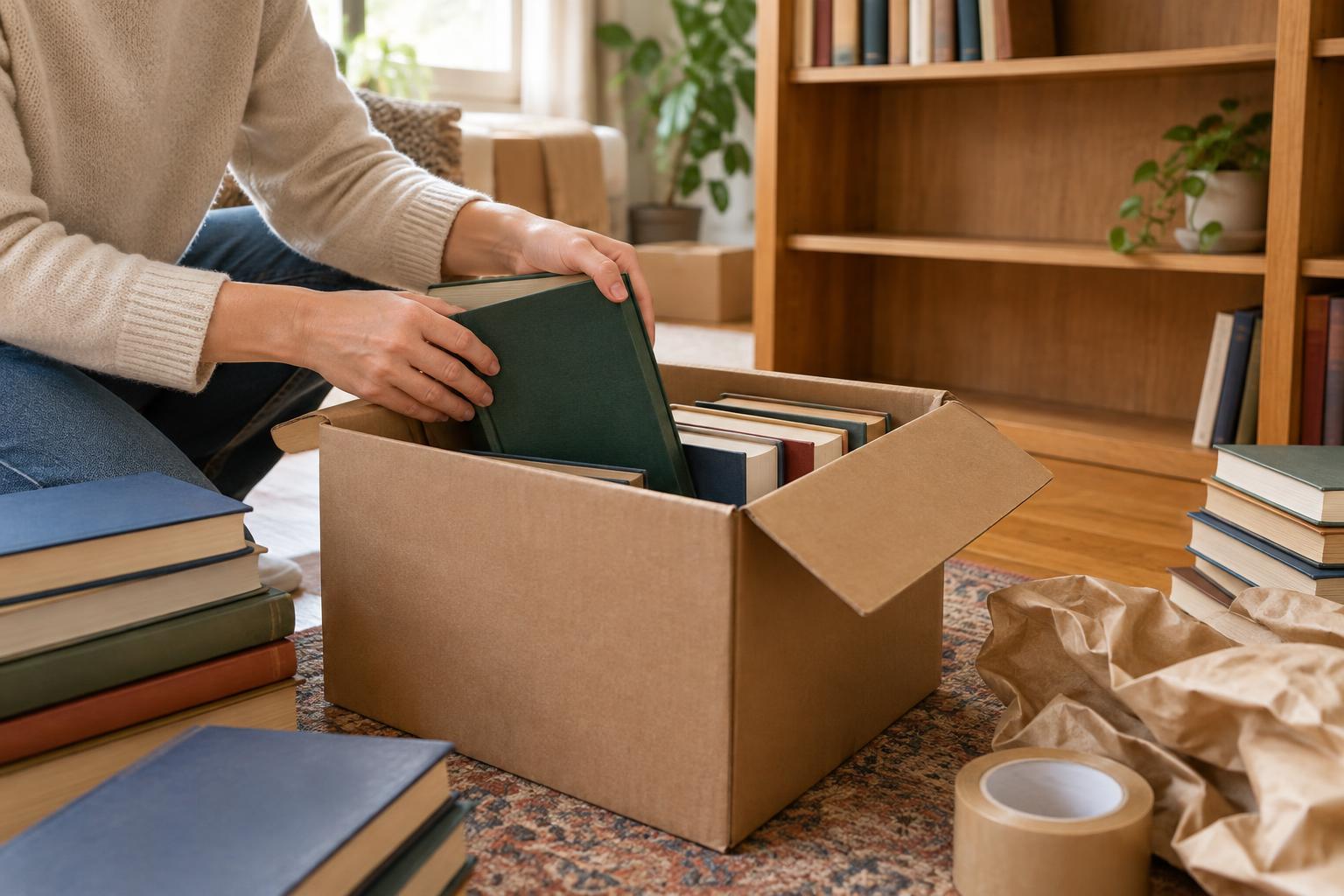
Books are dense, and a large box can become difficult to lift long before it looks full. Choose small, sturdy boxes where possible, and test the weight of each one before sealing it. Fill empty spaces with clean packing paper or other lightweight material so the books do not shift. Avoid relying on weak handles or a box that has already begun to bow.
Pack sturdy books snugly without forcing them in. Keep unusually large volumes flat if they fit comfortably, and avoid placing heavy books on top of delicate ones. Paperbacks with easily bent covers may benefit from being grouped between firmer books. For valuable, fragile or sentimental copies, wrap them individually in clean paper and give them a box with enough room to stay flat or upright without pressure on their bindings.
Label for the move and the first week
You do not need a complete catalog to find your books again. Label each box with its destination room and a useful description, such as “Living room: cookbooks and food writing” or “Bedroom: novels from top shelf.” Number the boxes if there are many, and keep a brief list on your phone or on paper. Write labels on more than one side so they remain visible when boxes are stacked.
Pack one clearly marked “open first” box with books you are likely to want right away: current reads, bedtime favorites, a frequently used reference book or anything that makes the new place feel familiar. Keep that box reasonably light. If it matters where particular books land, take a photograph of your current shelves before packing. It can serve as a memory aid without obliging you to recreate the old arrangement exactly.
Give the boxes a sensible journey
Seal boxes securely, and keep books away from obvious sources of moisture during the move. If boxes must wait in storage, choose a dry place when you can and avoid setting them directly on a damp floor. Books can be sensitive to moisture and rough handling, so a stable, sheltered spot is more useful than an elaborate packing system.
Think about carrying as well as packing. Put book boxes where they will not need to be moved repeatedly to reach other belongings. Tell anyone helping you move that the small boxes marked “books” may be heavier than they look. At the new home, place them near their intended shelves, but leave clear walking paths and avoid stacking them where they might topple.
Unpack for the home you have now
Before filling a shelf, make sure it is stable, clean and reasonably dry. Check that heavier books can sit securely on lower shelves, especially if the bookcase needs to be anchored according to its instructions. Then unpack by the labels you made rather than opening every box at once. Flatten empty boxes as you go to reclaim floor space and make it easier to see what remains.
The new arrangement need not match the old one. You might group books by subject, author, reader or frequency of use. Put the books you reach for most often within easy reach, and leave a little room for browsing and future finds if space allows. If a category no longer fits, give it a temporary home and revisit it later. A working home library is not a perfect display; it is a collection you can find your way around and enjoy.