Start with the question, not the label
Imagine you want to know what it was like to visit a library a century ago. You might find a visitor’s letter, a historian’s book and a general encyclopedia entry. All three could be useful, but they offer different kinds of evidence. The letter records one person’s experience. The historian interprets evidence from many places. The encyclopedia provides a quick overview. Calling them primary, secondary and tertiary sources helps you decide what to ask of each one.
These labels describe a source’s relationship to your question, not its quality. A primary source is not automatically accurate, and a tertiary source is not automatically too simple to use. Before classifying anything, finish the sentence: “I’m trying to find out…” That small step makes the distinctions much clearer.
Primary sources: direct evidence to examine
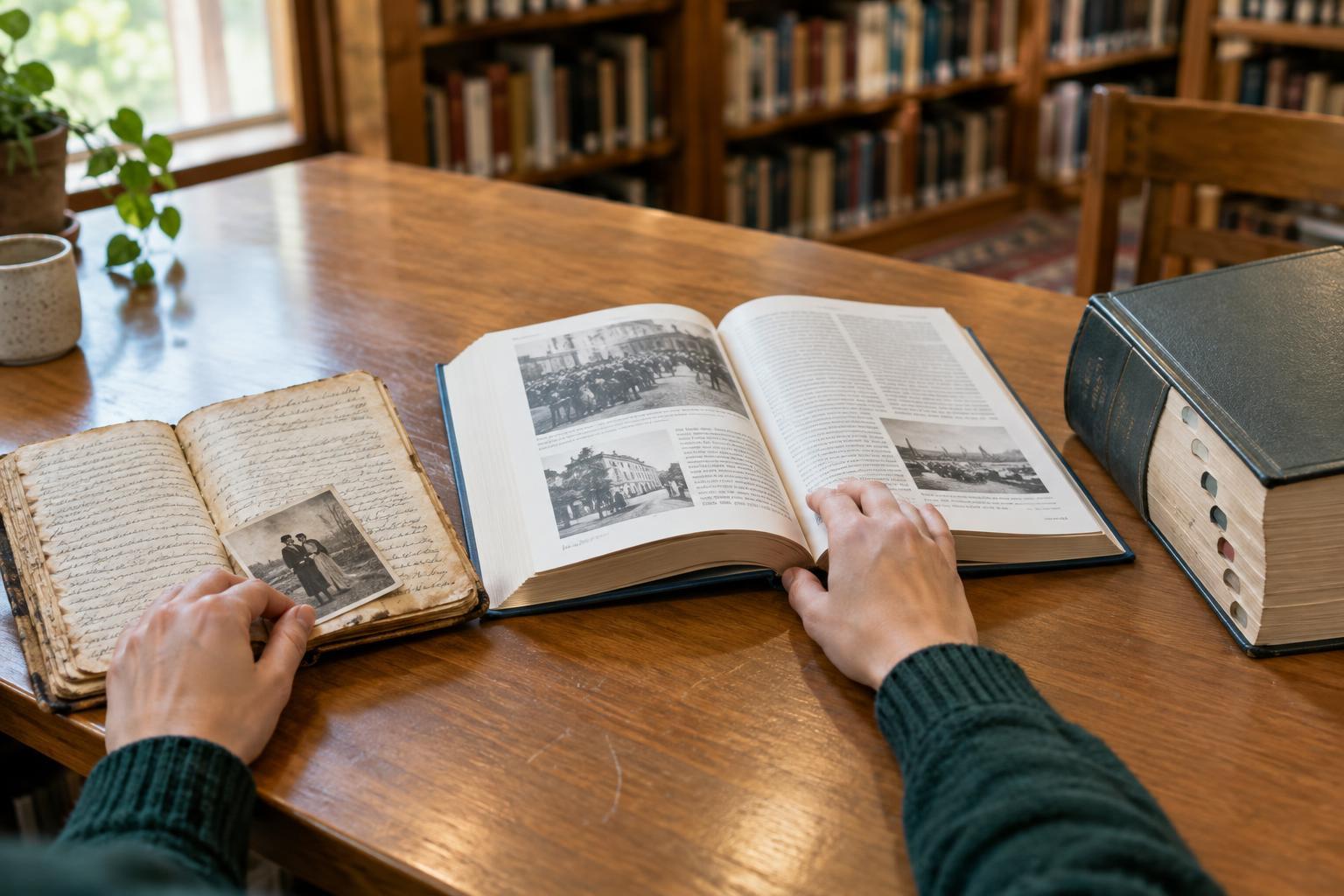
A primary source is material you can examine as direct evidence of the subject you are studying. For the library question, a visitor’s letter, an old borrowing register, a photograph of the reading room or the library’s rules could qualify. Each shows something close to the time or activity under investigation. Primary sources can also be objects, recordings, interviews, advertisements or works of art.
Their strength is their detail. A borrowing register might show which books were checked out; a letter might reveal how one visitor felt about the space. Neither tells the complete story. A register cannot explain every reader’s motives, and a letter reflects one person’s memory and point of view. Ask who created the source, for what purpose, who could access or contribute to it, and what it leaves out.
“Primary” also depends on the question. A novel is primary evidence if you are studying its language or the way it portrays libraries. It is not, simply by being old, reliable evidence that every library worked as its fictional one does. A newspaper report may be primary evidence of what readers were told at the time, while relying on other people’s accounts for the event it describes.
Secondary sources: interpretations that make connections
Secondary sources examine, explain or argue about a subject using evidence. A historian’s account of library life might compare letters, records and photographs to describe patterns that no single document reveals. A scholarly article about a novel’s themes or a documentary that interprets past events can play a similar role. Good secondary work makes its reasoning visible: you should be able to tell which evidence supports its main points.
Secondary sources are useful when you need context. They can explain unfamiliar terms, point out disagreements and help you see why a detail matters. But an interpretation is still an interpretation. Two careful writers may reach different conclusions because they ask different questions or weigh the evidence differently. If a claim is central to your own answer, look for the evidence behind it rather than repeating it without checking.
Tertiary sources: maps of a subject
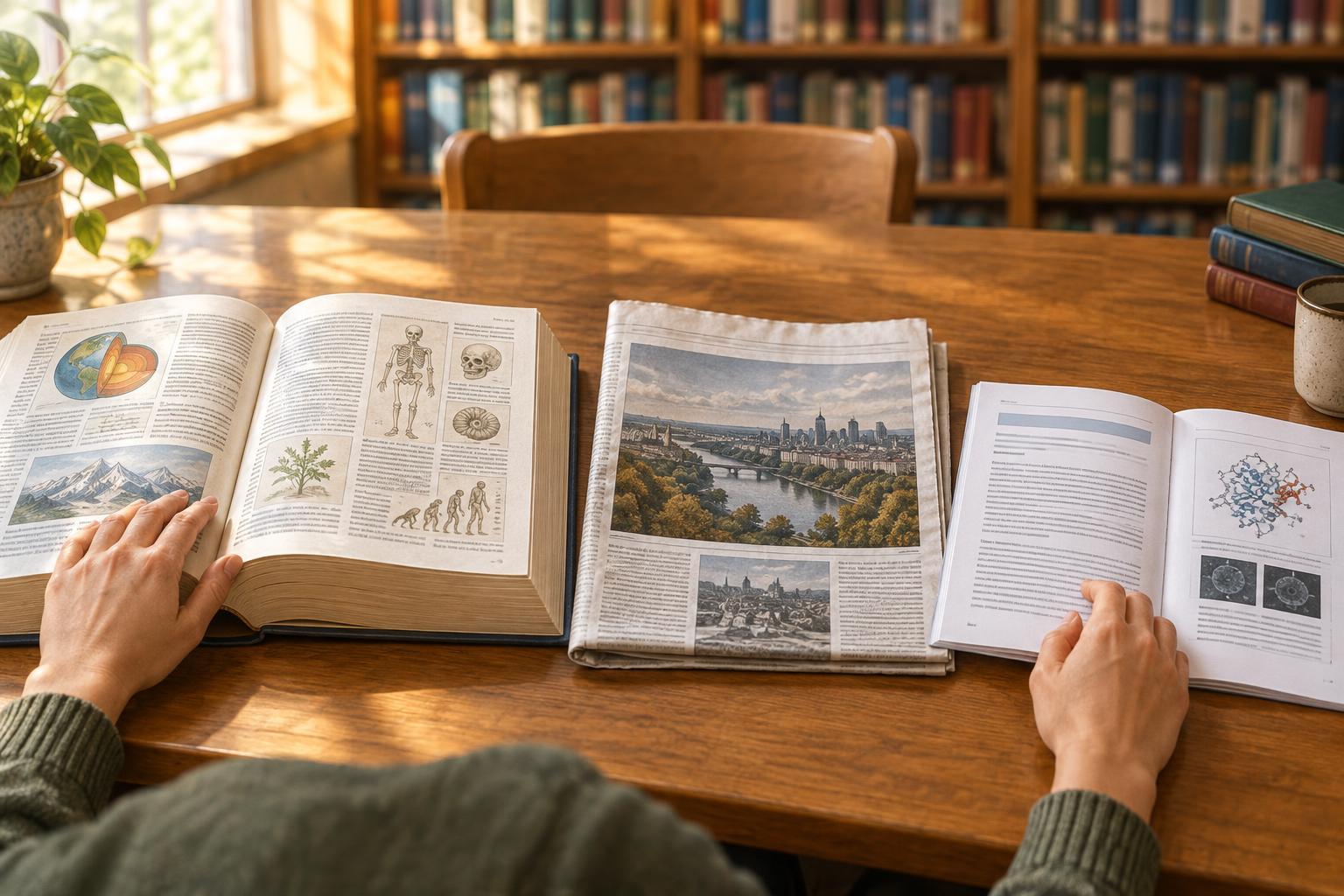
Tertiary sources gather and organize information from other sources. Encyclopedias, reference guides, timelines and some handbooks often serve this purpose. A library catalog or bibliography may not answer your question directly, but it can help you locate books and documents that do. These tools are especially handy when a subject is new to you: they offer vocabulary, a broad outline and leads for further reading.
An overview can smooth away uncertainty or omit the detail your question requires. Check whether an entry identifies its contributors, indicates when it was prepared or updated, and points toward sources you can examine. Use it to get oriented, then follow promising leads. If you need to support a specific claim, choose the source that actually provides the relevant evidence or argument.
Put the three types to work together
Try a simple sequence for your next reading or research project. Begin with a reference source to learn the basic terms and find useful leads. Read a secondary source to understand the larger conversation. Then examine a primary source closely, asking what it shows and what it cannot show. You can move back and forth as new questions arise; research rarely proceeds in a perfectly straight line.
Keep a brief note beside each source: “This helps me understand…” and “This does not establish…” Those two prompts discourage both overconfidence and needless dismissal. A letter can give a vivid glimpse, a historian can connect that glimpse to a wider pattern, and an encyclopedia can help you find your way in. Knowing which job each source is doing makes your answer stronger—and your next question more interesting.