Start with the book in front of you
A home library changes as its readers do. A once-loved picture book may be ready for another family, while an outdated guide may no longer be useful to anyone. Before choosing where a book should go, look at its condition, subject and likely audience. Is it complete and readable? Are the pages clean and the binding sound? Would you feel comfortable handing it to someone who was excited to read it?
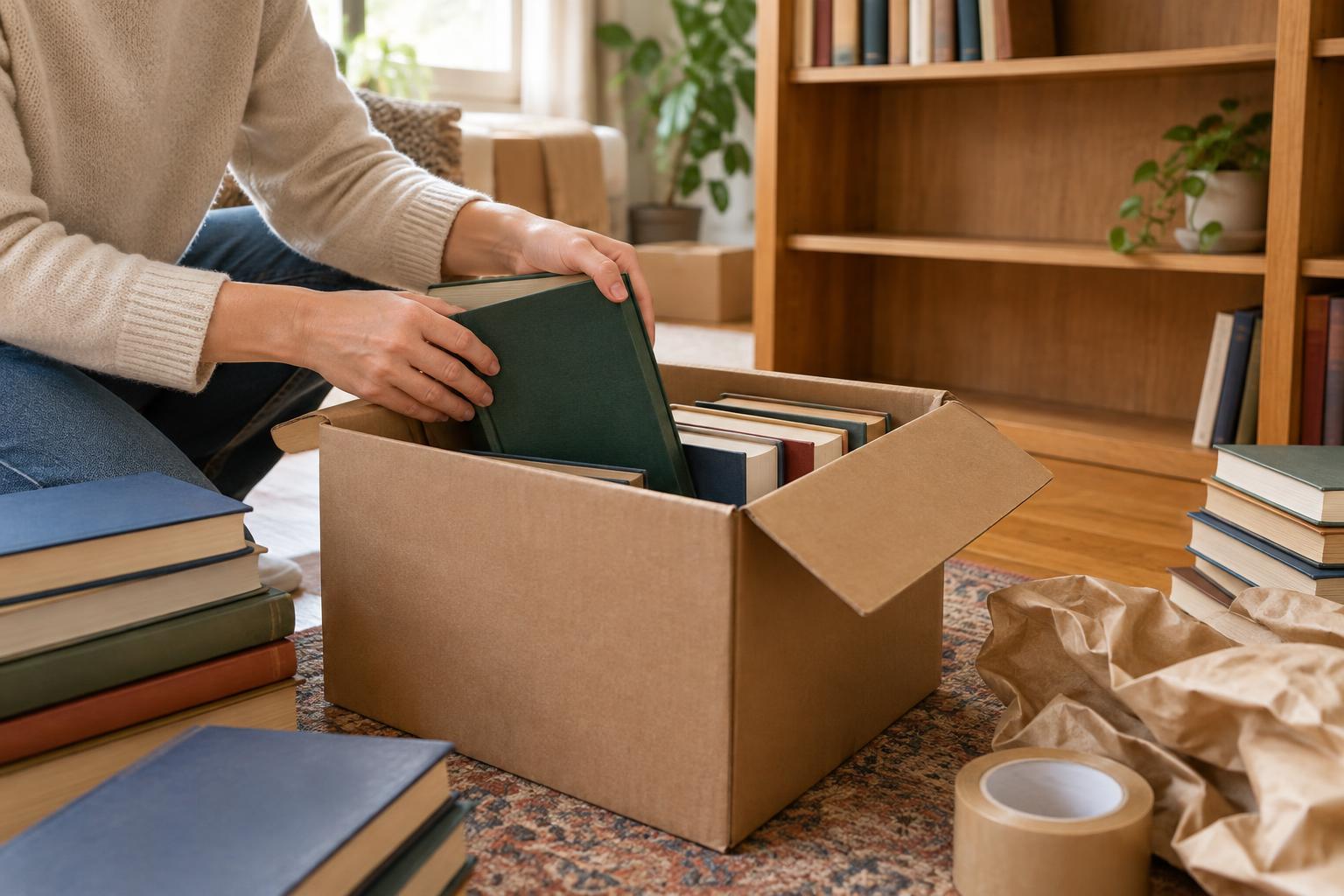
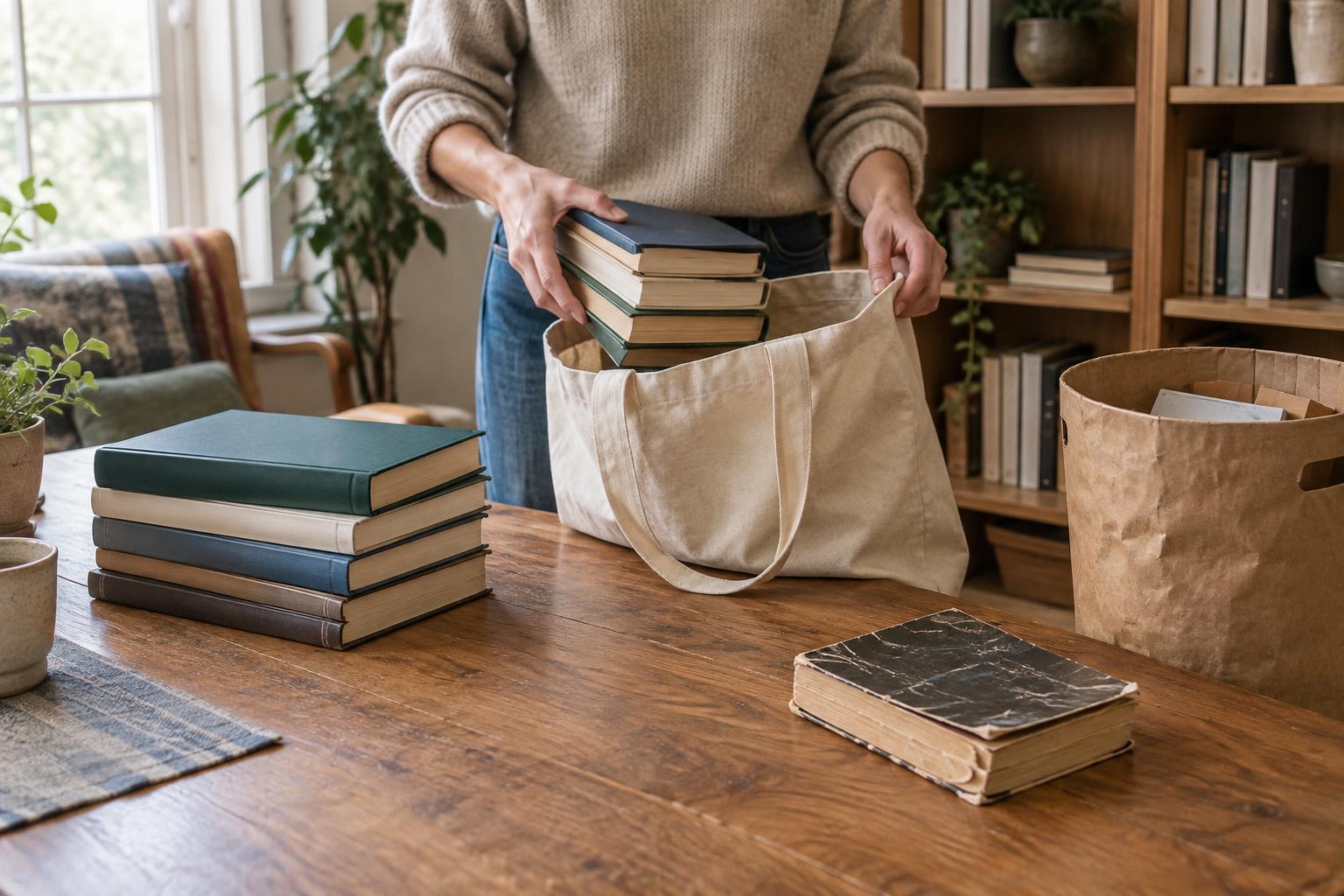
Make four small piles: keep, sell, give away and check for recycling. You do not need to decide every book’s fate in one sitting. Setting aside uncertain copies is better than letting them stall the whole project. Check inside covers as you sort; books sometimes hold photographs, letters, notes or bookmarks you will want to keep. A dedication might also change how you feel about parting with a copy.
Sell when the return is worth the effort
Selling can make sense for a book in good condition that has a clear potential buyer: a sought-after edition, a specialist title or a popular book that is still easy to describe accurately. It takes more work than placing books in a donation box. You may need to check prices, photograph the copy, answer questions, arrange a handoff or pack it securely.
Compare the likely sale price with any platform fees, packing materials and your time. A low-priced paperback may be better suited to a neighborhood exchange than an individual listing. If you do list a book, describe the actual copy rather than relying on a stock description. Mention annotations, missing dust jackets, worn corners and other details a buyer would reasonably want to know. For a large collection, selling in a grouped lot may be simpler, though it may bring less per book.
Donate for a reader, not just for an empty shelf
Donating works best when the recipient can use what you offer. Libraries, charity shops, schools, community shelves and local groups may have very different needs and limited storage space. Check their guidelines before carrying over a box. Some accept only certain subjects or conditions; others may pause donations when they have more than they can handle.
Offer books that are clean, complete and reasonably easy to pass along. Think about fit as well as condition: children’s books might suit a family-oriented exchange, while a collection on a specialized hobby may be more welcome in a group devoted to it. If a book contains personal notes, addresses or loose documents, remove them first. Giving books directly to friends can be lovely, too, provided it is an invitation rather than an obligation. A simple “Would you like this?” leaves room for an honest no.
Know when a book has reached the end of its reading life
Not every unwanted book is suitable for a new reader. Copies with heavy water damage, mold, missing pages or a broken binding may be difficult to sell or donate. Information can be another factor: an old reference work may be interesting as a historical object but a poor choice for someone seeking dependable, up-to-date instructions.
Recycling rules vary by area and by the materials used in a book. Check local guidance before putting books in a paper bin; some programs accept paperbacks but ask that hard covers or non-paper parts be removed. If a book cannot be recycled locally, look for an appropriate disposal option rather than leaving damaged copies at a donation point. A few clean pages might serve a craft project, but there is no need to save more material than you will realistically use.
Make the next sort easier
Once the outgoing books have destinations, give them a deadline. Keep a labeled box near the door for accepted donations, and set a date to list or pass along books you hope to sell. If they remain untouched after a while, reconsider whether the possible return is worth the space they occupy.
For the books that stay, leave a little room on the shelf. That space makes it easier to see what you already own and welcome future discoveries without starting another crowded pile. Choosing a next home is not a verdict on whether a book was good or worth buying. It is simply a way to match a physical copy with the reader—or recycling route—that suits it now.