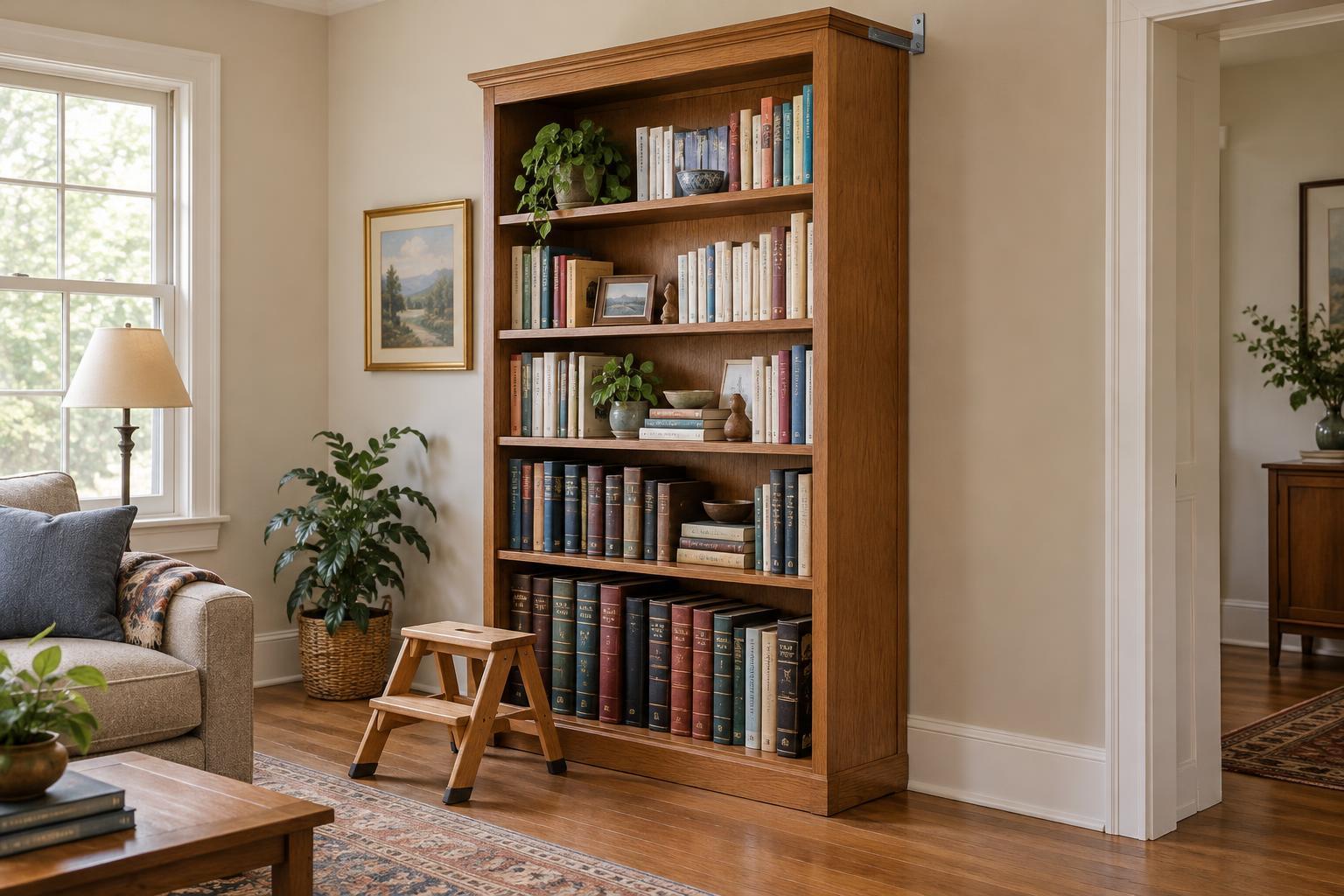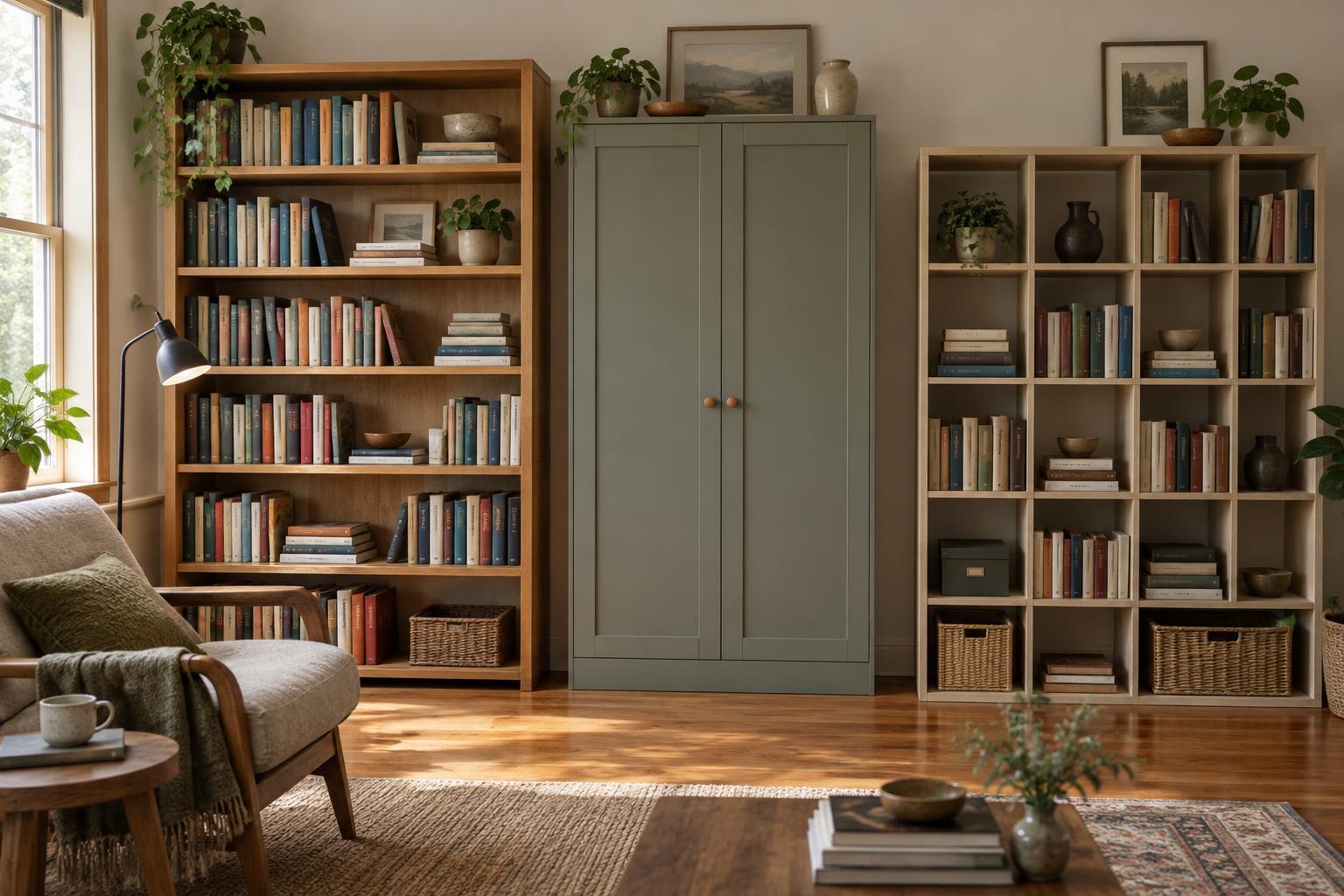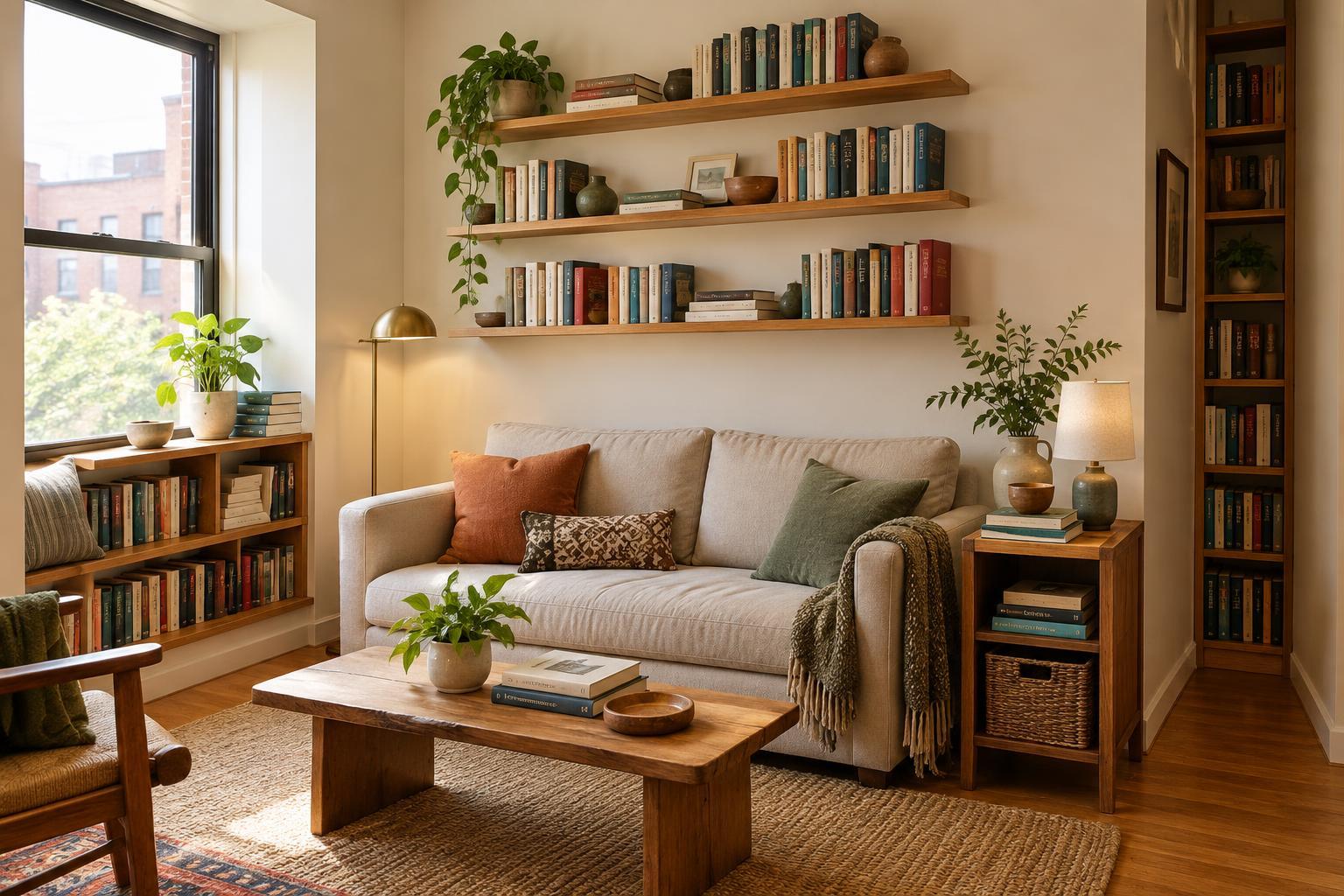
Start with the books you want close at hand
When floor space is limited, the first question is not where to put another bookcase. It is which books you want to be able to reach. A home library can include a shelf of current reads, a reliable spot for favorites and less prominent storage for books you rarely open. Giving each group a purpose makes it easier to find a place for it.
Gather books from their scattered spots and sort them loosely: reading now, returning to often, keeping for later and ready to pass along. You do not have to reduce your collection to a particular number. The aim is to see what needs convenient access and what could live higher up or behind a cabinet door. Leave a little room near your reading spot for borrowed books, too, so they have an obvious place to wait before being returned.
Use wall space where it helps, not everywhere
A shallow wall shelf can hold books without taking up the walking space of a freestanding case. The wall above a desk or beside a doorway may offer useful storage, provided the books remain easy to reach. A narrow shelf for paperbacks or picture books can be more practical than a deep one that encourages double rows. Before installing anything, check the wall, the shelf’s load rating and the appropriate fixings. Books become heavy surprisingly quickly.
There is no need to fill every wall from edge to edge. A few well-placed shelves can work better than a crowded display that is difficult to dust or browse. Keep frequently used books at a comfortable height, and reserve high shelves for lighter or less-used volumes. Avoid placing heavy books where they could fall onto a bed or chair. If you rent, a slim, stable bookcase may be a better choice than drilling; secure tall furniture appropriately and follow its installation guidance.
Ask existing furniture to do a second job
Look for furniture that already occupies floor space. A bedside table with an open shelf can hold the next few books in your reading queue. A desk hutch might make room for reference books, while a low cabinet can store books behind doors and provide a surface above. If you are buying a piece of furniture, choosing one with useful shelves may serve you better than squeezing in a separate bookcase.
Small, visible groups of books also fit on a mantel, a sturdy sideboard or a shelf near an armchair. These spots are best for books you actually use, not precarious stacks that need moving whenever you sit down. Keep walkways, doors, vents and access to electrical outlets clear. A home library should make daily life easier, not turn every available surface into an obstacle course.
Make overlooked spaces easy to browse
The end of a hallway, the side of a wardrobe and the space below a window can all be promising, depending on their dimensions. Measure both the available space and the books you hope to keep there before choosing storage. A shallow unit that fits your largest books upright is often more useful than one that looks tidy but forces them into awkward piles. Leave enough clearance to open doors and drawers fully.
In a child’s room, a low shelf or a small basket can make a changing selection of stories easy to choose and put away. Elsewhere, a basket beside a chair can hold current reads, but it is not ideal for long-term storage: books at the bottom can become hard to find or may bend. If you use an enclosed nook, check it occasionally for dampness or condensation. Books generally fare better in a dry place with some airflow than pressed against a persistently damp wall.
Keep the collection flexible
Limited space calls for a system that can change as your reading changes. Try keeping one accessible shelf for books you plan to read soon, then move finished books to their longer-term homes. Grouping by subject, author or reader can help, but a simple arrangement you can maintain beats a perfect scheme that collapses after a week.
Leave some empty space if you can. It makes books easier to remove, creates room for new discoveries and helps you notice which titles have been waiting untouched. When shelves begin to overflow, consider whether a book belongs in your permanent collection, could go to another reader or can be borrowed next time instead. A small-space library need not display everything you own. Its success is measured by how readily it brings the right book to your hands.