Pick one moment, not the whole book
A good puppet show starts with a small choice: one scene you would enjoy seeing unfold. Look for a moment with two or three characters, a clear place, and a change by the end. A surprising discovery, a tricky decision, or a funny misunderstanding can work especially well. You do not need to retell everything that came before it.
Read the scene together, then ask three questions: Who is there? What does each character want? What happens that changes the situation? The answers give you the bones of a short performance. If the scene depends on a long explanation, let a narrator offer one or two opening sentences. Alternatively, start just before the most interesting action and let the puppets show the rest.
Make a tiny plan before making puppets
On a sheet of paper, write the scene as three beats: beginning, change, and ending. For example, two characters search for a lost object; one spots an unexpected clue; they decide where to look next. This plan is enough to keep the show moving. Performers can use their own words rather than trying to memorize pages of dialogue.
Think about what the audience needs to recognize. A puppet may need only a distinctive color, hat, or expression. A setting may need one sign or object rather than a complete backdrop. When children are leading the project, invite them to decide which details matter most. Someone who prefers not to perform a voice can draw scenery, move a prop, narrate, or help plan the action.
Build with what you have
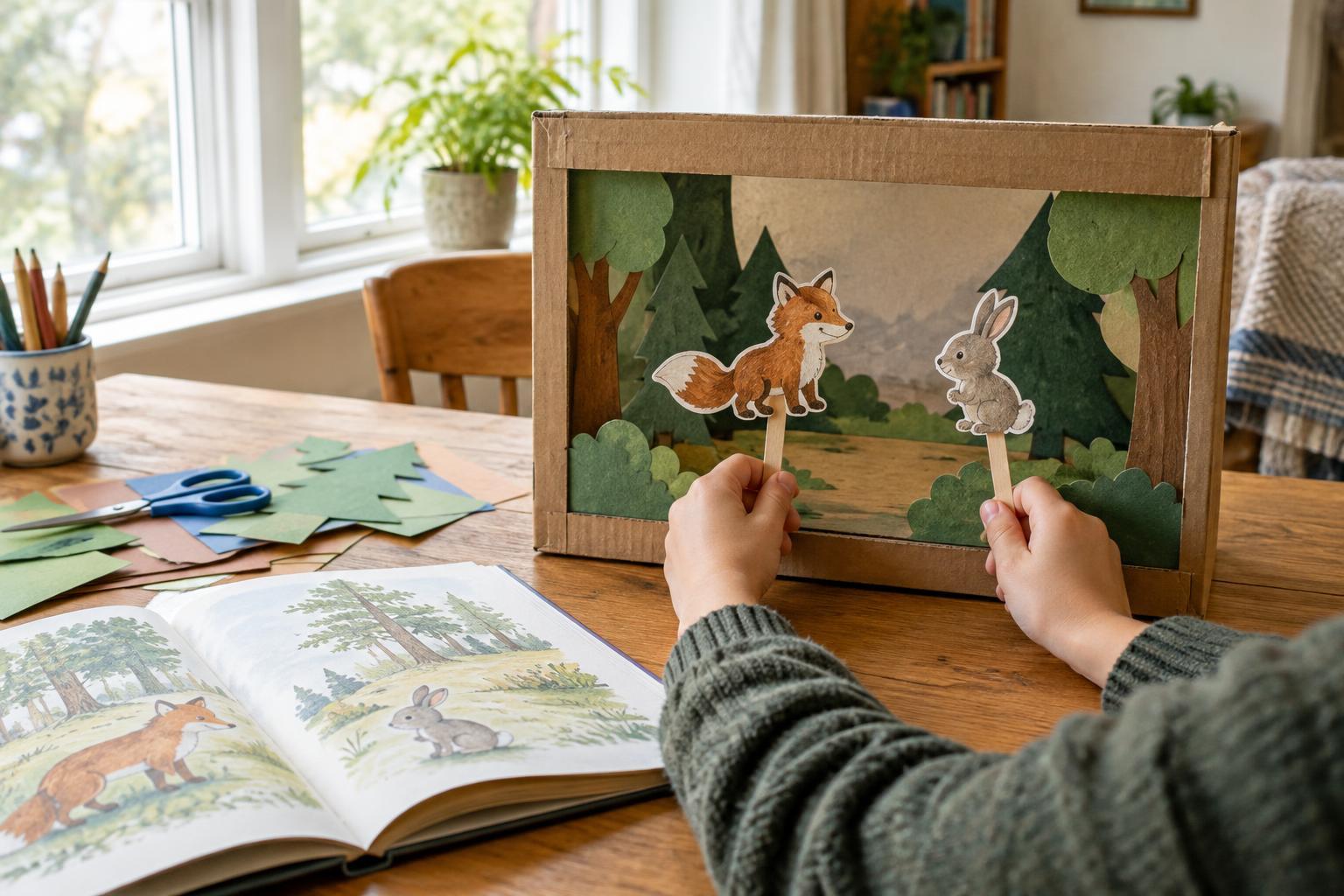
Paper, scrap card, crayons, tape, and craft sticks make a flexible starting kit. Draw each character on card or sturdy paper, cut it out, and tape a stick to the back. If a character needs to turn around, make a second drawing for the reverse side. Keep shapes broad and features bold so they can be seen from a few steps away. An adult can handle cutting if the tools or shapes are difficult for younger makers.
For a stage, drape a cloth over a table, use the opening of an empty box, or simply hold the puppets against a plain wall. A folded paper tree, a chair, or a colored sheet can suggest a location. Leave room for hands to move without knocking scenery over. Before adding more decorations, test whether the puppets can enter, face each other, and exit comfortably. Movement matters more than a perfect set.
Rehearse actions as well as lines
Try one slow run-through with no audience. Decide where each puppet begins and what it does while another character speaks. A puppet can lean toward a clue, pause before answering, or turn away in frustration. These small movements help tell the story, particularly when voices sound similar. Keep puppets still for a moment when you want the audience to notice an important line or object.
If the show feels too long, trim repeated explanations rather than rushing the performers. If the story feels confusing, add a short narrator line such as “Meanwhile, outside the door...” It is fine to change details to suit the stage: a crowd can become one visitor, and a complicated journey can become a single arrival. The aim is to share what is exciting about the scene, not to reproduce every sentence.
Perform, then return to the book
Choose a small audience and announce the title of the book and the scene you are about to show. Give performers a moment to get into place. A simple cue, such as “Curtain up,” can help everyone begin together. If a puppet falls or a line is forgotten, pause, reset, and carry on. The occasional mishap may become part of the fun.
Afterward, compare the performance with the page. What did the puppets make easy to understand? Which detail was harder to show? Did giving a character a voice change how anyone imagined them? These questions turn a playful activity into a fresh reading of the scene. You can put the puppets away for another day, or invite a different group to stage the same moment in its own way.