Start with the book, not the shelf
A home library does not need museum equipment to treat books well. The useful question is whether each book can rest in its chosen position without bending, leaning, or carrying too much weight. Size, binding, and condition matter more than whether a shelf looks perfectly uniform.
Most ordinary hardbacks and paperbacks can stand upright. They should sit on a level shelf, with neighboring books or a bookend keeping them from tipping. A slight variation in height is fine; a row that slopes sharply can put sideways pressure on covers and gradually twist bindings. If a book will not stand without leaning, give it support rather than wedging it into a crowded row.
When upright is the better choice
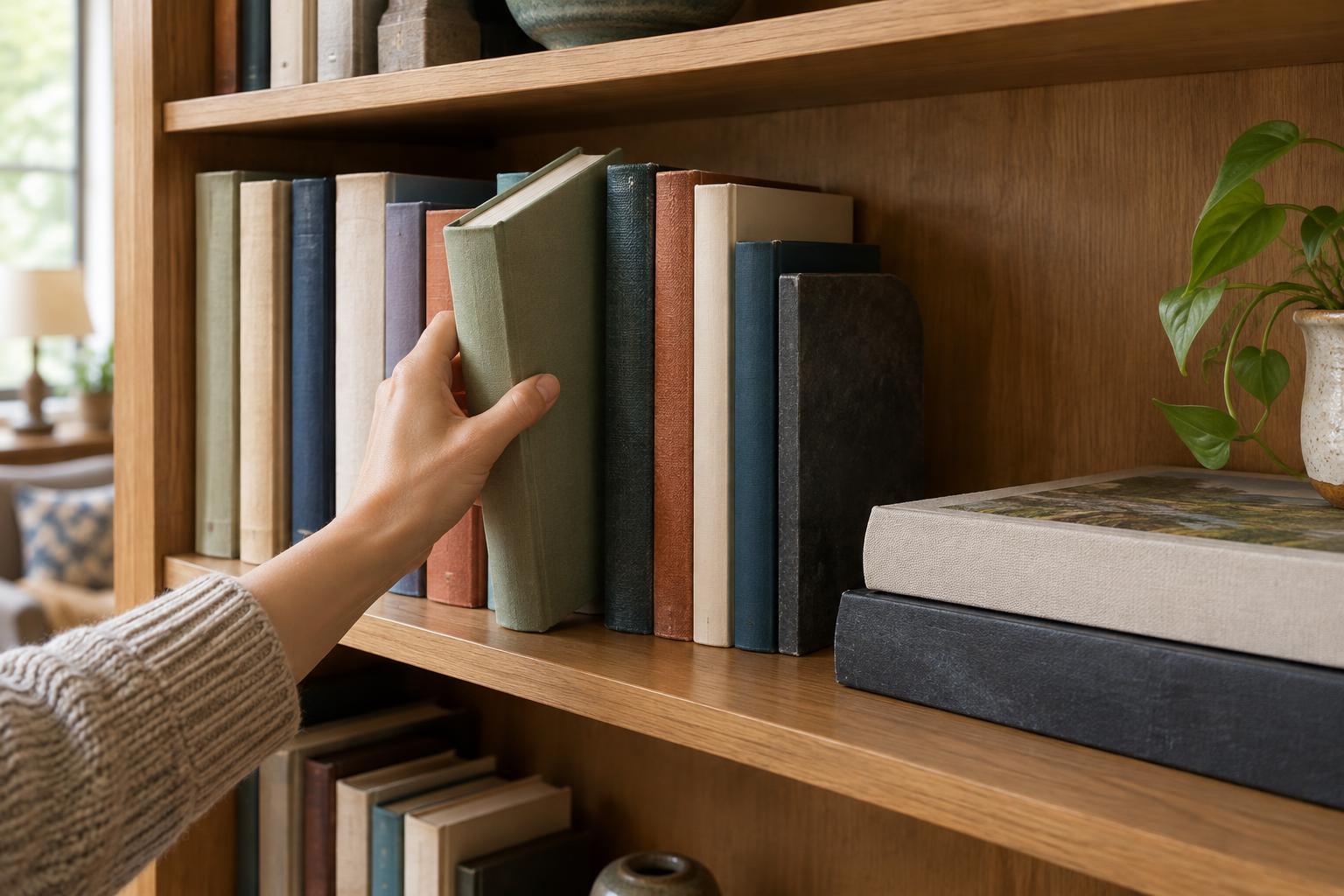
Standing books upright makes them easy to see and usually keeps the weight of one book off another. Line them up so their bottom edges rest on the shelf. Leave enough space to slide one out without dragging its cover against its neighbors, but not so much that the whole row falls sideways. A sturdy bookend is especially helpful at the end of a short run.
Arrange books of broadly similar size together when you can. A tall book squeezed between much shorter ones may lack support across its covers, while a thin paperback can curl if it is pressed between heavy hardbacks. Avoid packing a shelf so tightly that removing one book takes force. That pressure can scuff covers, crease jackets, and strain spines each time you browse.
If the shelf is deep, resist pushing books behind another row unless you can easily reach both. Hidden books are more likely to be tugged out awkwardly. A single accessible row also makes it easier to notice when a volume has begun to lean or a cover has caught on its neighbor.
When flat is kinder
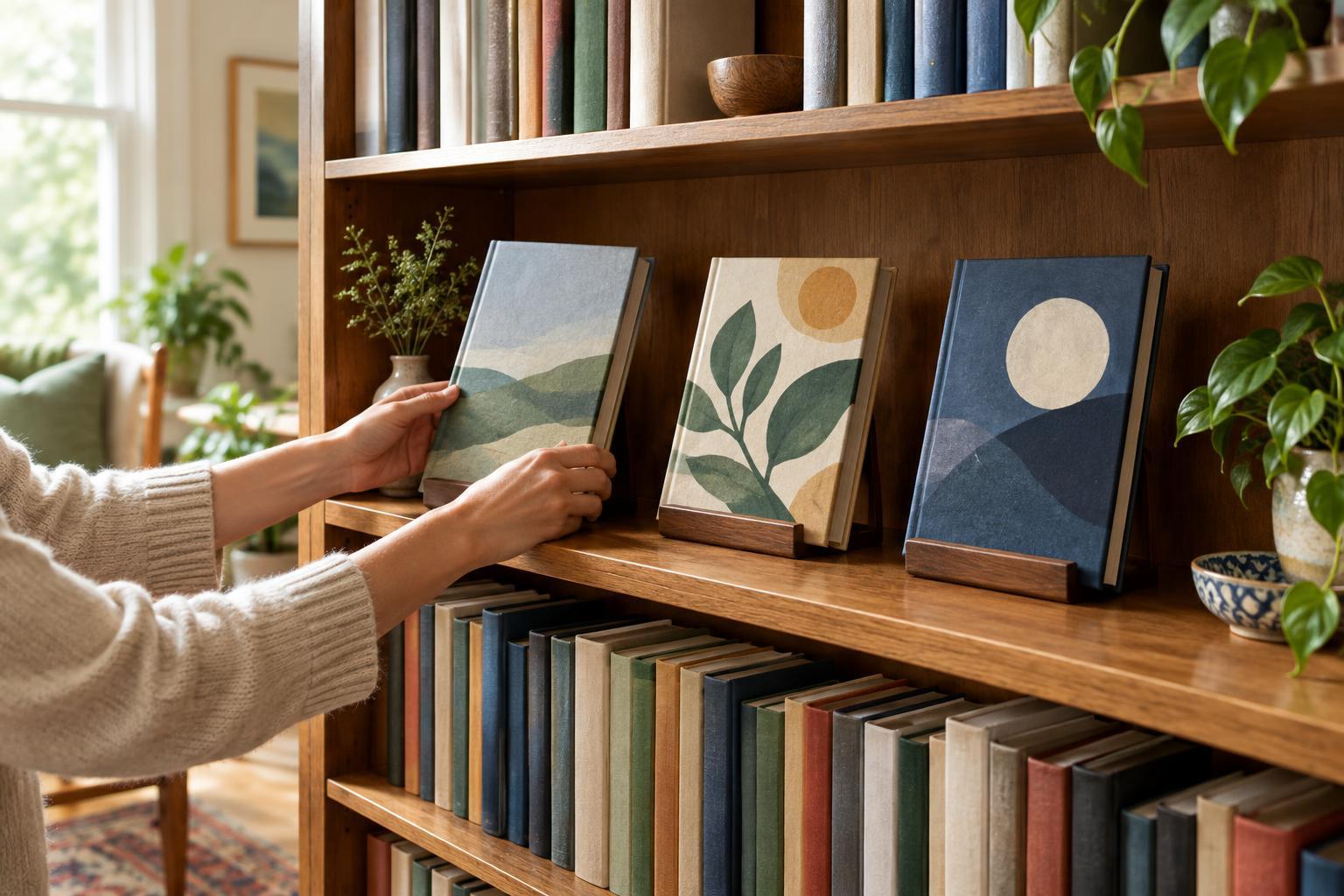
Large atlases, art books, and other heavy volumes may be more comfortable lying flat, especially if their pages pull downward when they stand. Flat shelving can also suit a book with a loose or fragile binding that needs full support. Place the book on a clean, level surface with its covers fully supported; do not leave an edge hanging over the shelf.
Keep stacks short and stable. A high pile makes the bottom books hard to retrieve and puts unnecessary weight on their covers. Group volumes of similar dimensions so a smaller book does not create a pressure point beneath a larger one. If you want a particular book often, put it near the top or give it a shelf of its own.
Flat is not automatically safer for every book. A small paperback buried under several large hardbacks may end up creased, and a tall stack can slide when someone reaches for the bottom volume. Think of horizontal storage as a useful option for books that need it, not a rule for the entire collection.
Protect the covers when you browse
A good shelving arrangement should make removal gentle. Rather than pulling a book by the top of its spine, especially the small lip sometimes called the headcap, move the books beside it back slightly and grasp its covers or the sides of its spine. Support a heavy volume with both hands as you lift it. Return it with the same care instead of forcing it into a gap.
Dust jackets can catch on adjacent books. If one is repeatedly snagging, make a little more room or adjust the neighboring volumes. For a book with a loose cover or damaged spine, avoid assuming that tighter shelving will hold it together. Give it a stable position where it can be lifted without pulling on the damaged part.
Give the whole shelf a quick check
Where a book lives matters as well as how it sits. Keep shelves away from persistent damp, strong heat, and prolonged direct sunlight where practical. A dry, comfortable room and occasional dusting are sensible everyday aims. Put the heaviest books on sturdy lower shelves, and check that bookends cannot slip under their weight.
Every so often, scan the collection for leaning rows, bowed covers, crowded gaps, and stacks that have grown too tall. You do not have to reorganize everything: moving one oversized book flat, adding a bookend, or freeing a little space may solve the problem. The best system is one that protects your books while still inviting you to take them down and read them.