Pause before you clean
Finding a fuzzy patch, musty smell or small insect in a home library can make you want to scrub every shelf at once. Start instead by looking closely without shaking, brushing or opening suspect books more than necessary. Disturbing a moldy item may spread particles; moving an infested book through the collection can carry insects to another shelf.
Not every brown spot is active mold, and not every insect near a book is feeding on it. Older paper can have stains known as foxing, while dust and ordinary household insects may turn up on shelves. Take a photograph and note where you found the item. Those details can help you compare nearby books or describe the problem if you need specialist help.
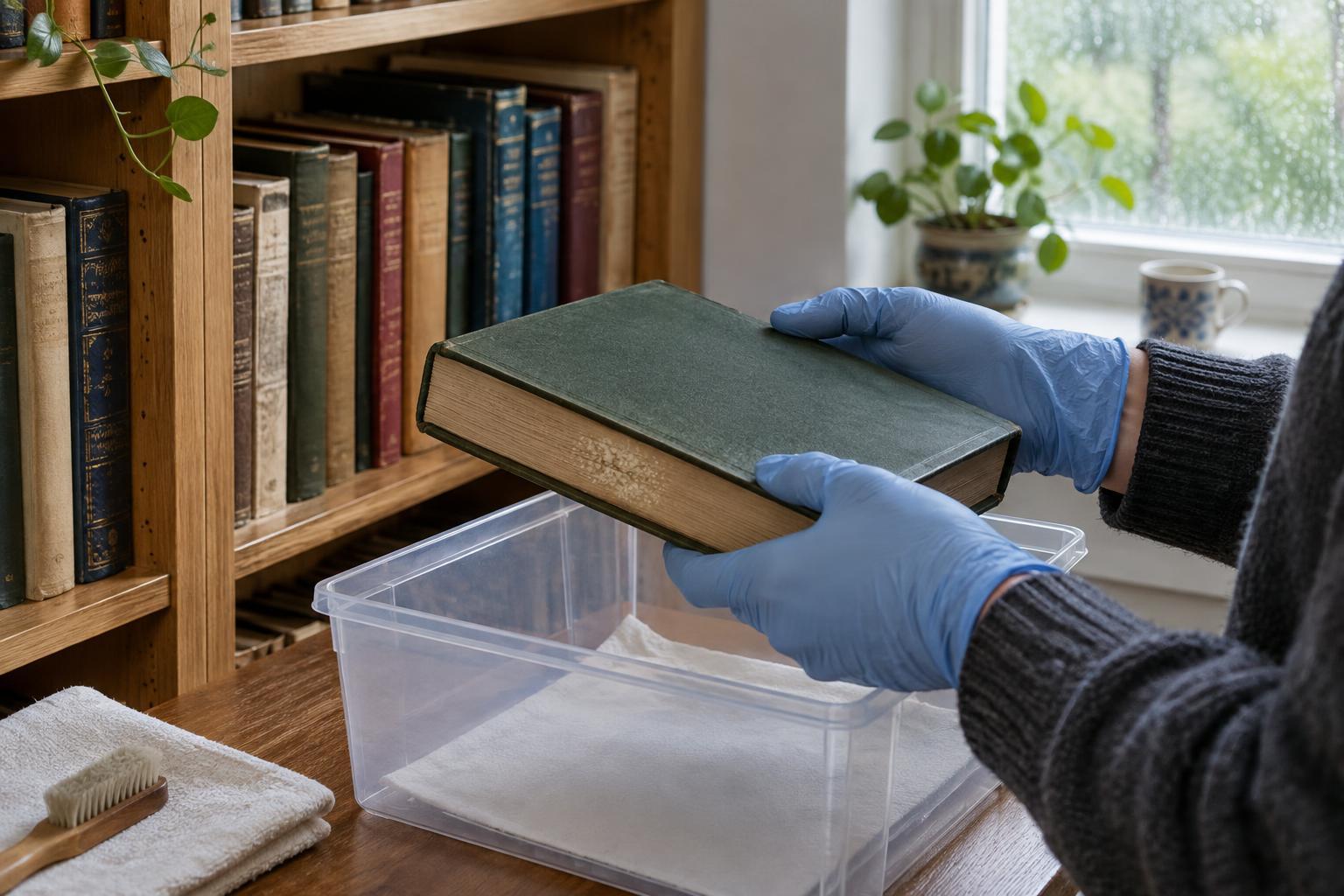
Separate the affected books
Set suspect books away from the rest of the collection and from areas where people spend long periods. If a book is damp or appears to have active mold, handle it as little as possible and avoid trapping it wet in a sealed plastic bag: enclosed moisture can make deterioration worse. If you are concerned about exposure, have a sensitivity to mold or are dealing with many affected items, leave the cleanup to a qualified professional.
For a dry book with visible insects or fresh-looking feeding damage, temporary isolation in a clean, sealable container can help keep pests from spreading while you investigate. Keep it out of heat and direct sunlight. Check the neighboring books, shelf joints, baseboards and any cardboard storage boxes for insects, shed skins, droppings or new damage. The aim is to establish whether this is one affected item or a wider problem before choosing a treatment.
Find the conditions behind the problem
Mold needs moisture, so a leak, condensation, a damp wall or poor airflow may matter more than the book itself. Look for water marks and feel for dampness around the shelf without opening walls or disturbing damaged materials. Move unaffected books away from a wet area. Address the source of moisture and let the space dry before returning anything to it; otherwise, cleaning a book may only provide a short reprieve.
Book pests vary, but clutter, undisturbed storage and access through gaps can make an infestation harder to notice. Inspect the room as well as the books, including textiles, food stored nearby and paper packaging. Clear loose debris and vacuum accessible shelves and floor edges, then dispose of the vacuum contents promptly. Avoid spraying insecticide, bleach or scented cleaners onto books. Such products can damage paper and bindings, and a spray may not address the source of the problem.
Choose a response that fits the book
For an inexpensive, replaceable book with extensive mold, disposal may be the most practical choice. A treasured or rare item calls for a more cautious approach. A book conservator can advise on whether cleaning or stabilization is possible without causing further damage. If mold covers many books, keeps returning or appears alongside substantial building moisture, seek help with the space as well as the collection.
Likewise, if you continue to see live insects or fresh damage after isolating the first item, consider a pest professional who can identify what is present and recommend a plan for the room. Avoid treating the entire collection based on a single unidentified bug. Home remedies such as heat, freezing or chemical treatments can harm some bindings, coatings and photographs if used without the right preparation.
Make future checks easy
Once the shelves are clean and dry, return only books that appear unaffected or have been assessed. Leave enough space to see behind and between groups of books, and keep shelves away from known damp spots. Check stored boxes occasionally rather than waiting until you need something inside them. A brief look at page edges, covers and the shelf beneath a book can reveal a change early.
You do not need a perfect library to care for your books well. A small record of which shelf had a problem, what you observed and when you checked it again is more useful than trying to remember every mark. If nothing new appears, you can settle back into reading. If the signs return, you will have a clearer picture to share with someone who can help.