
Home LibrariesA home library does not need its own room. Start with the books you use, choose storage that fits your space, and leave room for your collection to change.
Read article · 4 min↗

Book DiscussionsA lively book club does not have to be a loud one. With a little structure, thoughtful questions and room to pass, a facilitator can make it easier for quieter readers to join the conversation without putting them on the spot.
Read article · 4 min↗

Book DiscussionsA book discussion works better when everyone knows how far into the story the conversation may go. Learn how to set a clear spoiler boundary, make room for readers at different stages, and handle accidental reveals without turning the gathering into a test.
Read article · 4 min↗

Book DiscussionsA lively book discussion does not require everyone to love the same characters or reach the same interpretation. These practical habits can help readers challenge ideas, listen closely and stay curious when opinions differ.
Read article · 3 min↗
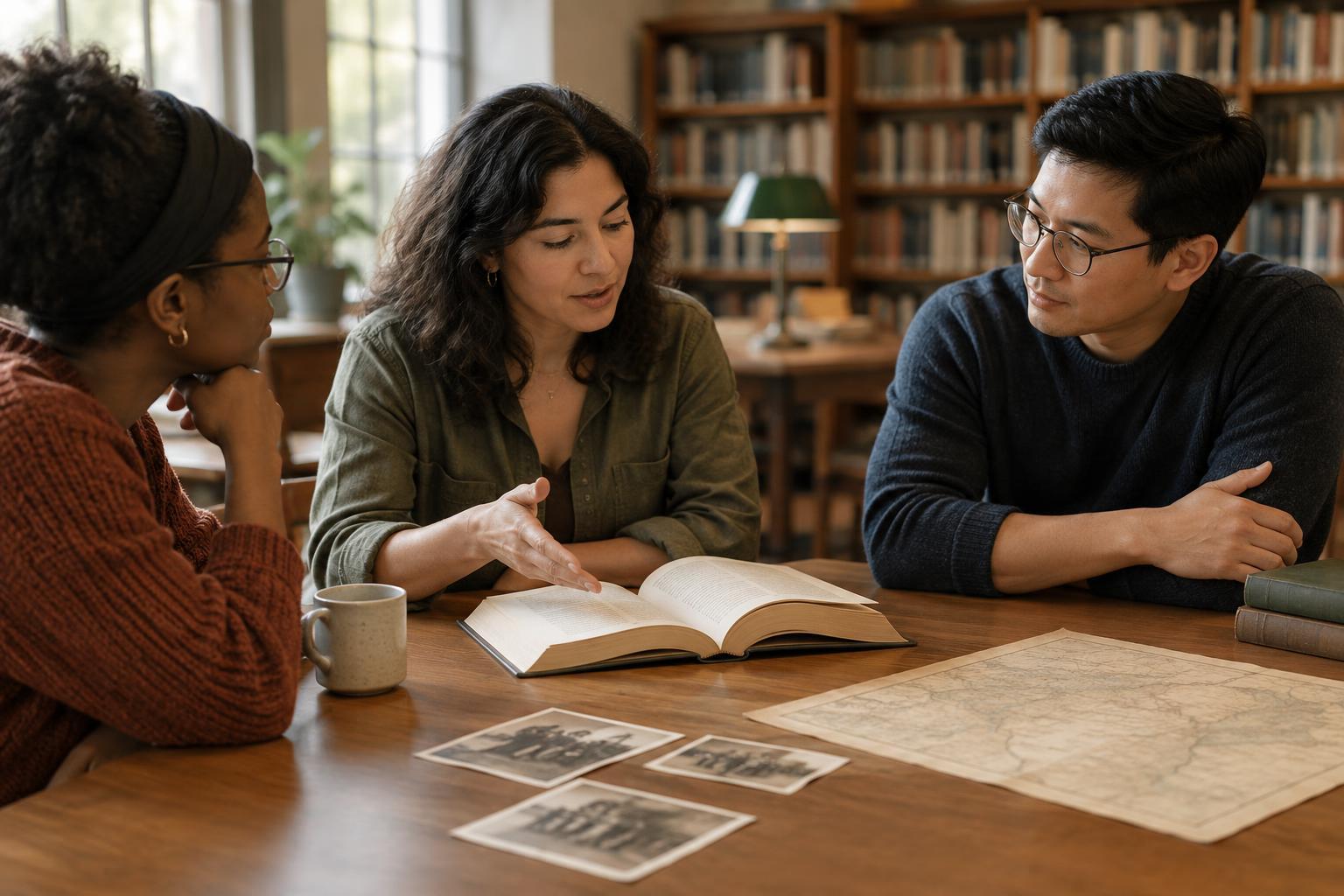
Book DiscussionsKnowing more about a story’s setting can open up richer questions about a character’s choices. Here’s how to bring historical context into a book discussion while still taking harm, responsibility and differing viewpoints seriously.
Read article · 4 min↗

Book DiscussionsA translated book gives readers a real encounter with a story, but not a transparent view of every word in its original language. Here is how to discuss voice, style, culture and translation choices without claiming to know more than the text allows.
Read article · 4 min↗
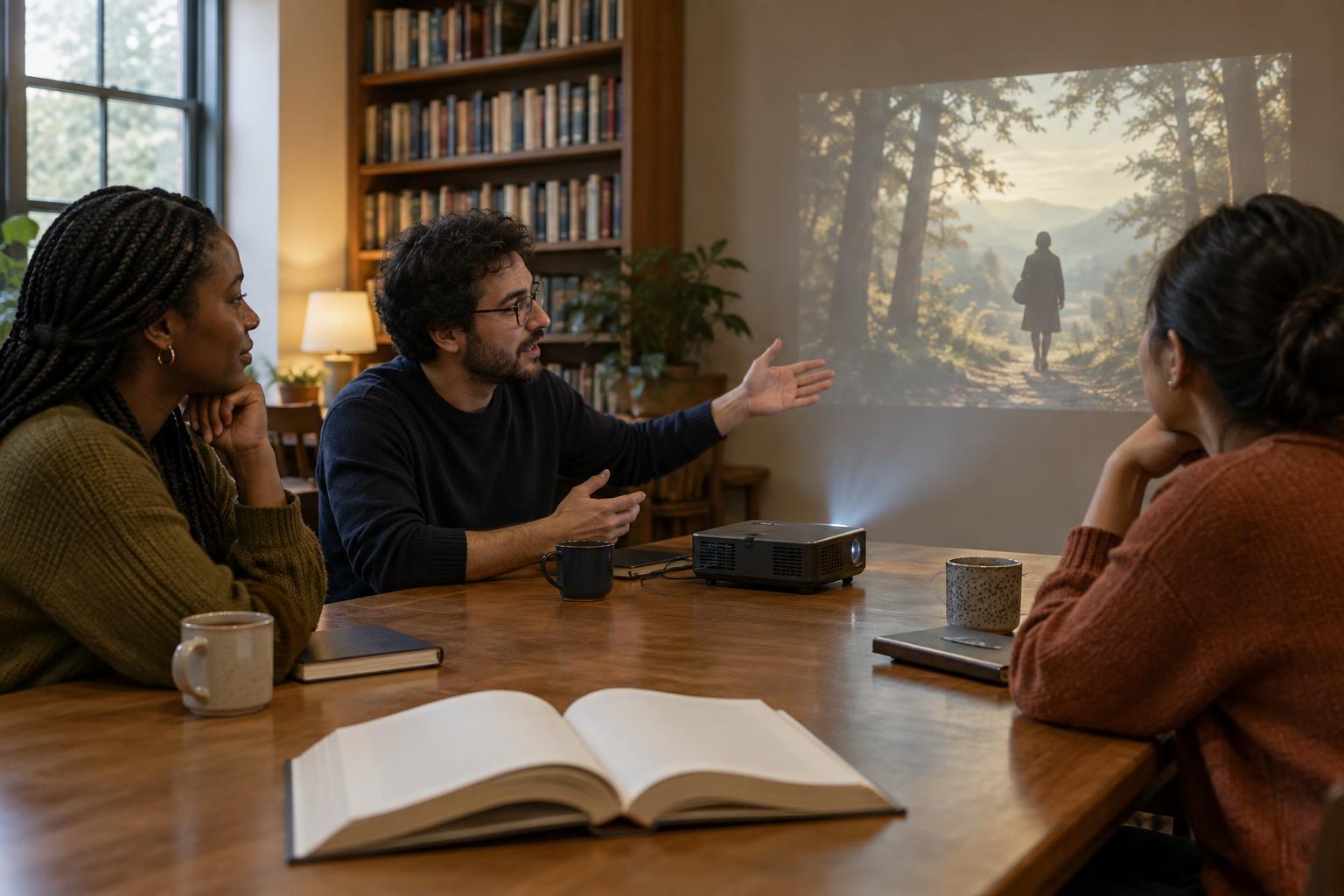
Book DiscussionsA film adaptation does more than transfer a story to the screen. Explore how to discuss changes in character, structure, setting and point of view without reducing the conversation to what the film left out.
Read article · 4 min↗

Book DiscussionsComparing books can open up a conversation rather than settle a contest. Start with a question both books explore, notice how each approaches it, and leave room for different readers to respond differently.
Read article · 4 min↗

Book DiscussionsA mystery invites us to look for clues; a romance invites us to watch a relationship change. Genre conventions can make reading more satisfying, but they can also narrow what we notice. Here is a way to discuss the promises stories make—and what happens when they keep, bend or break them.
Read article · 4 min↗

Book DiscussionsAn open ending can make a book discussion feel uncertain—or unusually lively. Here’s how to explore competing interpretations, use details from the story, and leave room for readers who see the final pages differently.
Read article · 4 min↗

Book DiscussionsCharacters do not always say what they mean. Learn how to discuss the pauses, evasions, changes of subject and small choices of wording that give a conversation its deeper meaning.
Read article · 4 min↗

Book DiscussionsA recurring object, color or sound can open up a book discussion—but not every repeated detail is a secret code. Learn how to notice patterns, connect them to a story’s choices and leave room for other readings.
Read article · 4 min↗
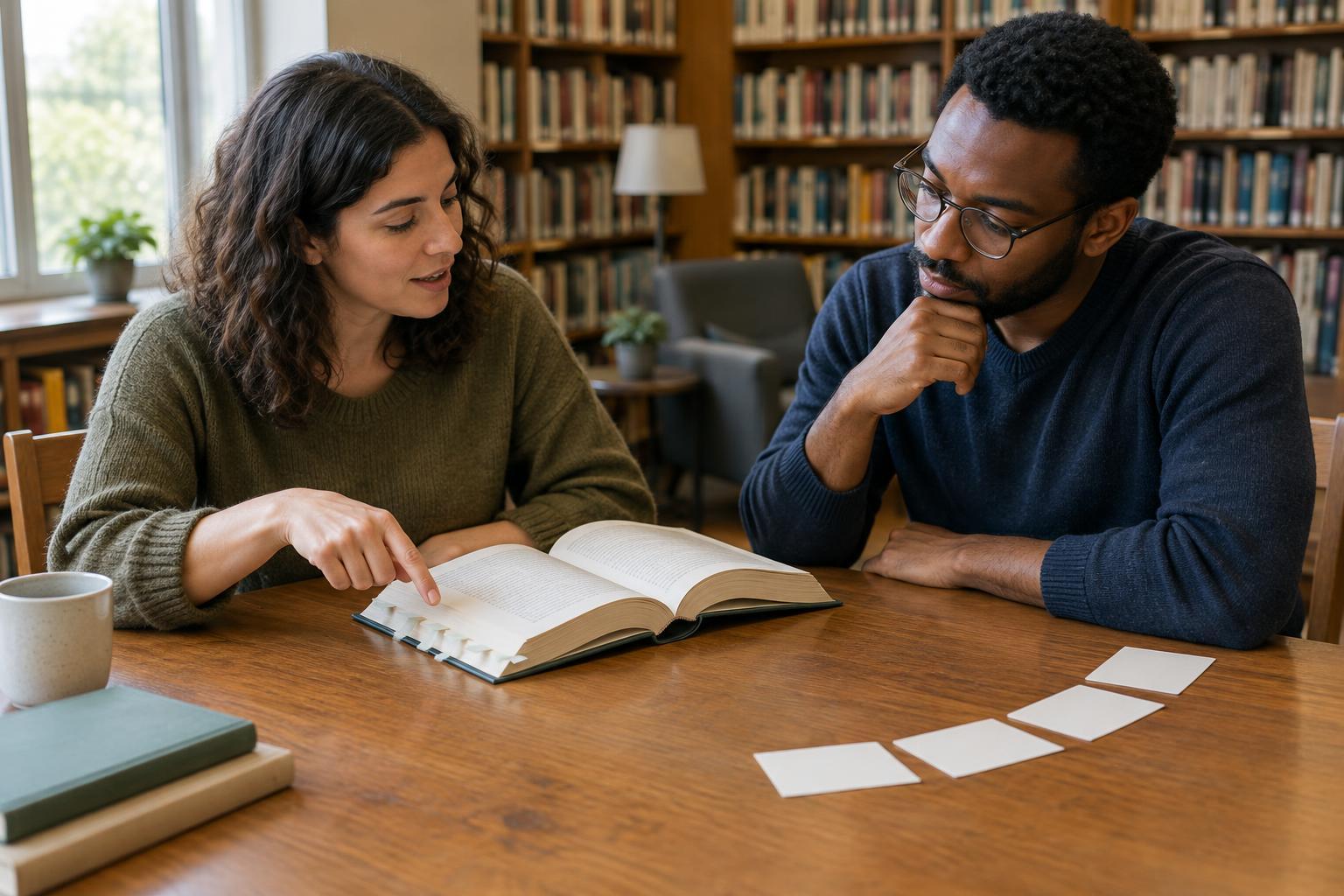
Book DiscussionsA plot summary tells you what happened. A richer book discussion asks when it happened, how long the story lingered there, and what the arrangement made you expect. Use these questions to talk about a book’s pacing and structure without needing technical vocabulary.
Read article · 4 min↗

Book DiscussionsSetting is more than the backdrop to a story. The places, times and moods a writer creates can shape what characters notice, what choices they have and how readers understand an event. These questions can help any book group talk about setting with curiosity and care.
Read article · 4 min↗

Book DiscussionsA story’s point of view does more than decide who tells it. It controls what readers can know, whose feelings they can enter, and which questions remain open. Learn how to notice those choices and bring them into a richer book discussion.
Read article · 4 min↗

Book DiscussionsA narrator can tell a compelling story without telling the whole truth. Learn how to spot gaps, contradictions and carefully chosen details—and use them to start richer book discussions.
Read article · 4 min↗

Book DiscussionsA character can frustrate you and still be worth understanding. Try these questions and conversation habits to move a book discussion beyond a simple likeable-or-unlikeable verdict.
Read article · 4 min↗

Book DiscussionsA book discussion can be thoughtful without ending in a tidy message. Learn the difference between theme and moral, then use open questions and details from the story to explore what a book leaves readers wondering.
Read article · 4 min↗

Book DiscussionsA thoughtful book discussion does more than point to a passage and say, “See?” Learn how to make a clear claim, choose revealing details, explain your reasoning, and make room for other readings.
Read article · 4 min↗

Book DiscussionsRetelling a plot helps everyone find their place in a book, but it is only the beginning of a discussion. Learn how to turn a memorable scene into a question about character, meaning and craft—without losing readers who remember the story differently.
Read article · 4 min↗

Book DiscussionsA good book discussion does not need a perfect opening question. Start with something readers can notice, explain or wonder about, then make room for different interpretations. These practical question patterns can help a group move beyond short answers without turning the conversation into a quiz.
Read article · 3 min↗